Types of HIV test
HIV tests look for different 'traces' of the virus. Some look for the virus itself (its genetic material). Some look for a viral protein called the p24 antigen. Others look for antibodies, the defenses your body makes to fight the virus. Tests that catch HIV earliest are usually done in a lab. Home self-test kits are easy and private, but if your risk event was recent they may not pick up an infection yet.
What is the window period?
The window period is the time after HIV acquisition when a test may not yet detect the marker it is designed to find. It is different from the incubation period, which is the time between infection and the onset of symptoms. Window periods vary by test type, and no HIV test can detect infection immediately after exposure.
NAT · Nucleic acid test
Detects viral genetic material and can usually detect HIV about 10–33 days after exposure. It is used when a qualified healthcare professional considers it appropriate.
Antigen/Antibody, 4th generation
A laboratory test using blood from a vein can usually detect HIV in about 18–45 days; a rapid finger-stick version may take about 18–90 days.
Antibody
Detects antibodies and can usually detect HIV in about 23–90 days. Many rapid tests and self-tests use this method.
These ranges are estimates and can vary with the specific test, specimen, and recent PrEP or PEP use. If you test negative too early, your provider may recommend another test. Count from the most recent possible exposure; a new exposure requires a new assessment of timing.
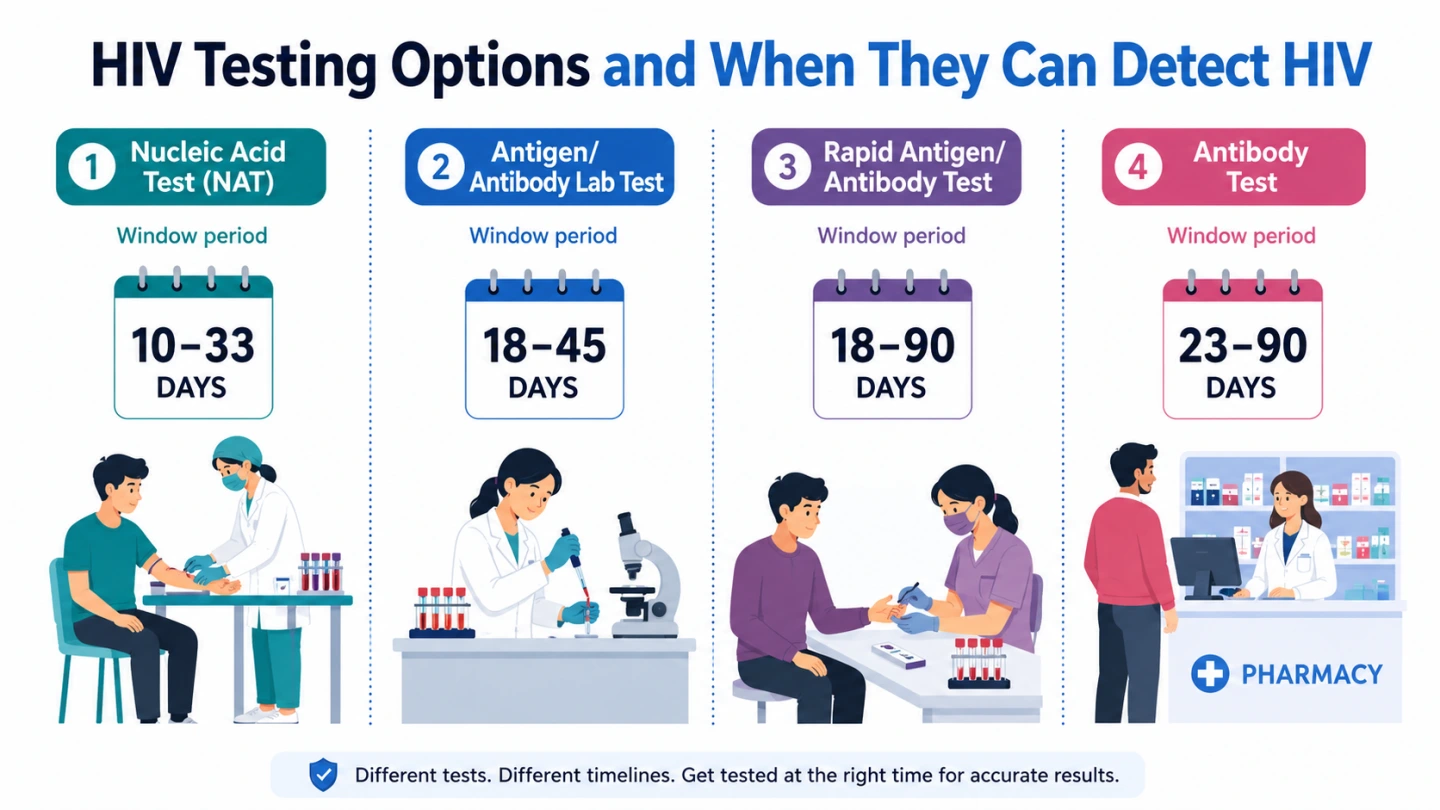
These are estimated windows after an exposure that results in HIV acquisition. Antiretroviral medicines such as PrEP or PEP can affect interpretation and follow-up testing.
- 10–33 days: Nucleic acid test (NAT)
- 18–45 days: Laboratory antigen/antibody test using blood from a vein
- 18–90 days: Rapid antigen/antibody finger-stick test
- 23–90 days: Antibody test
Negative, positive, and invalid results
A negative result means that the test did not detect the HIV marker it was designed to find at that time. It does not rule out HIV if testing occurred during the window period or soon after an exposure. A reactive screening result is not a final diagnosis and requires follow-up testing. If a self-test has no control line or cannot be read clearly, treat it as invalid and test again.
How to prepare before testing
Note the risk event Write down the date and details of your most recent risk event.
Share your medicines Tell your provider if you take PrEP, PEP, or antiretroviral therapy (ART).
Ask about the test Ask which test they use and when you should test again.
Pick a service you trust Choose one that keeps things confidential and offers counseling.
Plan for the result Have a plan ready for whatever the result turns out to be.
You usually do not need to fast before testing. Testing early only helps: if it is positive, you can start treatment right away; if it is negative, you can review how you protect yourself going forward.
Testing after PEP, PrEP, or an unclear result
Antiretroviral medicines used for PEP or PrEP can affect the timing and interpretation of HIV testing because they may suppress early viral replication. Tell the service exactly which medicine you used, when you started, when you stopped, and whether doses were missed. Do not rely on a home test alone to end follow-up after PEP or to investigate symptoms while taking PrEP. A clinic can select an antigen/antibody test, NAT, or repeat schedule appropriate to the situation.
A reactive screening result is not a final diagnosis. The laboratory follows an HIV testing algorithm with supplemental testing, while an indeterminate or discordant result may require a new specimen or NAT. During this period, avoid donating blood, continue the prevention method you can use, and return for the planned test. Do not repeatedly use different rapid tests on the same day in an attempt to settle an unclear result; that can add confusion without completing the diagnostic algorithm.
Testing frequency should reflect current exposure rather than identity labels. People using PrEP need regular HIV testing as part of safe prescribing. Pregnancy care, a new STI, shared injection equipment, sexual assault, and a partner with a new diagnosis may also change the recommended schedule. Ask what the test detects, which sample was used, when the window period ends, whether antiretroviral medicine changes follow-up, and the exact date for the next step.
- Bring the name and dates of any PEP or PrEP used
- Complete confirmatory testing after a reactive screen
- Use the same clinical pathway for follow-up instead of collecting unrelated home tests
- Seek urgent PEP assessment first when exposure was within 72 hours
Understand the main HIV testing technologies
- Antibody tests look for how your body responds to HIV. Most rapid finger-prick tests and self-tests are this type.
- Antigen/antibody (4th-generation) lab tests look for both antibodies and the p24 antigen, so they can catch many infections earlier.
- Nucleic-acid tests (NAT) look for the genetic material of the virus directly and can detect it even sooner, but they cost more and are usually saved for special cases such as a very recent high-risk exposure or symptoms of new HIV.
- Self-testing is a screening step, not a final diagnosis. Check the expiry date, follow the instructions, use the right specimen, and read the result within the time given.
- If the control line is missing, the device is unreadable, or you read it too late, the result is invalid. Repeat with a new kit or see a provider.
Window period: timing matters more than symptoms
- The window period is the time after exposure when a test may not detect HIV yet. It is not one fixed number; it varies by test and by person.
- Antigen, antibodies, and viral RNA each become detectable at different times.
- PEP or PrEP medicines can affect the testing plan, so tell your provider what you took and when.
- A negative result soon after exposure is a useful baseline but may not be the final answer. Follow the schedule for your exact test.
- Do not test every single day. Testing too early, over and over, does not replace one well-timed test and only adds stress.
- If the exposure was within 72 hours, get PEP now; do not wait for a test to turn positive.
- If you get symptoms after a recent exposure, call a clinic and explain the timing, because they may add a nucleic-acid test. Keep protecting yourself until your final test.
From screening result to confirmed diagnosis
- A non-reactive screen usually means the test found nothing, but this still depends on good timing and correct use.
- A reactive screen means the test found a signal. The approved confirmation steps must be finished before it is certain.
- False-reactive screens can happen, so wait for confirmation before making treatment or disclosure decisions, while getting prompt clinical advice.
- If confirmation is negative or unclear after a reactive screen, more testing (often a nucleic-acid test) may be needed to tell very early infection from a false reaction.
- After a confirmed result, a second sample or identity check is common before starting care. Linkage to care should be fast and supportive.
- Baseline viral load and CD4 do not decide whether the screen was truly positive; they guide care after diagnosis.
- If a result is lost, unclear, or given with no explanation, ask for a written report showing the method and any follow-up needed.
Choose a service that matches the question
- Clinics, community sites, mobile units, pharmacies, labs, and self-tests can all work. Weigh privacy, cost, distance, hours, counseling, confirmation testing, and quick linkage to PrEP, PEP, or treatment.
- A good screening service also explains what to do next.
- If you need documentation, have symptoms, used PEP or PrEP, are pregnant, or may have new HIV, a clinic or laboratory may offer important extra checks.
- An HIV test does not automatically check for syphilis, hepatitis, gonorrhea, chlamydia, pregnancy, or other conditions. Ask what is included.
- STI testing may need throat, rectal, genital, urine, or blood samples depending on the exposure. Combining relevant tests saves repeat visits, but consent stays specific and results stay confidential.
Manage anxiety before and after testing
- Anxiety often makes people search symptoms, retest too soon, or avoid opening a result.
- Trade the uncertainty for a written plan: date of exposure, the PEP deadline, your baseline test, your final test date, and someone to ask questions.
- Share only with a trusted person, and only if it feels safe. Skip online images and unmoderated claims that ignore test type and timing.
- Breathing exercises, sleep, regular meals, and less compulsive searching make the wait easier.
- Whatever the result, there is a next step: a negative result can lead to PrEP, condoms, vaccination, and a testing schedule that fits you; a reactive result leads to confirmation; a confirmed positive leads to effective treatment and U=U.
- If anxiety becomes overwhelming, disrupts daily life, or brings thoughts of self-harm, reach out for mental-health or emergency support instead of coping alone.
Read results in context
To read a result well, look at several things together: the test name, the sample used, the date, the reference range, and how long it had been since the exposure. Screening tests are meant to flag people who may need more testing, so a "reactive" screen is not always final — a confirmation test follows. A negative result is reassuring only when the right test was used and enough time had passed. An "inconclusive" result does not mean positive or negative; it just means you need to finish the next step.
Keep copies of important reports and ask which result guides each part of care. For HIV, viral load measures the amount of HIV in blood, while the CD4 count reflects immune status and opportunistic-infection risk. For gonorrhea and chlamydia, the body site sampled matters, because a urine test may not check the throat or rectum. Your provider should connect the result to your symptoms and history before recommending treatment or follow-up.