
PrEP: HIV prevention before a possible exposure
PrEP is antiretroviral medicine for people whose testing confirms that they do not have HIV. It is used before a possible exposure and is highly effective when taken or received as prescribed. Protection is not immediate after the first dose; timing depends on the regimen and exposure route. Start PrEP through a qualified provider who can confirm HIV status and assess kidney function, hepatitis B, and sexually transmitted infections as appropriate.
PrEP is a good fit if you have a partner whose HIV status you don't know, use condoms only some of the time, have used PEP before, currently have an STI, or simply want more peace of mind. Taking PrEP is nothing to be ashamed of, and it doesn't mean you are careless — it means you are looking after your health by planning ahead.
PEP: emergency medicine after a possible exposure
PEP is HIV medicine you take after you have just had a possible exposure to HIV. Start it as soon as you can, and no later than 72 hours (3 days) after the exposure. The sooner you start, the better it works. Once you start, keep taking it every day until you finish the full course your provider prescribes, and go back for your follow-up tests. PEP is for emergencies only — it is not a replacement for long-term prevention. If you find yourself needing PEP often, talk to a provider about switching to PrEP.
The sooner, the better — PEP is for emergencies and must be started no later than 72 hours after exposure. Don't wait for symptoms.
| Tool | When to use it | Keep in mind |
|---|---|---|
| PrEP | Before a potential exposure | Get an HIV test and attend follow-up appointments |
| PEP | After a risky event | Start within 72 hours; the sooner, the better |
| Condoms | During sex | Help protect against HIV and many STIs |
| U=U | A partner with HIV on treatment until undetectable | Does not transmit HIV through sex |
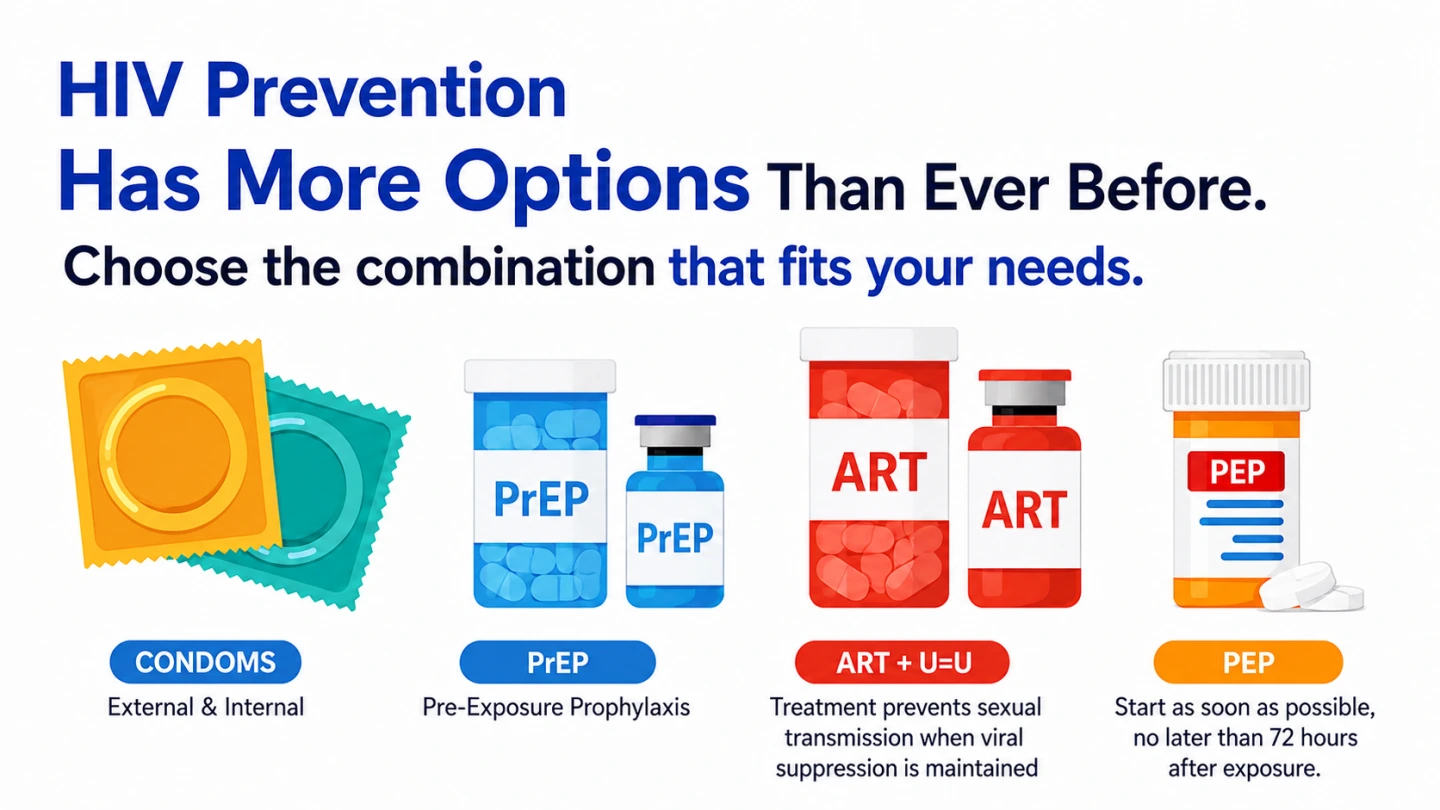
Choose one or combine several methods according to your situation, health, and preferences.
- Condoms — Reduce HIV and several STI risks when used correctly every time.
- PrEP — Pre-exposure medicine for people without HIV, with testing and follow-up.
- PEP — Emergency medicine after exposure: start as soon as possible and no later than 72 hours; usually taken for 28 days.
- ART and U=U — A person with HIV who maintains viral suppression will not transmit HIV through sex.
Condoms and lubricant
Pick a condom size and type that fits you. Check the expiration date before every use. Open the wrapper gently so the condom doesn't tear. Use a new one every time, and never wear two at once — that adds friction and makes them break more easily. Lubricant cuts down friction and helps keep condoms from breaking, but pick a type that matches the condom material. For latex condoms, use water- or silicone-based lube; don't use oil or lotion, which weakens latex and makes it break. Condoms have another benefit: they help protect against many STIs that PrEP and PEP do not.
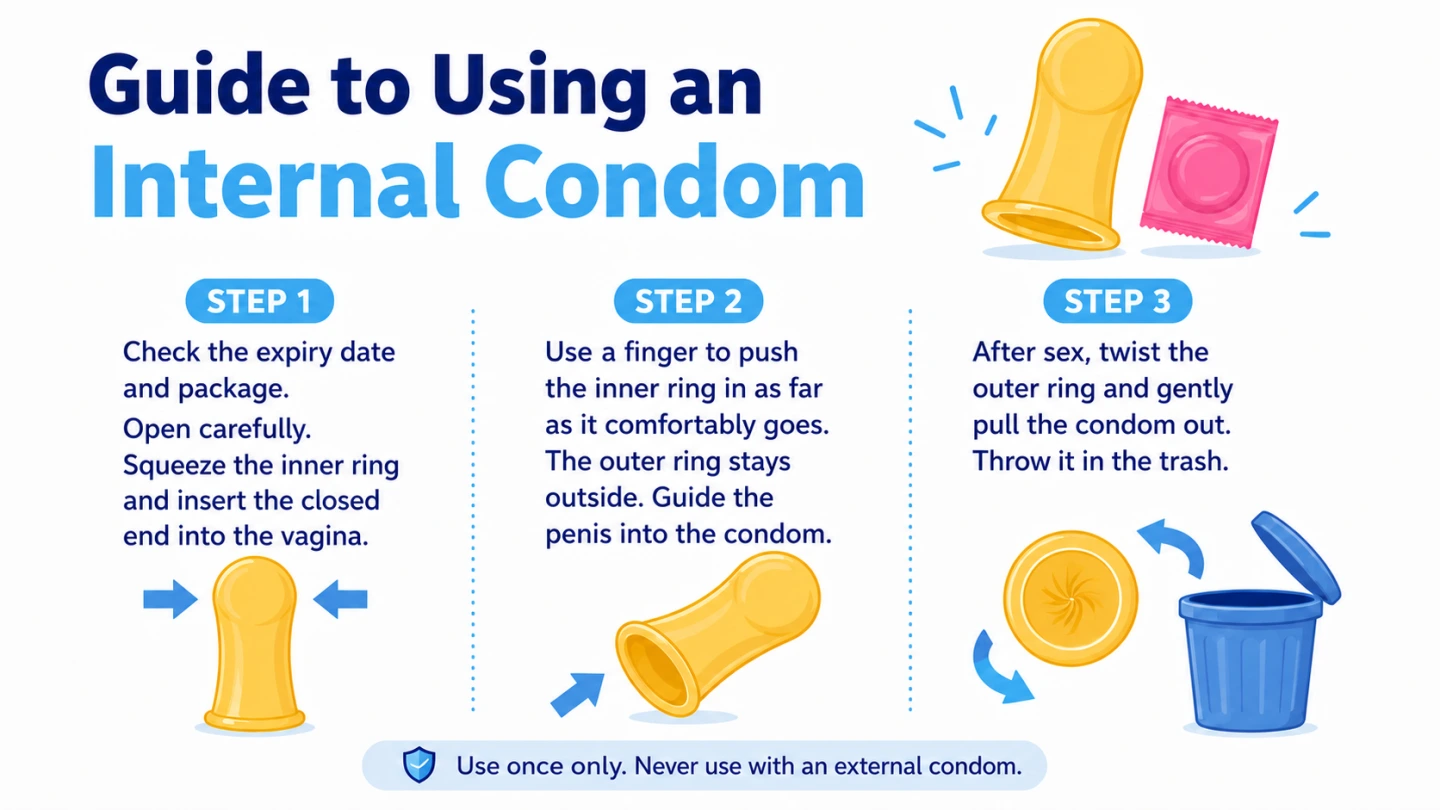
Read the product instructions, check the expiry date, and use a new condom from start to finish every time you have sex.
- Open and prepare — Open carefully, check for damage, and add lubricant if needed.
- Insert and position — Squeeze the inner ring and insert it. Make sure the pouch is not twisted and the outer ring remains outside.
- Guide during sex — Guide the penis into the condom, not between the condom and the body wall.
- Remove and discard — Twist the outer ring, pull the condom out gently, and place it in the trash.
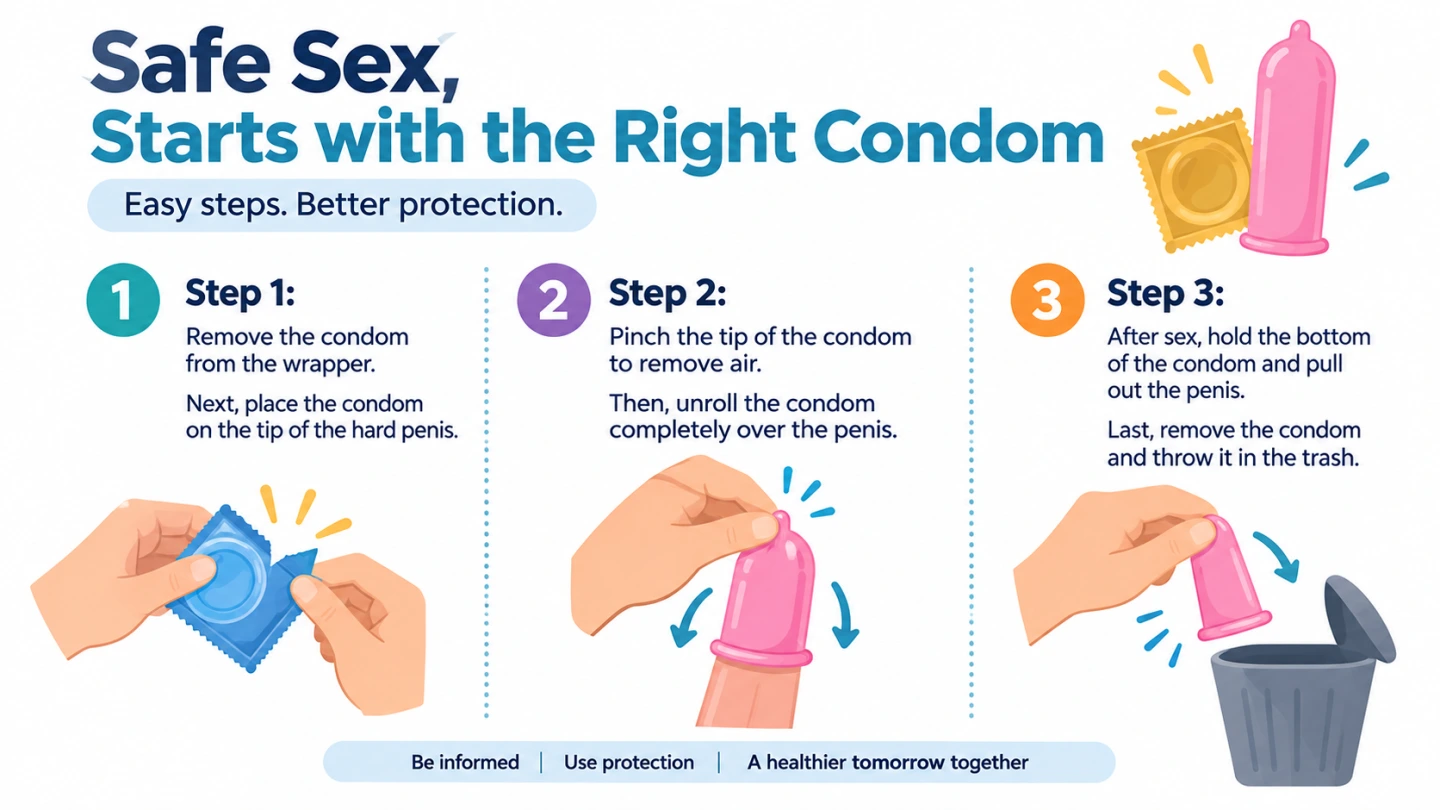
Use a new condom for every act, check the expiry date and wrapper, and choose a fit that is secure without being painfully tight.
- Open carefully — Push the condom away from the edge and tear the wrapper without sharp objects.
- Put it on the right way — Place it on an erect penis, pinch the tip to remove air, and roll it to the base.
- Use compatible lubricant — Use water- or silicone-based lubricant with latex; avoid oils and lotions.
- Remove safely — Hold the base while withdrawing, then wrap or tie the condom and place it in the trash.
Build a prevention plan that fits you
Start with a few questions. How often might exposure occur? Do you also want protection from STIs or pregnancy? Can you collect medicine and attend follow-up visits? Is a partner living with HIV and maintaining viral suppression? The answers can shape a plan that includes PrEP, HIV and STI testing, condoms, indicated vaccination, partner communication, and knowing where to obtain PEP after an emergency exposure.
Consider how often exposure might occur Ongoing or occasional exposure may call for different prevention options.
Pick your main method PrEP if the risk is ongoing, plus condoms every time to block STIs.
Test for HIV/STIs regularly And get the hepatitis B vaccine.
Talk with your partner About status, testing, and U=U.
Line up PEP as a backup Know where to go if an emergency happens.
Choose prevention by situation, not by a single label
A useful prevention plan begins with the kind and timing of exposure, what each person can use consistently, and whether protection is needed now, occasionally, or over a longer period. Condoms reduce HIV and many STI risks when used correctly with compatible lubricant. PrEP provides highly effective HIV prevention before exposure. PEP is an emergency course that must start as soon as possible and no later than 72 hours after a possible exposure. Sterile injection equipment prevents blood-borne exposure, while testing helps people connect to the right option.
Partners can use different methods at the same time without one method cancelling another. A person may use PrEP and condoms, or rely on U=U for HIV while using condoms for STI or pregnancy prevention. Someone living with HIV who maintains viral suppression below 200 copies/mL does not transmit HIV through sex. The plan can change with a new partner, missed medicine, pregnancy goals, side effects, access, or a new test result. Review the plan after a change rather than assuming an old agreement still fits.
Prevention should remain voluntary and practical. Ask about cost, confidentiality, dosing, kidney or liver health, hepatitis B, contraception, vaccines, and the body sites that need STI testing. Prepare an emergency contact for PEP and keep condoms and lubricant where they can be used without pressure. If a method fails or is not used, focus first on time-sensitive care and testing rather than blame. A plan people can return to after a missed step is safer than one that depends on perfection.
Combination prevention works because lives are different
HIV prevention works best when you mix methods that fit your body, your relationships, how often you face risk, and what services you can reach. You can combine tools — using one does not rule out another.
Risk is not who you are; it changes with the activity, the partner, viral load, and how consistently you protect yourself. Skip labels like “safe person” or “risky person,” and revisit your plan when things change — a new relationship, stopping PrEP, or a planned pregnancy.
- Condoms with compatible lubricant
- PrEP (daily or long-acting, where available) before exposure
- PEP as emergency backup after exposure
- Sterile injection equipment
- Regular testing and treatment that keeps viral load undetectable (U=U)
- Care that prevents transmission during pregnancy and breastfeeding
Condoms and lubricant: details that improve protection
External and internal condoms are a barrier that helps stop HIV, many STIs, and pregnancy. Use them right and they work well.
Lubricant cuts friction and lowers the chance of breakage. Water- and silicone-based lube is fine with latex; oil-based products weaken it. If a condom breaks, stop, replace it, and think about STI testing and PEP if HIV exposure may have happened within 72 hours.
- Check the package and expiration date
- Use a new condom for every act and body site
- Open it by hand, not with sharp objects
- Leave space at the tip and pinch out the air before rolling it on
- Hold the base during withdrawal
- Never use two condoms at once — friction can cause breakage
PrEP prevents before exposure; PEP responds after exposure
PrEP is HIV medicine for people without HIV who want ongoing protection before exposure. Starting safely means an HIV test plus checks of kidney function, hepatitis B, and relevant STIs. Protection is not always immediate, and stopping needs a plan. PrEP does not treat HIV or prevent most other STIs or pregnancy.
PEP is an emergency course started as soon as possible and no later than 72 hours after a significant exposure. Take the full prescribed course and return for follow-up testing. Don’t wait for the other person’s result or for symptoms as the deadline nears. Needing PEP often is not a failure — it is a reason to discuss PrEP.
Treatment and U=U are central to prevention
Antiretroviral therapy (ART) protects the health of a person living with HIV. When it keeps the viral load undetectable, it also stops sexual transmission. This is U=U: Undetectable = Untransmittable, backed by large studies with no sexual transmissions while viral suppression held. It does not prevent other STIs or pregnancy.
Support means encouraging care and respecting privacy — not policing someone’s medication or records. If treatment has been interrupted or the latest viral load is unknown, check with the clinic and add extra prevention for a while. For pregnancy and breastfeeding, specialist care can lower transmission to very low levels.
Prevention beyond sexual contact
If you inject drugs or hormones, use new sterile equipment every time and don’t share anything that may touch blood. Harm-reduction and syringe-service programs can provide sterile supplies, testing, vaccination, naloxone, and links to care without requiring you to stop.
In healthcare and community settings, standard precautions, safe sharps disposal, and sterilized equipment protect everyone. After a needlestick or blood splash, wash or rinse right away and seek an assessment for PEP — don’t squeeze the wound hard or use harsh chemicals. Prevention works best when incidents can be reported without blame and acted on quickly.