How Much Does an HIV Test Cost, and Where Can You Get It Free?
In Thailand, Thai citizens are entitled to two free HIV tests a year across all health funds, and to free antiretroviral therapy under their coverage.
อ่านภาษาไทย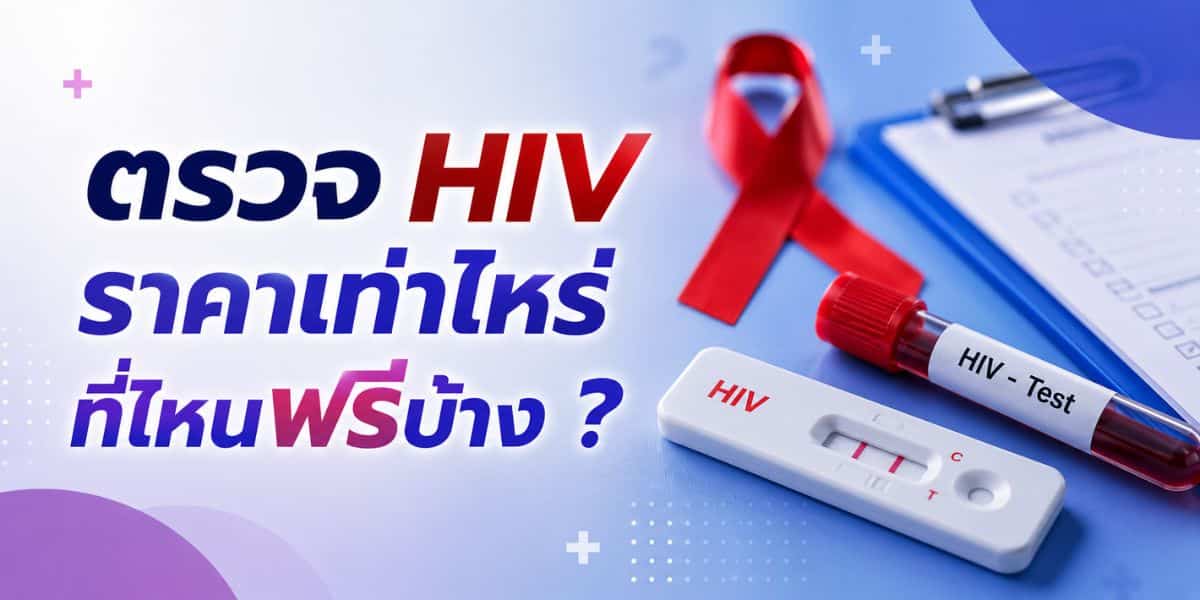
Contents
The question "How much does an HIV test cost?" has an answer most people don't expect — for Thai citizens, the answer is free. And it isn't free with a lot of complicated strings attached; it's a right you can use immediately with nothing more than your national ID card.
The problem is that many people don't know this, so they pay when they don't need to — or worse, they never get tested at all because they assume it's expensive. This article explains what's free, what isn't, what makes prices differ, and how to avoid paying more than necessary.
The free-testing right that every Thai citizen has
All Thai citizens are entitled to two free HIV tests per year at participating facilities under Thailand's national health system. Bring your Thai national ID and confirm availability with the facility.
What makes this right more powerful than many people realize:
- It covers every health fund — Universal Coverage (Gold Card), Social Security, and civil servant benefits alike.
- You don't have to be in a "high-risk group" — you should not be turned away from routine testing just because you don't identify with a particular group at higher risk.
- You don't need a referral — you can walk in and ask for the service directly.
- You don't need to have symptoms — most people who are living with HIV have no symptoms at all. See early HIV symptoms.
- You aren't restricted to the province where your coverage is registered — in practice many facilities serve people from outside their area, though it's best to ask ahead.
More details at free HIV services in Thailand.
What's free and what has a cost
| Item | Cost |
|---|---|
| HIV test at a government hospital, 1st–2nd of the year | Free under your coverage |
| 3rd test or more in the same year | May have a cost |
| Confirmatory test when a screening result is reactive | Covered by the system |
| Antiretroviral therapy when the result is positive | Free under your coverage |
| CD4 and viral load testing for people in treatment | Free under your coverage |
| PrEP | Free in many programs |
| PEP after exposure | Depends on the case and the facility |
| Testing at a private hospital | Has a cost |
| Self-test kit | Has a cost; some programs give them out free |
| Testing for syphilis, gonorrhea, and other STIs | Depends on the facility and your coverage |
The point that worries people most: if your result comes back positive, the cost of antiretroviral medication is not a burden you have to shoulder yourself. Every health fund covers the medication and the follow-up testing. So the fear of "if I test positive I won't be able to afford treatment" should never be a reason for anyone to avoid getting tested.
Why prices vary so much
When you choose to test outside your coverage, prices can differ widely from one place to another. The main factors are as follows.
1. The testing method used
This is the factor that affects price the most, and it's something you should always ask about first.
| Testing method | Relative price level | Window period |
|---|---|---|
| Rapid test (fingerstick) | Lowest | 18–90 days |
| 4th-generation Anti-HIV lab test | Moderate | 18–45 days |
| NAT (nucleic acid testing) | Very high | 10–33 days |
| Combined multi-item STI package | High | Depends on each infection |
Many people pay for NAT when they don't need to, because they assume "more expensive means more accurate." The truth is that NAT is suited to specific situations — for example, when an exposure was less than three weeks ago and you need a fast answer, or when you have symptoms of acute infection but your screening result is still negative. In ordinary situations, a 4th-generation test taken at the right time gives an equally reliable answer at a far lower cost.
See details on which method to use and when at the HIV window period.
2. The type of facility
Private hospitals have higher operating costs, so their prices are significantly higher than government facilities. Meanwhile, community clinics run by civil-society organizations are often supported by program funding, so they provide services free or at very low cost.
3. How fast you get the result
Services that return a result within a few hours or offer express turnaround usually charge an additional fee.
4. Bundled packages
Many places offer a comprehensive STI testing package, which can be worthwhile if you genuinely need several tests. But they often include items that aren't necessary for your particular risk.
How to avoid paying more than necessary
- Always use your coverage first — ask yourself whether you've already used both of this year's free tests.
- Ask the price before every test — don't feel awkward; this is a normal question everyone has the right to ask.
- Ask which generation of test kit is used — so you can judge whether the price is reasonable for what you're getting.
- Test at the right time — testing too early and then having to retest means paying twice for no reason.
- Ask what's included in the package — and which items are actually relevant to your risk.
- Try a community clinic first — many offer free service of equal quality.
- Be wary of deals that look too good to be true — check that the facility is properly licensed.
Are self-test kits worth it?
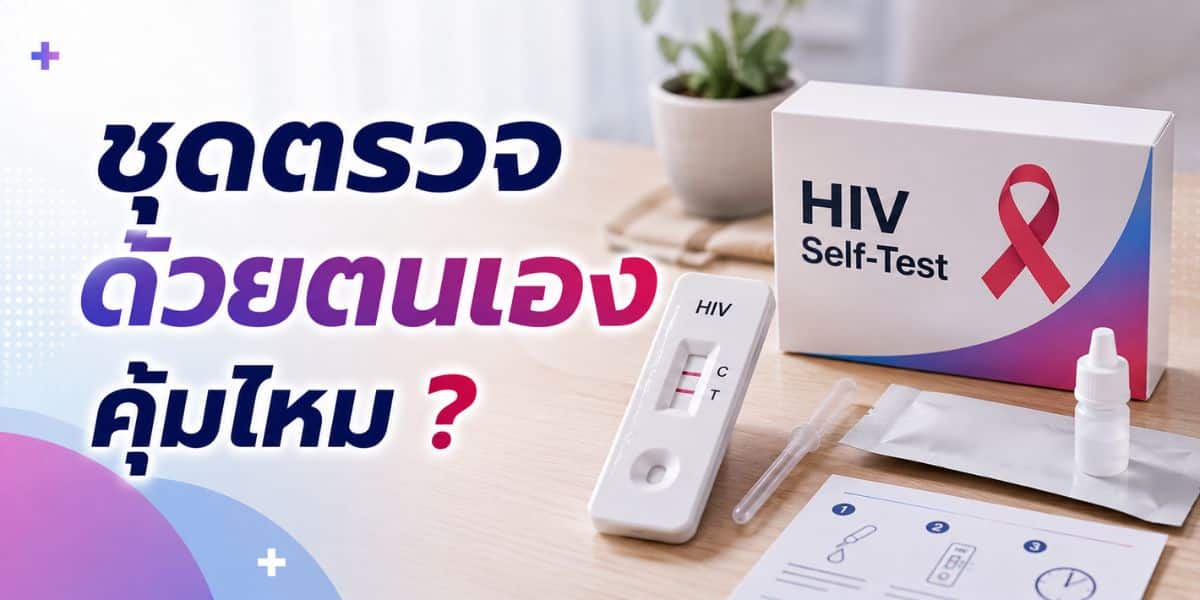
An HIV self-test kit approved by the Thai FDA has a cost, while testing at a government hospital is free. So the question is: what are you paying for?
| Aspect | Self-test kit | Testing at a facility |
|---|---|---|
| Cost | Yes | Free under your coverage |
| Privacy | Highest | Depends on the location |
| Window period | Longer (23–90 days) | Shorter (18–45 days) |
| Counselor available | No | Yes |
| Can a positive result be used as a diagnosis? | No — it must be confirmed | Built-in confirmation process |
| Can it test for other infections too? | No | Yes |
What you're really paying for is privacy and an easier first step, which for someone who has hesitated for months can be well worth it. But if you are eligible and comfortable attending a facility, covered testing may include counseling and can catch infection sooner than many self-tests.
An important caution — if you buy a self-test kit, it must be a model approved by the Thai FDA. Kits ordered from overseas online may not have passed quality control and can degrade from being shipped in high temperatures.
Costs for people without Thai government coverage
For foreign nationals, migrant workers, and people without registered status:
- People with Social Security — can use their benefits under the fund's conditions.
- People with private health insurance — check whether your policy covers it; some policies exclude sexually transmitted infections.
- People with no coverage at all — many community clinics run by civil-society organizations provide service free of charge and without asking about legal status.
- Programs funded by international sources — these often cover key populations regardless of nationality.
Long-term costs if your result is positive
This is the worry that keeps many people from getting tested, and it's one that should be put to rest as soon as possible.
| Item | Cost for people with coverage |
|---|---|
| Antiretroviral medication | Free |
| CD4 testing at scheduled visits | Free |
| Viral load testing at scheduled visits | Free |
| Scheduled doctor's appointments | Free |
| Medication for opportunistic infections | Covered under your coverage |
The things that do cost money are usually the surrounding ones — for example, travel to pick up medication and the lost income from taking time off work. Some places help reduce these with medication pickup closer to home or more flexible appointments, so it's worth asking your care team what options are available.
Read more at HIV treatment guidelines and how to take antiretroviral HIV medication and its possible side effects.
How much do PrEP and PEP cost?
These two are preventive medications, not treatment, and their cost conditions differ from testing.
PrEP — pre-exposure prevention
PrEP is medication taken before a potential exposure, for people with ongoing risk. In Thailand there are programs that provide it free to those who meet the criteria, covering both the medication and the necessary follow-up testing.
What people often don't realize is that being on PrEP isn't just about receiving the medication — it comes with periodic follow-up, including repeat HIV testing, kidney function testing, and testing for other sexually transmitted infections. That's a set of services with a high value if you had to pay for it yourself.
Read how to get started at the beginner's PrEP guide, and about the injectable option at injectable PrEP in Thailand.
PEP — emergency medication after exposure
PEP must be started within 72 hours of a potential exposure and taken continuously for 28 days. Cost conditions vary by case and facility — for instance, cases of sexual assault or healthcare workers with needlestick injuries often receive dedicated care.
What matters more than the price is time — if you've just had a possible exposure, don't spend it comparing prices between facilities. Go to the nearest one immediately and discuss costs afterward, because PEP becomes less effective with every hour that passes.
Do company annual health check-ups include HIV?
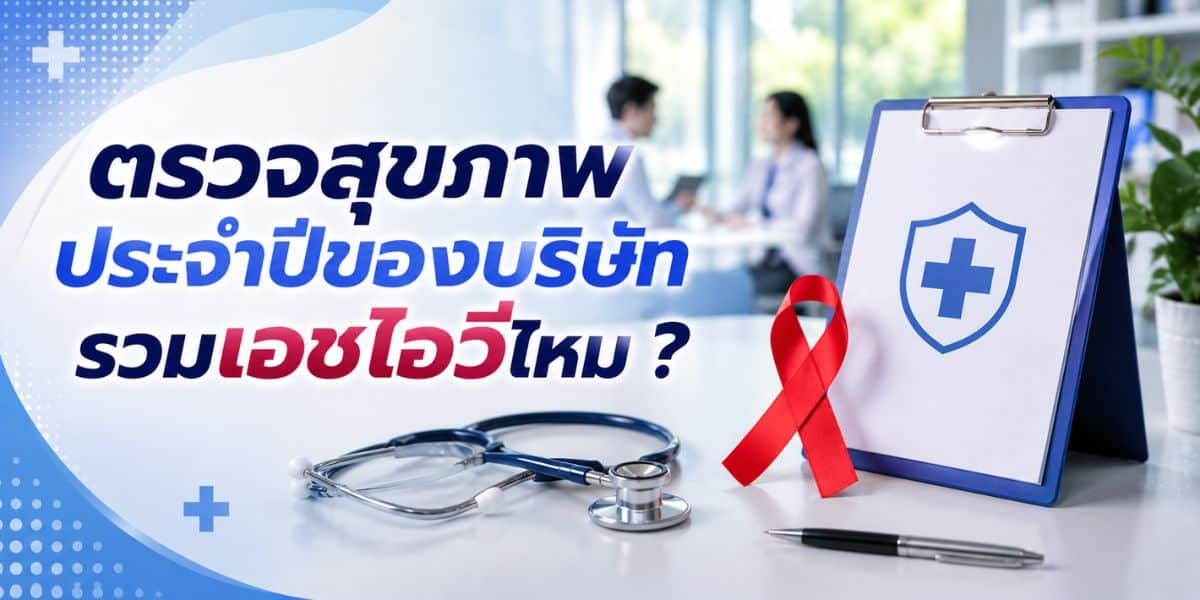
This question causes anxiety for many employees. The answer is generally no — and it shouldn't be included without your knowledge.
Principles worth knowing:
- HIV testing must always have your consent — it cannot be done secretly on blood drawn for another purpose.
- Mandatory testing as a condition of employment is something that should not happen.
- An employer has no right to access an employee's HIV test results.
- You have the right to ask what tests are included — and the right to decline any you don't want.
If you're worried that a result might reach your workplace, the most direct option is to get tested separately at an anonymous clinic, which never ties the result to your real name in the first place.
The real cost of not getting tested
When people think about price, they usually think only of the money spent today, without considering the cost of not knowing.
| Aspect | Test early and start treatment early | Find out only once symptoms appear |
|---|---|---|
| Testing cost | Free under your coverage | Also free, but comes too late |
| Immune status at the start of treatment | Still strong, recovers quickly | Already damaged, takes a long time to recover |
| Risk of opportunistic infections | Very low | High, may require hospitalization |
| Effect on those around you | No sexual transmission when viral suppression is sustained | May have already transmitted it unknowingly |
| Impact on work | Almost none | May require a long time off |
The difference between these two columns isn't about money — it's about time. And time is the one thing you can't buy back. See the stages of the disease and what happens without treatment.
Frequently asked questions
How much does an HIV test cost?
For Thai citizens using their coverage, it's free twice a year at government facilities. Testing outside your coverage varies widely depending on the method and the type of facility, so always ask beforehand.
What do you need for a free HIV test?
Just your national ID card. You don't need a referral, and you don't need to fast.
If you test more than twice a year, do you have to pay yourself?
There may be a cost, but some programs and community clinics can provide additional testing free of charge, especially for people with ongoing risk. It's best to ask locally.
If the result is positive, is the medication expensive?
Antiretroviral medication is free under coverage for people with any Thai government health fund. It is not a burden you have to pay yourself.
Is a private clinic better because you pay for it?
Not necessarily. Accuracy depends on the test kit and the timing of the test, not on the price. What you get extra for paying is convenience and speed.
Is a comprehensive STI testing package worth it?
It's worth it if you genuinely have multiple areas of risk, but you should ask whether each item is necessary for your situation before deciding.
Summary
Price should never be the reason anyone skips an HIV test in Thailand, because both testing and treatment are free under coverage for Thai citizens. Some community programs may offer free or subsidized testing to people without Thai public coverage; eligibility and availability vary.
The simple rule is: use your coverage first, ask the price first, and test at the right time. That alone covers most people's situations. Paying only makes sense when you truly need extra privacy or a faster answer than usual.
Read on: What is an anonymous clinic? · HIV testing in Chiang Mai · Understanding Anti-HIV test results
Book a free HIV test anywhere in Thailand at Love2Test.org
Verified references
Links and relevance to the article’s main topic were reviewed on 13 August 2026. Each source supports only the scope stated in the original document and does not replace personalised medical, legal, or service advice.
- กรมควบคุมโรค: สิทธิตรวจ HIV และ HIV self-test Accessed 13 August 2026
- Love2Test: Clinic and appointment directory Accessed 13 August 2026
- CDC: Getting Tested for HIV Accessed 13 August 2026