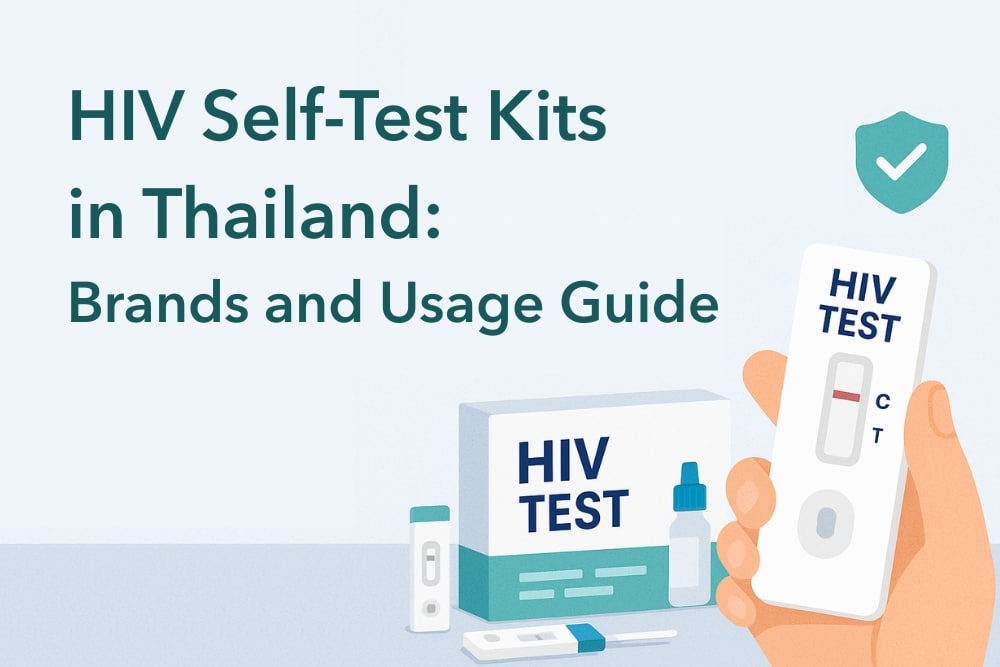
In an era where convenience and privacy are increasingly important, easy access to sexual health services has become essential. HIV self-testing, or HIV Self-Test has emerged as a crucial innovation, especially in Thailand, where several kits are now officially registered and approved by the Thai Food and Drug Administration (FDA). This article will introduce you to the HIV self-test kits that have been certified in Thailand, provide an in-depth comparison, and guide you on proper usage—helping you make informed purchasing decisions and live more confidently.
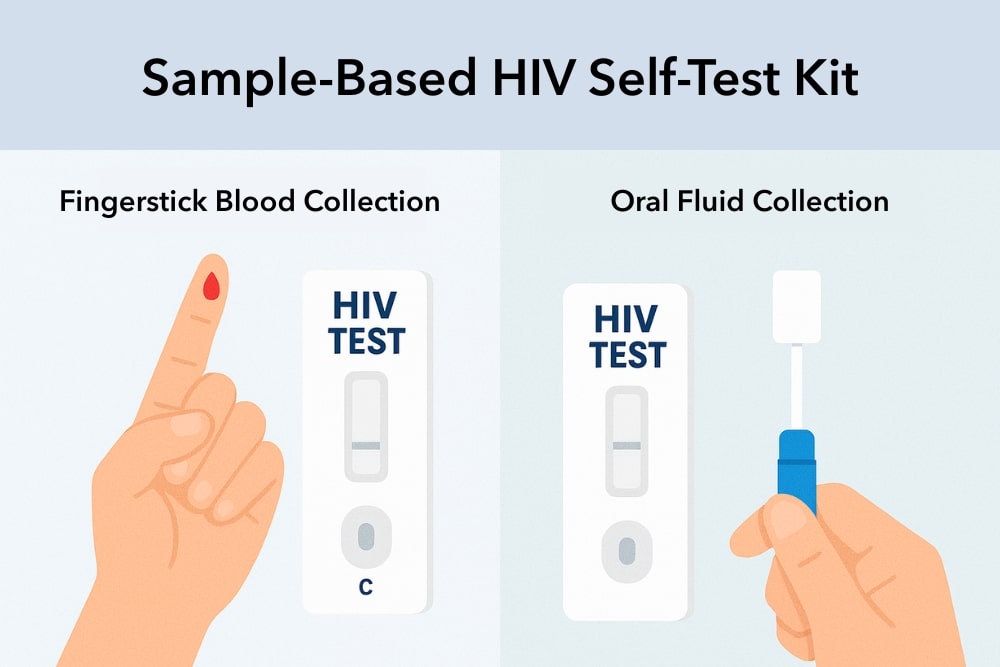
An HIV self-test (HIV Self-Test) is a device that allows individuals to collect their own sample and perform an HIV test privately at home. It is ideal for those who are at risk but may prefer not to or are unable to visit a healthcare facility or clinic, due to the desire for greater privacy. Samples used for testing can either be fingerstick blood or oral fluid, and both methods have been proven to offer high accuracy when used correctly.
Using a self-test with Fingerstick Blood Collection
Fingerstick blood collection is the process of obtaining a small amount of blood from the capillaries at the fingertip. A special lancet is used to gently prick the skin, allowing a drop of blood to emerge, which is then used for analysis—whether for HIV testing, blood sugar measurement, or other hematological parameters.
For HIV self-testing, collecting blood from the fingertip is a highly popular method due to several advantages: high accuracy, quick results, and the convenience of being performed at home.
Steps for collecting a fingerstick blood sample:
Wash your hands thoroughly with soap and clean water to eliminate germs and contaminants that could affect the blood sample.
Dry your hands completely: Moisture can make it harder for blood to flow and may dilute the sample.
Clean the fingertip with alcohol: Focus on the fingertip area you intend to prick (typically the middle or ring finger).
Use a lancet to prick the fingertip: Gently prick and massage the base of the finger to encourage blood flow.
Collect the required amount of blood: Most kits provide a small device to draw the blood or require you to directly drop the blood onto the test pad.
Follow the instructions carefully: This may include dropping the blood onto the test cassette, adding a buffer solution, and timing the result accordingly.
Advantages of Fingerstick Blood Collection:
High Accuracy: Blood contains a higher concentration of HIV antibodies compared to oral fluid, enhancing the reliability of the test.
Speed and Convenience: Blood samples can be used to detect HIV and deliver results within just a few minutes.
User-Friendly Equipment: HIV self-test kits usually come complete with all necessary tools, including a lancet, blood collection device, and test cassette.
Precautions for Fingerstick Blood Collection:
Do not use blood obtained after excessive squeezing of the hand, as it may become diluted with tissue fluid.
Avoid contaminating the puncture site: Ensure the fingertip does not touch any unclean surfaces.
Always use a new, sterile lancet for each test: Never reuse an old lancet.
Using a self-test with Oral Fluid Collection
Oral fluid collection is the process of collecting secretions from the gum tissue inside the mouth to test for HIV infection or other pathogens, without the need for a blood sample. This method is convenient, safe, and painless, making it highly popular for self-testing for HIV. It’s important to note that the oral fluid used for testing is not ordinary saliva, but rather the fluid found at the junction between the gums and the teeth, which contains antibodies to HIV at detectable levels.
Steps for Collecting an Oral Fluid Sample:
Prepare your mouth properly: Refrain from drinking, eating, brushing your teeth, or chewing gum for at least 30 minutes before the test.
Carefully open the test swab package: Avoid touching the tip of the swab to any surfaces.
Gently swab the gums: Swipe the swab once along the upper gum line and once along the lower gum line, using gentle but firm pressure.
Insert the swab into the test tube or solution: Follow the specific instructions provided in the test kit.
Wait for the results: Generally, it takes about 20–40 minutes before you can read the result.
Advantages of Oral Fluid Collection:
No blood draw required: Reduces fear of needles and eliminates pain.
Convenient and easy: Ideal for general users without medical training.
Quick sample collection: Takes only a few seconds to collect the specimen.
Lower risk of cross-infection: As there is no direct contact with blood.
Precautions for Oral Fluid Collection:
Do not eat, drink, smoke, or chew gum for at least 30 minutes before collecting the sample.
Always use a new, unopened swab from a complete test kit: Never reuse old equipment.
Avoid touching the swab against teeth, inner cheeks, or any surfaces to prevent contamination.
Make sure to swab along the gum line (not just anywhere inside the mouth) to obtain a quality sample.
Read the results within the specified time frame: Avoid interpreting results too early or too late, as this can affect accuracy.
Types of HIV Self-Test Kits
In Thailand, HIV self-test kits approved by the Food and Drug Administration (FDA) are broadly categorized into two main types based on the type of sample collected:
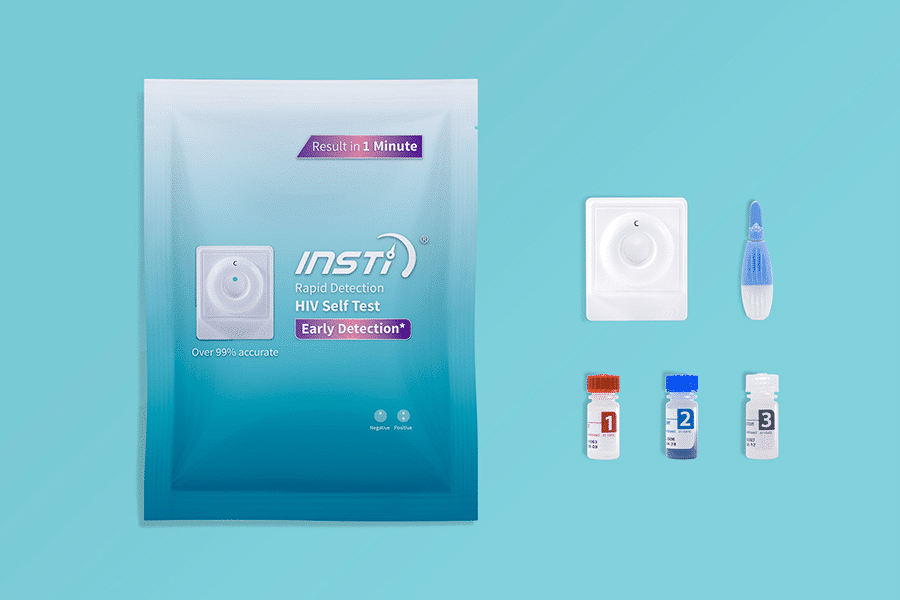
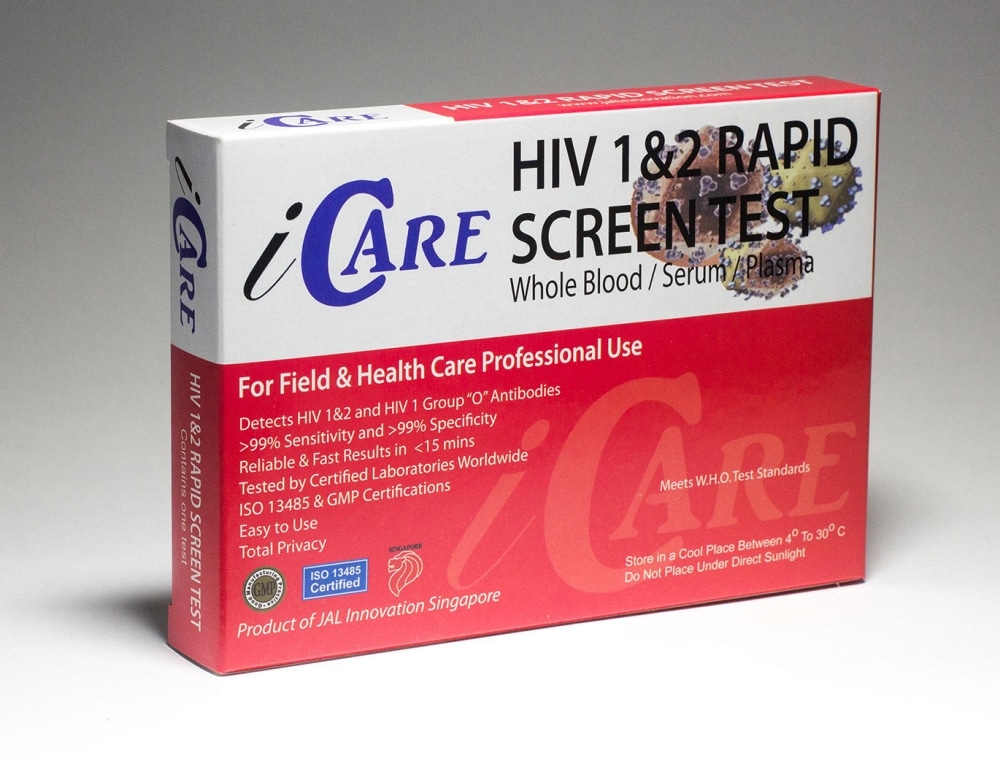
Fingerstick Blood Test Kits
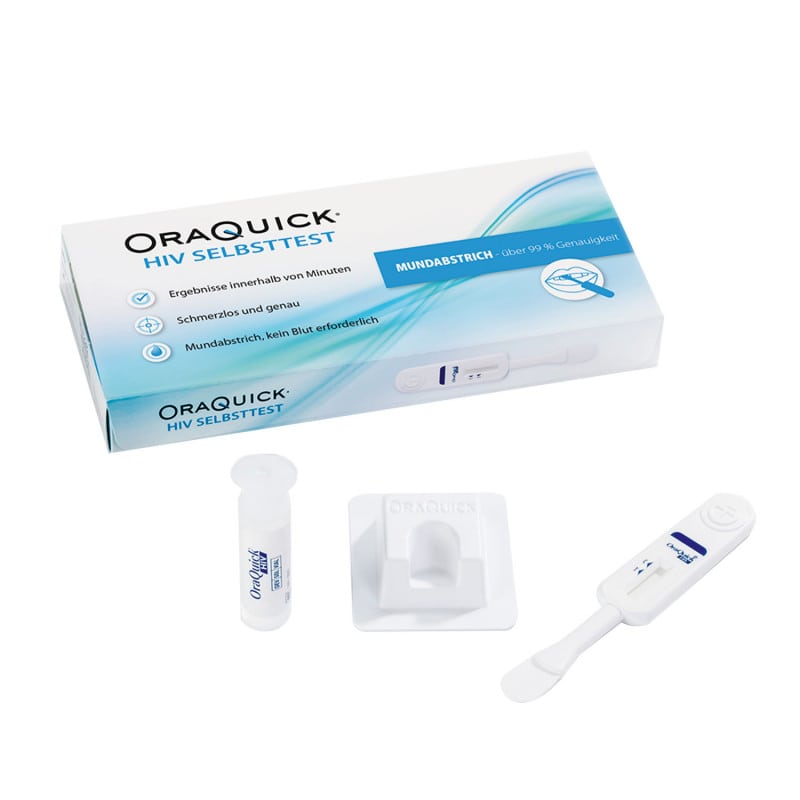
Oral Fluid Test Kits
▶ Uses a small drop of blood from the fingertip
▶ Uses a swab to collect oral fluid along the gum line
▶ Extremely high sensitivity (≥ 99.5%)
▶ Painless and blood-free
▶ High specificity (≥ 99%)
▶ Sensitivity approximately (≥ 99%) and specificity (≥ 98%)
▶ Example brands: INSTI, iCare
▶ Example brand: OraQuick
What is Sensitivity?
Sensitivity refers to the ability of a test kit to correctly detect an HIV infection. In simple terms, if you are truly infected, sensitivity indicates how accurately the test can detect your infection. For example:
☞ If a test kit has a sensitivity of 99.5%, it means that out of 100 people who are truly infected, the test can correctly identify about 99–100 individuals, with a chance of missing only 0.5 cases—which is considered very low.Find private HIV testing near you
* Prices and free services vary by provider. Please check the details before booking.
Find a provider →03
What is Specificity?
Specificity refers to the ability of a test kit to correctly identify individuals who are not infected. In simple terms, if you are not actually infected, specificity indicates how accurately the test can confirm that you are HIV-negative. For example:
☞ If a test kit has a specificity of 99%, it means that out of 100 people who are truly uninfected, the test will correctly identify 99 individuals as negative, with only about 1 individual being incorrectly identified as “positive” despite not being infected.
List of HIV Self-Test Kits Approved by the Thai FDA
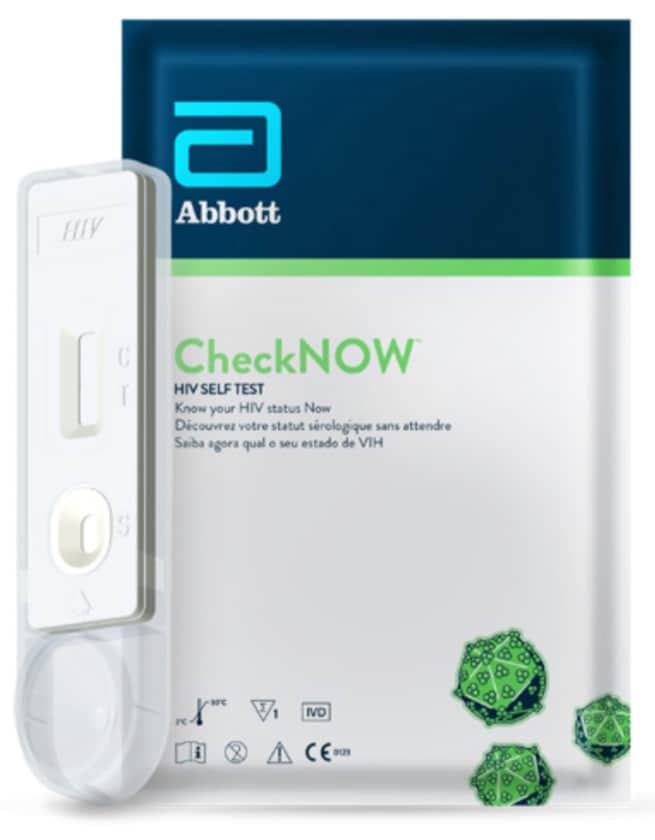
Highlight: Easy-to-read results with very high accuracy
Sensitivity: ≥ 99.5%
Specificity: ≥ 99%
Manufacturer: Abon Biopharm (Hangzhou), China
Importer: DCH Auriga (Thailand) Co., Ltd.
Thai FDA Approval Date: October 25, 2023
*Not available for general retail purchase. Distributed exclusively through healthcare facilities registered with the National Health Security Office (NHSO) in Thailand.
How to Use the CheckNOW® HIV Self-Test
How to Interpret Results from an HIV Self-Test
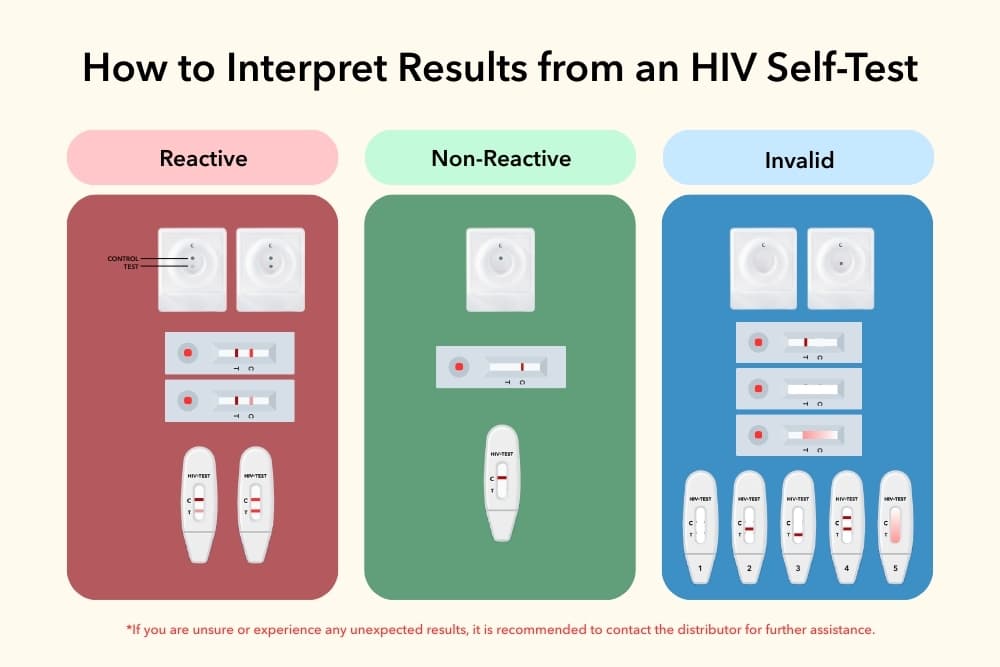
After performing an HIV self-test, reading the result correctly is crucial, as it provides you with an initial understanding of your HIV status. Test results can generally be interpreted into three categories: Reactive, Non-Reactive, and Invalid, as explained below:
1. Reactive
For Test Type 1: Two dots appear—one near the letter "C" and another lower down on the test device.
For Test Types 2 and 3: Two red lines appear—one at the "C" mark and another at the "T" mark, or faint lines may appear at both "C" and "T."
Meaning: There is a high possibility that you may be infected with HIV. However, you must undergo confirmatory testing at a healthcare facility, as there could be other reasons causing a false positive result.
2. Non-Reactive
For Test Type 1: Only a single dot appears near the letter "C."
For Test Types 2 and 3: Only a red line appears at the "C" mark, and no line appears at "T."
Meaning: No HIV infection was detected at the time of testing. However, if you had a risk exposure within the past 3 months (the "window period"), it is recommended to retest at a later date.
3. Invalid
An invalid result occurs when:
For Test Type 1: No dot appears at the "C" position or no dots appear at all.
For Test Types 2 and 3: Errors such as:
No red lines at either the "C" or "T" positions (Image 1)
A red line appears only at "T" or misplaced triangle markings (Images 2 and 4)
A red line appears only at "T" (Image 3)
The background appears abnormal, such as no visible line (Image 5)
What to Do After Receiving Your HIV Self-Test Result
Self-testing for HIV is just the first step in assessing your health status. Regardless of whether your result is negative or reactive, it's important to take appropriate follow-up steps to take care of yourself and prevent the potential transmission of HIV to others.
If Your Result is Negative (Non-Reactive)
If you have had no risk behavior in the past 3 months: You can generally trust your result. It’s a good sign that you are not infected with HIV.
If you have had recent risk behaviors, such as:
Having sex without a condom (without a condom)
Having multiple sexual partners
Sharing needles
Receiving unscreened blood
Even if your result is negative, your body may still be in the "window period", during which antibodies to HIV are not yet detectable.
Therefore, it is recommended to:
Retest after 3 months from the date of possible exposure.
Avoid additional risky behaviors during this period.
The Importance of Retesting: Retesting after the 3-month window ensures the most accurate result, as antibodies would be detectable if an actual infection occurred.
If Your Result is Positive (Reactive)
Seek confirmatory testing at a healthcare facility immediately: A positive result from an HIV self-test is not a definitive diagnosis. You must visit a doctor or clinic to confirm the result through standard diagnostic methods, such as:
Antibody testing (e.g., ELISA, Western blot)
HIV RNA (viral load) testing
Begin antiretroviral therapy (ART) as soon as possible: If confirmed to be HIV positive, treatment should begin immediately with ART (Antiretroviral Therapy), which can:
Suppress the viral load to undetectable levels
Restore and support your immune system
Effectively prevent the transmission of HIV to others (U=U: Undetectable = Untransmittable)
Seek support for your mental and emotional well-being: Learning that you are HIV-positive can lead to stress, anxiety, or depression. Therefore, it's important to:
Speak with experienced doctors, nurses, or mental health professionals
Join support groups or communities of people living with HIV
Take care of both your physical and emotional health so you can continue to live a full, healthy life
Where Can You Buy an HIV Self-Test Kit in Thailand?
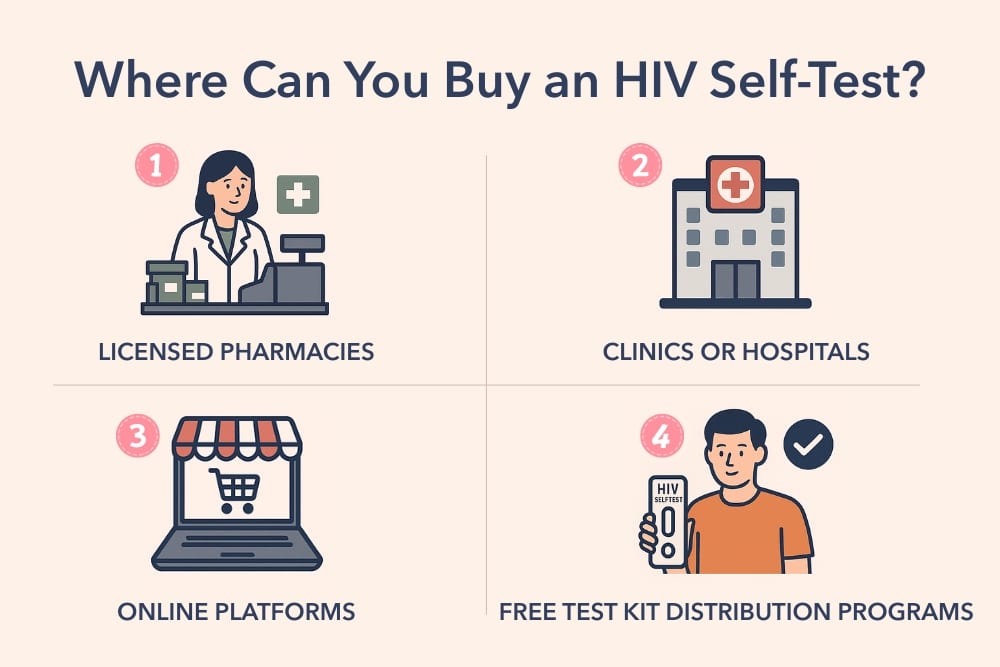
In Thailand today, HIV self-test kits are legally available for purchase by the public. These tests, especially those approved by the Thai Food and Drug Administration (FDA), are regulated for quality and accuracy. Below are the main channels through which you can obtain an HIV self-test kit:
✔ Licensed Pharmacies
These are pharmacies legally authorized to sell medical products.
Pharmacists can provide guidance on choosing and using the test correctly.
Tip: Choose pharmacies where a licensed pharmacist is on duty. Ask whether the test kit is FDA-approved. Examples include branches of Boots, Watsons, Save Drug, or Fascino (select branches only).
✔ Clinics or Hospitals Offering Sexual Health Services
Specialized clinics such as sexual health centers or anonymous testing clinics
Some hospitals offer HIV self-test kits for those seeking preliminary screening
Certain clinics provide "consultation + test kit" services, including help interpreting your result
✔ Certified Online Platforms
Websites or apps that sell health products legally and display the Thai FDA registration number clearly
Choose trusted platforms, such as the manufacturer’s official website, authorized distributors, or well-established platforms with product verification systems
Tip: Buy directly from the manufacturer's or importer’s website, reputable online pharmacies, or certified health clinic websites. On marketplaces like Shopee or Lazada, choose sellers with verified credentials and strong reviews.
✔ Free Test Kit Distribution Programs (For Specific Groups)
These are HIV self-test kits distributed through initiatives by the Ministry of Public Health or NGOs. Examples include:
Voluntary Counseling and Testing Centers (VCCTs)
Community-based organizations focused on HIV prevention
However, these programs may have eligibility criteria—for example, being part of a high-risk group or specific population.
Precautions When Buying an HIV Self-Test Kit
Always choose kits with a Thai FDA (Aor Yor) approval mark
Check the expiration date printed on the packaging
Do not use kits with damaged or suspicious packaging
Carefully read all labels and instructions before testing
If you are unsure about your result, consider retesting at a healthcare facility
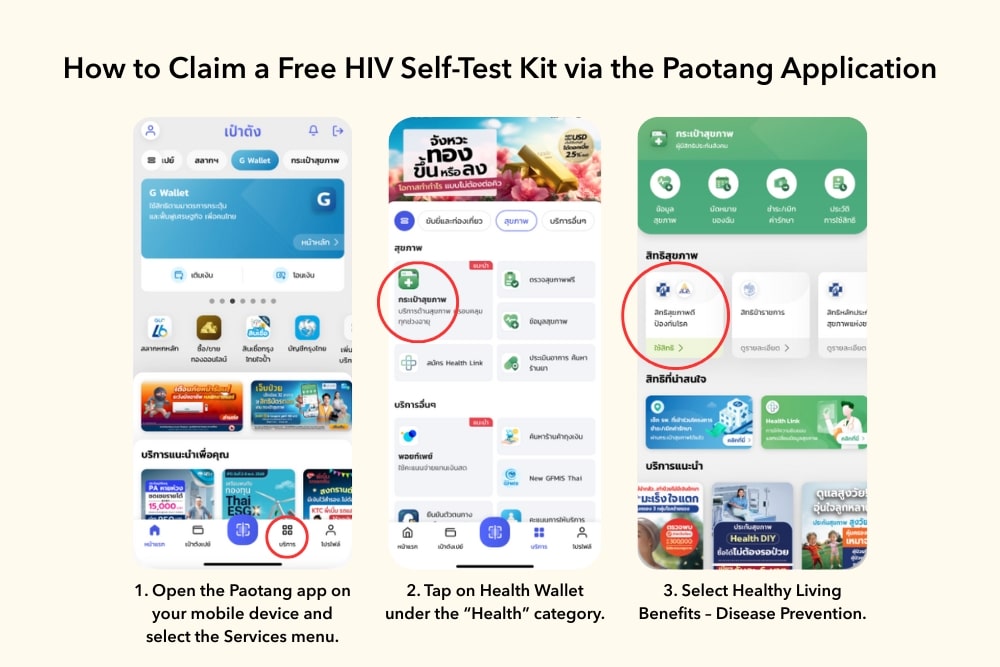
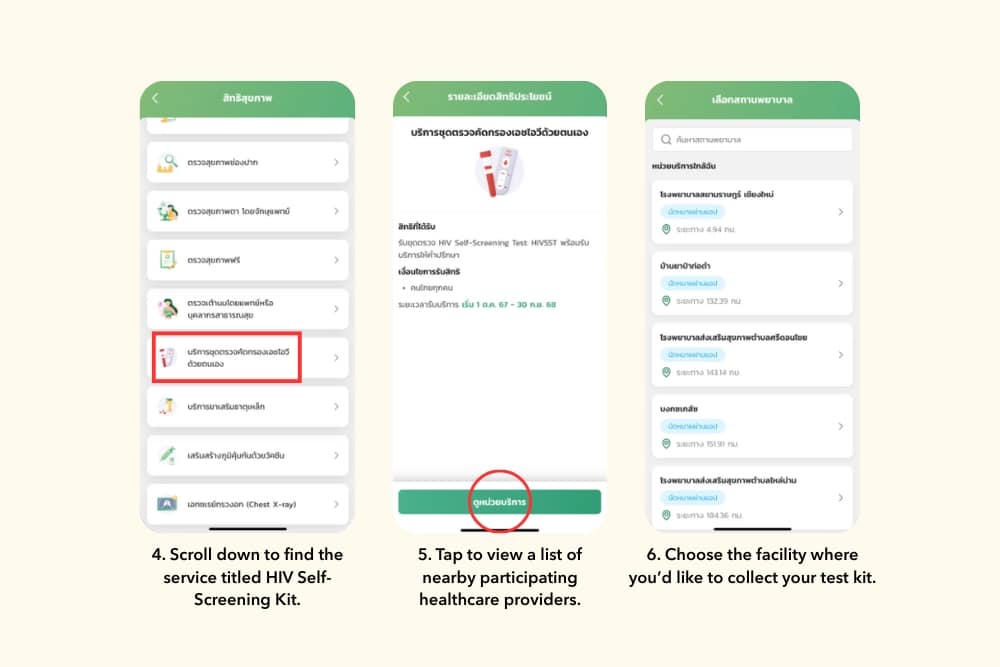
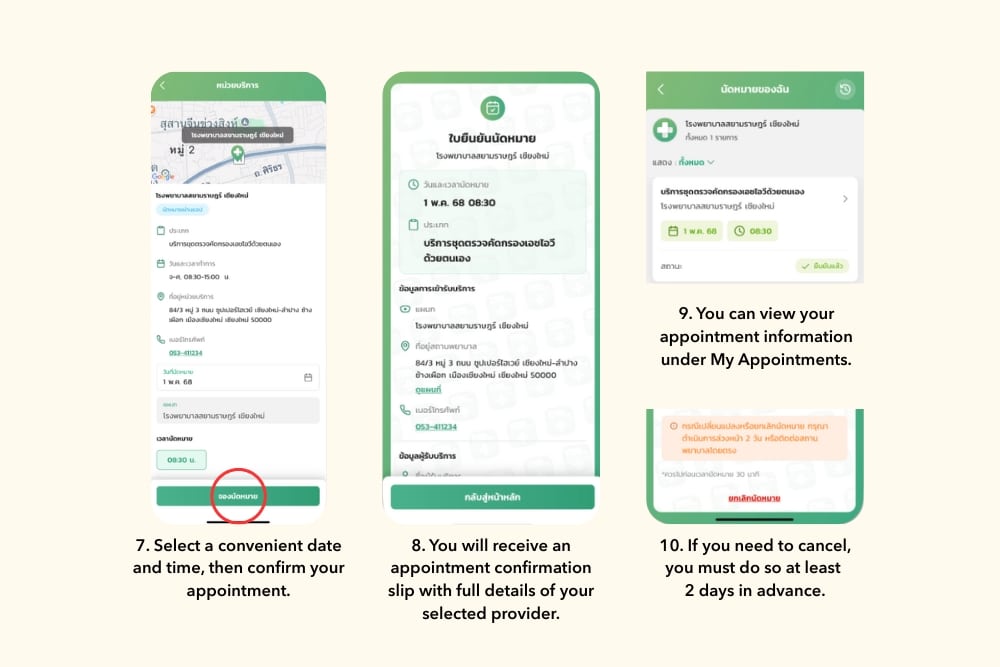
How to Claim a Free HIV Self-Test Kit via the Paotang App
All Thai citizens are eligible to receive a free HIV self-test kit through the Paotang mobile application. You can make an appointment and collect your kit at a participating healthcare facility from now until September 30, 2025. A full list of participating locations can be found [here]. Claiming your kit is simple and can be done in just a few steps:
How to Safely Dispose of an HIV Self-Test Kit
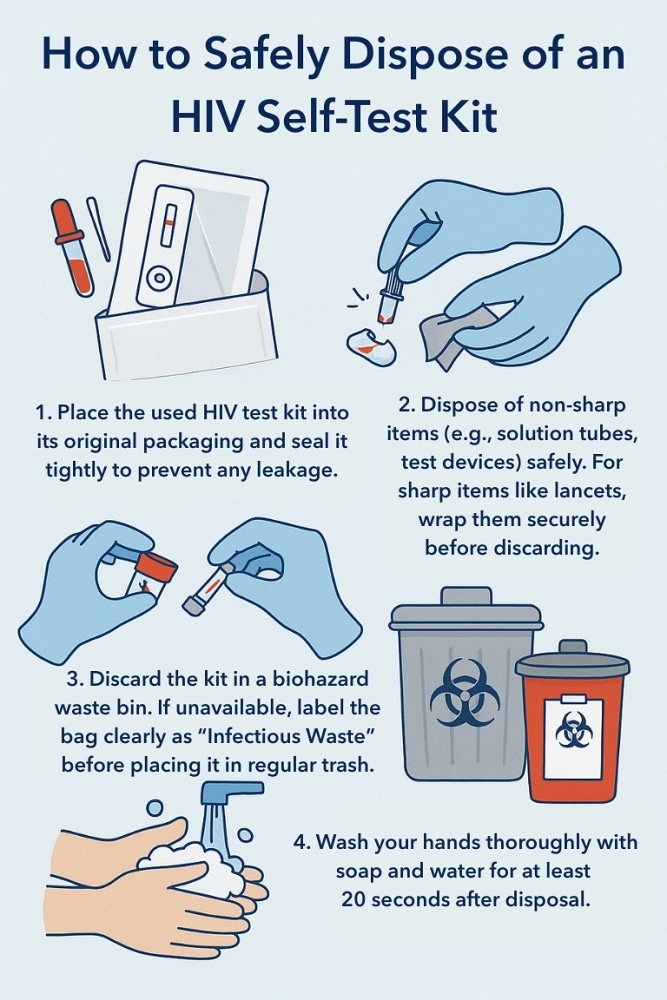
Although HIV self-test kits are designed for convenient home use, several components—such as the lancet, sample collection tube, and test strip—are considered biohazardous or potentially infectious waste after use. Proper disposal is essential to prevent the spread of pathogens and to protect others from accidental harm.
Step-by-Step Guide to Handling Used Test Materials
Keep used test materials out of reach of children and pets: To prevent accidental contact, chewing, or exposure that could lead to injury or infection.
Place all used items back into the original kit packaging: This includes the lancet, sample collection tools, test strip, and any blood-contaminated components. Use the kit’s original bag or container for storage.
Seal the bag securely: To prevent leakage or contamination and reduce the risk of infection to others.
How to Treat and Contain the Used Materials
For non-sharp components (e.g., test cassettes, dropper tubes, solution packets):
Pour dish soap or detergent into the items
Place them into a plastic bag
Tie the bag securely
Clearly label it as "Infectious Waste" or "Biohazard"
For sharp components (e.g., lancets)
Place in a puncture-resistant container (such as a hard plastic bottle or medical sharps container)
Ensure the lid is tight-fitting
Do not fill beyond ¾ full to ensure the lid can be closed securely
Disposal Instructions
Preferred Method: Dispose of the sealed bag in a red biohazard waste bin, if available at your location.
If no red bin is available:
You may use a general waste bin, but the waste must be securely sealed, clearly labeled as "Infectious Waste", and not pose any leakage or puncture risk.
Final Step: Wash Your Hands
After handling and disposing of the used test materials, wash your hands thoroughly with soap and water for at least 20 seconds to ensure safety and prevent possible infection.
How accurate are HIV self-test kits?
ANS: If the kit is approved by the Thai FDA, it has very high sensitivity and specificity (≥ 99%). When used correctly and according to the instructions, the accuracy is comparable to testing at a healthcare facility.
Does a negative result mean I’m definitely not infected?
ANS: If you have had no risk behaviors in the past 3 months, the negative result is highly reliable. However, if you recently had risky exposure, it's recommended to retest after 3 months due to the window period when the virus might not be detectable yet.
What should I do if my result is positive?
ANS: A positive result from a self-test is not a definitive diagnosis. You must go to a healthcare facility for confirmatory testing and, if confirmed, begin appropriate treatment.
How long is the shelf life of an HIV self-test kit?
ANS: HIV test kits typically have a shelf life of 12–24 months from the date of manufacture. Always check the expiration date on the box before use and store it under appropriate conditions.
Is an oral fluid HIV test as accurate as a blood-based test?
ANS: Oral fluid-based tests are generally accurate. However, fingerstick blood tests tend to have slightly higher sensitivity and specificity, especially in detecting very recent infections.
How should I prepare before using an HIV self-test?
ANS:
For blood-based tests: Wash your hands thoroughly
For oral fluid tests: Avoid eating, drinking, smoking, or brushing your teeth for 30 minutes beforehand
Read the instructions carefully and follow each step strictly
Final Thoughts: HIV self-test kits are powerful tools that empower individuals to take control of their own health—conveniently, privately, and safely. Choosing a test kit that is officially approved by the Thai FDA ensures confidence in your results. When used together with regular self-assessments of your HIV risk, self-testing can be an effective step in preventing the spread of HIV. Don’t wait! Test yourself for HIV today—for better health and a more confident future.
Reference:
HIVSST: online system for requesting HIV self-test kit support and counseling
hivsst.ddc.moph.go.th/
HIV self-test kit (HIV Self Test)
oryor.com/media/infoGraphic/media_printing/2144
Thai FDA advises checking the label before buying an HIV self-test kit
fda.moph.go.th/news/hiv
Verified references
Links and relevance to the article’s main topic were reviewed on 13 August 2026. Each source supports only the scope stated in the original document and does not replace personalised medical, legal, or service advice.
 Related Articles