Early HIV Symptoms: What to Look For and How Many Days Until They Appear
Early HIV symptoms can be absent or resemble other illnesses. Plan the right test and repeat date, and seek PEP assessment promptly after a recent exposure.
อ่านภาษาไทย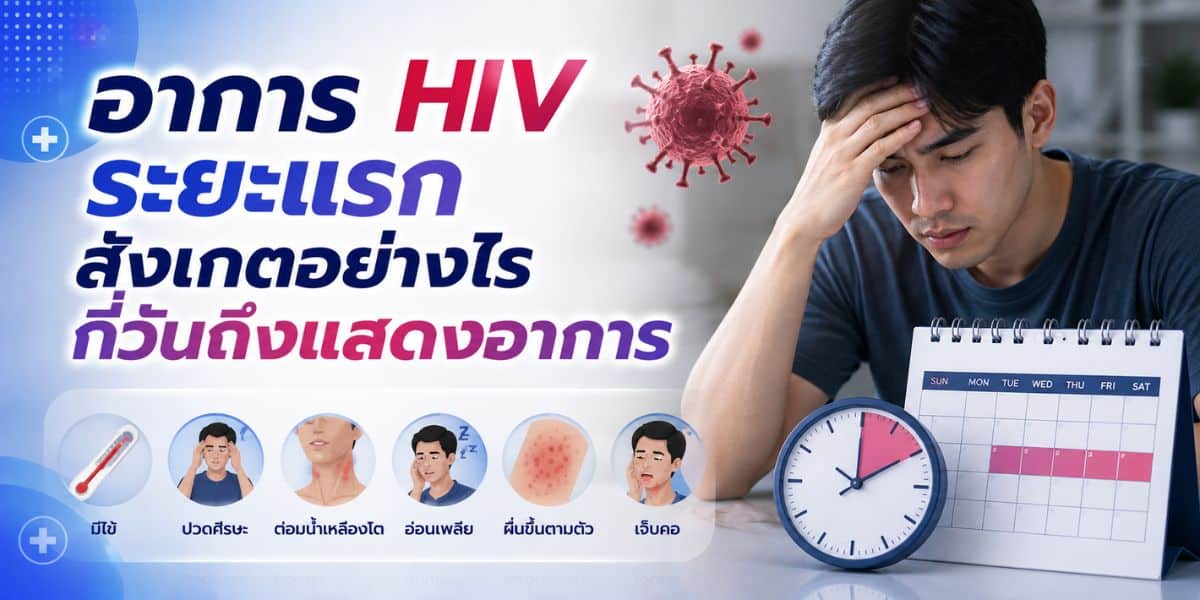
Contents
Can fever the next day prove HIV, or no symptoms rule it out?
Neither can determine HIV status. Acute symptoms, when present, often occur weeks after acquisition and overlap with many illnesses. Discuss the exposure date and test type with a provider instead of using a symptom countdown.
Is a negative HIV test at two weeks conclusive for every method?
No. Test methods have different window periods, and prevention medicines can affect the testing plan. Ask for the test name and repeat date. A reactive screening result also needs the correct confirmation pathway.
Should I wait for flu-like symptoms before asking about PEP?
No. If a possible exposure was within 72 hours, seek urgent PEP assessment immediately. Severe symptoms or a rash after a new medicine also need clinical evaluation, regardless of whether HIV is the cause.
Sources for these answers
Early HIV symptoms are what many people worry about most after a possible exposure. But the truth to understand before reading on is that symptoms alone cannot tell you whether you have HIV, because early HIV symptoms are almost impossible to tell apart from an ordinary case of the flu, and quite a few people have no symptoms at all.
This article will help you understand when early HIV symptoms appear, what they look like, how they differ from the flu, and — most importantly — if you are worried right now, what you should do next.
What Are Early HIV Symptoms?
When HIV enters the body, the virus multiplies rapidly during the first few weeks. The immune system responds with body-wide inflammation, producing a group of symptoms known as Acute Retroviral Syndrome (ARS), or acute HIV infection.
Key points people often misunderstand:
- Symptoms usually appear 2–4 weeks after exposure, not the very next day.
- Some people have no symptoms at all during this stage.
- Symptoms often go away on their own within 1–3 weeks, leading many people to think they are "fine, nothing to worry about" even though the virus is still there.
- This is the stage when the amount of virus in the blood is very high, making it the easiest time to transmit HIV to others.
If you would like to understand the basics of what HIV is and how it differs from AIDS, we recommend also reading What Is HIV and How HIV and AIDS Differ.
The 3 Stages of HIV Infection: A Timeline
Acute, chronic and advanced HIV describe clinical stages, not a fixed countdown for every person. Effective ART can prevent progression and support recovery. Symptoms, their absence and an undated table cannot identify a person’s stage or transmission potential.
The 10 Most Common Early HIV Symptoms
Possible acute symptoms include fever, rash, sore throat, swollen lymph nodes, fatigue and muscle aches. Some people have no symptoms. These signs are not ranked here as a validated diagnostic score and cannot distinguish HIV from other illnesses. Testing and an exposure-based assessment are needed.
Do HIV Symptoms Differ Between Men and Women?
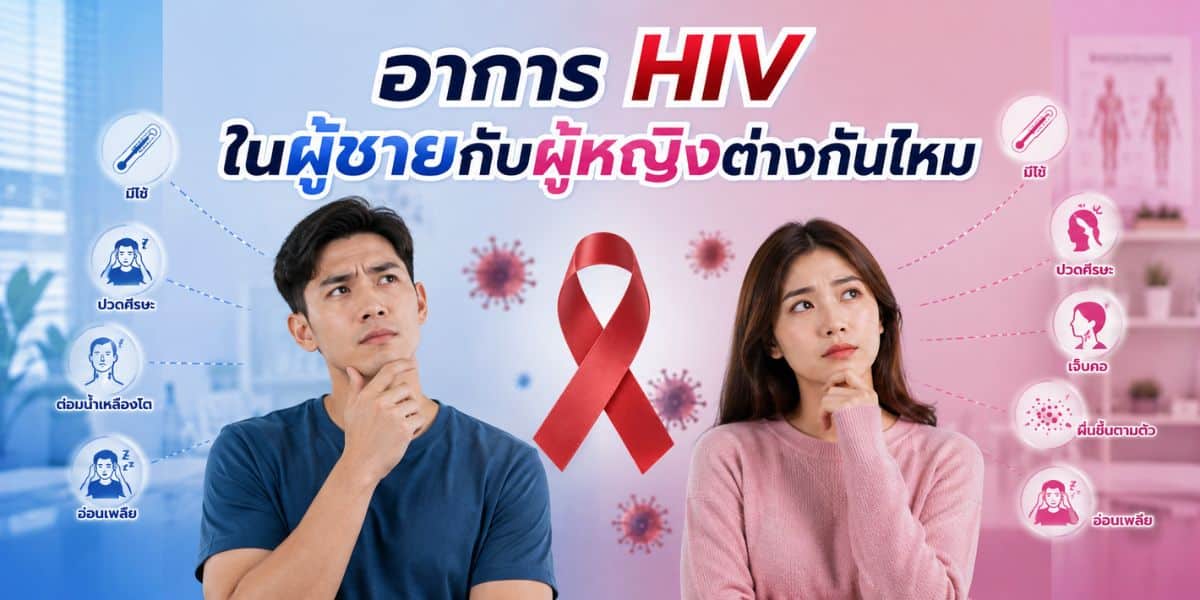
The answer is that the acute-stage symptoms are almost identical. Acute HIV symptoms are broadly similar across sexes, although individual experiences vary.
Differences tend to show up more in the long term. For example, women living with HIV may have recurrent vaginal yeast infections, irregular periods, or a higher risk of more severe HPV infection. Men may develop sores in the genital area from sexually transmitted infections.
What matters more than sex is your risk history, not the specific symptoms.
Is This HIV or Just a Cold?
This is the hardest question to answer, and the honest response is that you cannot tell from symptoms alone. That said, some signs should make you think more seriously about getting tested.
| Feature | Common cold | Suspected acute HIV |
|---|---|---|
| Risk history | None | Sex without a condom or shared needles in the previous 2–4 weeks |
| Runny nose / cough | Often prominent | Often not prominent |
| Rash | Uncommon | Common, often not itchy |
| Lymph nodes | May swell only in the neck | Swell in several places at once |
| Duration | 3–7 days | 1–3 weeks |
The safest conclusion: if you have a risk history, then whether or not you have symptoms, you should get tested — there is no need to wait for symptoms to appear.
You Have These Symptoms — What Should You Do Next?
1. Assess whether you are actually at risk
HIV is transmitted through only a few routes: blood, semen (including pre-seminal fluid), rectal fluids, vaginal fluids, and breast milk. It is not spread by shaking hands, hugging, sharing a restroom, or eating together. Read more at How Is HIV Transmitted?
2. Count the days since the exposure
A test result is only reliable once the window period for that particular test has passed, and this varies by method, ranging from 10 to 90 days. Full details are at How Long Is the HIV Window Period, and When Can It Be Detected?
3. If the exposure was within the last 72 hours, see a doctor right away
PEP (emergency post-exposure antiretroviral medication) can significantly lower the chance of infection, but it must be started within 72 hours — and the sooner, the better. This is the one situation where you should not wait to read articles or watch for symptoms.
4. Get tested
Every Thai citizen has the right to free HIV testing twice a year at public hospitals nationwide. There are also HIV self-test kits approved by Thailand's Food and Drug Administration (FDA) for people who are not yet ready to visit a health facility.
If the Result Is Positive, Is Life Over?
No — and this is not just reassurance, it is a medical fact.
Today, people living with HIV who take antiretroviral therapy consistently until the virus is suppressed to undetectable levels cannot transmit HIV to others through sex. This is the principle known as U=U (Undetectable = Untransmittable), and they can expect a life span close to that of the general population.
Read more at Living With HIV and HIV Treatment Guidelines. If you are feeling emotionally overwhelmed, the article HIV and Mental Health may help.
How to Prevent HIV
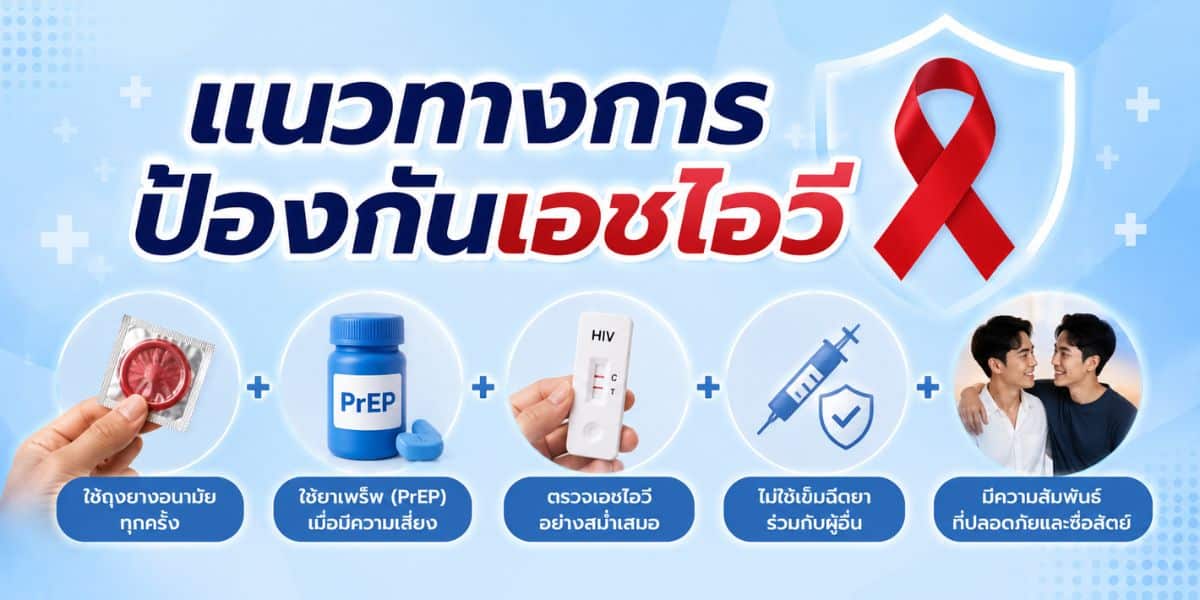
- Condoms — protect against both HIV and other sexually transmitted infections (STIs). Read how to choose the right condom size.
- PrEP — pre-exposure prophylaxis for people at ongoing risk; it is now available free of charge in Thailand.
- Test regularly — if you have multiple partners, testing every 3–6 months is recommended.
- Do not share needles.
Frequently Asked Questions About Early HIV Symptoms
How many days after HIV exposure do symptoms appear?
Usually 2–4 weeks after exposure, though some people may notice them as early as 1 week or as late as 6 weeks — and some people have no symptoms at all.
Does having no symptoms mean I am not infected?
No. Having no symptoms does not mean you do not have HIV. The only way to know for sure is a blood test.
The symptoms went away — does that mean the infection is gone?
No. Acute-stage symptoms resolve on their own within 1–3 weeks, but the virus remains in the body and enters the clinical latency stage.
I tested negative one month after the exposure — can I trust that?
It depends on the test. For a laboratory antigen/antibody test, a negative result at 45 days is highly reliable, but an antibody-only test may require waiting up to 90 days. Retesting is recommended for peace of mind.
How severe are early HIV symptoms?
For most people they are mild and resolve on their own, and are often mistaken for an ordinary case of the flu — which is why many people do not realize they have HIV.
Summary
Early HIV symptoms appear 2–4 weeks after exposure, resemble the flu, and go away on their own — which means they cannot be used as a diagnostic tool. Only one thing gives you a real answer: a blood test.
If you have read this far because you are worried, remember that finding out early is always an advantage. Whichever way the result comes back, a negative result lets you plan your prevention going forward, while a positive result lets you start treatment early and live a long, healthy life.
Book a free HIV test anywhere in Thailand at Love2Test.org
Verified references
Links and relevance to the article’s main topic were reviewed on 13 August 2026. Each source supports only the scope stated in the original document and does not replace personalised medical, legal, or service advice.
- WHO: HIV and AIDS fact sheet Accessed 13 August 2026