What Is an Anonymous Clinic? Where to Get a Confidential HIV Test in Thailand
Anonymous clinics use a code instead of your real name, require no national ID card, and do not link your results to your national ID number, making them…
อ่านภาษาไทย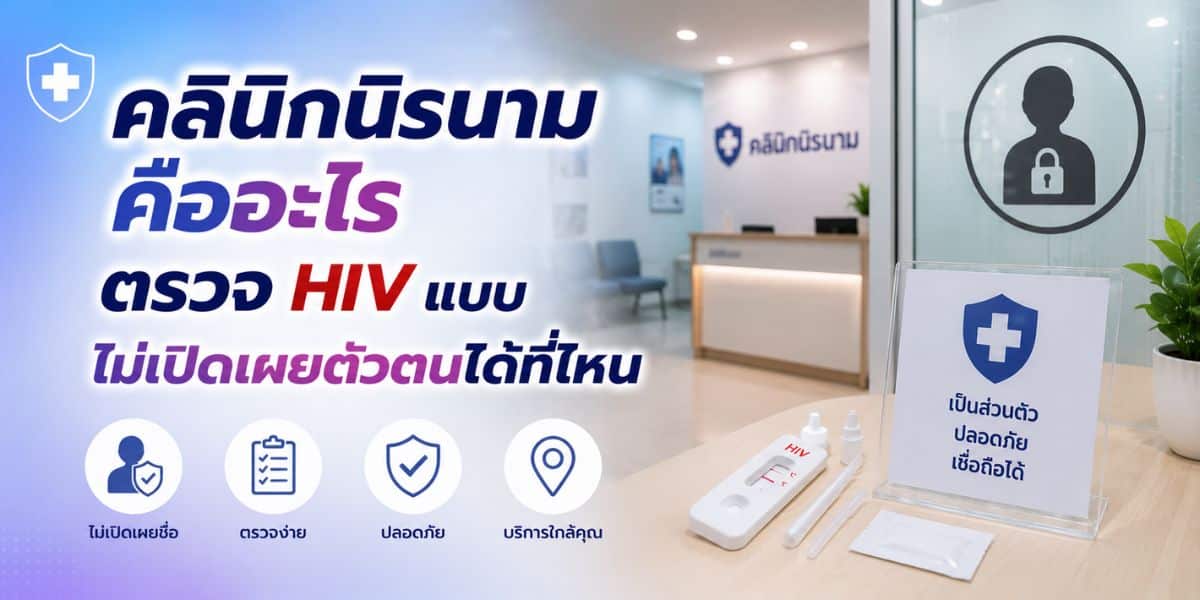
Contents
The number one reason Thai people don't get tested for HIV isn't money and isn't distance. It's the fear that someone will find out.
Fear that your name will end up in a system, fear of running into someone you know in the waiting room, fear that your workplace will learn, fear that your family will see the result slip. These fears push many people to put off testing for years, even though finding out early is the one thing that can change the outcome.
Anonymous clinics were created specifically to solve this problem. This article explains how they work, how anonymous they really are, how they differ from an ordinary clinic, and what limitations you should know before you go.
What is an anonymous clinic?
An anonymous clinic is an HIV testing and counseling service that does not record your real name, using a personal code instead.
The idea comes from a clear public health lesson about privacy and stigma: when people fear stigma more than they fear the disease, they won't come in for testing, and when they don't get tested, the infection keeps spreading without anyone knowing.
In Thailand this kind of service has operated for decades. The best known is the Anonymous Clinic at the Thai Red Cross AIDS Research Centre in Bangkok, which became the model for similar services that later opened in other provinces.
Three core principles
- No national ID card required — you use a code or number the clinic issues to you instead.
- Your result is tied to a code, not to your identity — you have to keep the code yourself, because it's the only thing that lets you collect your result.
- Your identity is kept separate — at a genuinely anonymous testing service, the test record is not linked to your national ID. Data-handling practices vary between providers, so you can ask the facility how it stores and shares your information.
How anonymous is it really?
This is an important question, and the honest answer is that it is anonymous in a way that genuinely matters, but it isn't perfectly invisible.
| Concern | The reality |
|---|---|
| Do I have to give my real name? | Not with an anonymous service — you use a code instead. |
| Will my result go into the central health system? | No. With an anonymous service the result isn't tied to your national ID number. |
| Can my employer ask to see the result? | Generally no. Your result is confidential health information, and sharing it without your consent would breach that confidentiality. You can ask a provider about its disclosure policy. |
| Can an insurance company access it? | Not directly from the clinic. If you have questions about how insurers handle health information, ask the provider about its data-sharing policy. |
| Will my family find out? | No, unless you tell them yourself. |
| Are there security cameras in the clinic? | There are, as in any standard building, but they aren't linked to your test data. |
Limitations you need to understand
These are the things people often don't know in advance, and that cause complications later.
- If your result is positive and you want to start treatment using your health coverage, you'll need to reveal your identity at that stage, because claiming antiretroviral medication under your coverage requires your national ID number. Anonymity applies to the testing stage, but doesn't automatically extend to long-term treatment.
- If you lose your code, you may not be able to collect your result, and some clinics can't recover it at all, because there's no other information linked to it.
- Some clinics charge a fee, because they don't bill through the Universal Coverage (Gold Card) scheme, which requires your real name.
- Not every province has one. Full-service clinics tend to be concentrated in major cities.
How is it different from an ordinary clinic?
| Aspect | Anonymous clinic | General public hospital |
|---|---|---|
| Real name required | No | Yes |
| Cost | Free or a service fee, depending on the clinic | Free under your coverage, twice a year |
| Wait time | Usually faster | Can be a long wait |
| Setting | Designed for privacy | Shared space with general patients |
| Staff | Specially trained in counseling | Varies by department |
| Link to treatment | Requires a referral and revealing your identity | Continuous care in one place |
| Other services on site | Often includes PrEP and full STI testing | May require going to another department |
How the service works
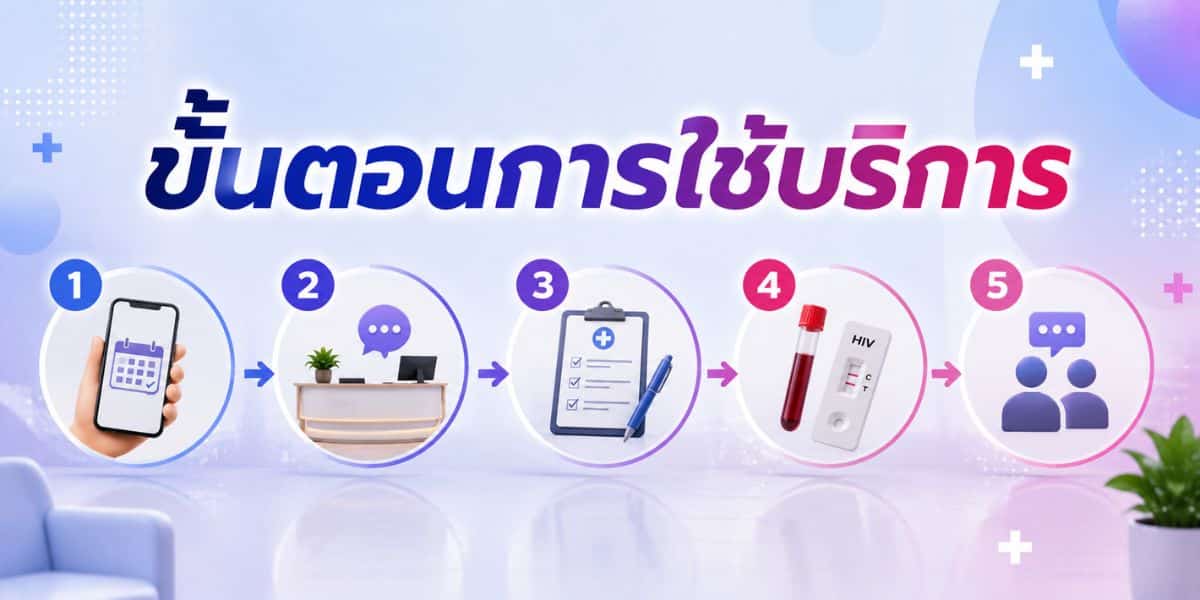
1. Register with a code
When you arrive, staff will issue you a code or number. Some clinics may ask for basic, non-identifying details such as your age range and gender, used for statistics only.
Keep this code safe, and take a photo of it on your phone too, because it's the only thing you'll use to verify yourself and collect your result.
2. Pre-test counseling
This is the clearest difference at an anonymous clinic. A counselor will talk with you for about 10 to 20 minutes to assess your risk, choose the right test for your situation, and help you prepare for the result.
The questions aren't meant to judge you. They're there to help pick the right test. For example, if your risk involved anal sex, a urine test alone won't detect gonorrhea located there.
3. Blood test
Blood is drawn from your arm or a fingertip, depending on the method chosen. For details on each testing method and how long you need to wait, see The HIV window period.
4. Get your result and post-test counseling
Many clinics have your result the same day. When you receive it, its meaning is clearly explained, which matters a great deal, because "Non-reactive" and "Reactive" mean very different things. Read more at What is an Anti-HIV test, and how do you read the result?
Who is an anonymous clinic right for?
This kind of service is an especially good fit for:
- People who work in organizations where confidentiality is a concern — civil servants, military personnel, police, and healthcare workers.
- Young people and students who aren't ready for their parents to know.
- LGBTQ+ people who aren't out to their family or workplace.
- Sex workers.
- People living in small towns where everyone knows one another.
- People who have been judged by healthcare staff before.
- Couples who want to test together before deciding on prevention.
Who might be better suited to another option?
An anonymous clinic isn't always the best choice for everyone.
- People who already know they want to start treatment — going directly to a public hospital offers more continuous care.
- People who want to use their entitlement to two free tests a year — this benefit requires a national ID card. See Free HIV services in Thailand.
- People who aren't ready to leave home at all — a self-test kit may be an easier first step.
- People in provinces without an anonymous service — community clinics run by civil society organizations often offer a similar level of privacy.
Your rights under the law
Even if you don't use an anonymous service, you already have rights that are protected. Many people don't realize this and end up allowing their rights to be violated unnecessarily.
- Your test result is personal health information — it is treated as confidential and should not be disclosed without your consent. You can ask a provider how it protects and shares your information.
- Requiring an HIV test as a condition of employment should never happen — and refusing to hire someone because of their result is discrimination.
- You have the right to refuse a test — HIV testing always requires consent.
- You have the right to counseling — both before and after the test, not just being handed a result slip and sent on your way.
- People living with HIV have the right to free treatment under their coverage.
Read more at HIV and human rights.
What to prepare and what to ask
Bring with you
- Information on when the risk exposure happened (the exact number of days is even better).
- A list of any medications you're taking, especially if you're on PrEP or PEP.
- A phone you can use to take a photo of your code and keep it.
- Enough spare time — don't rush.
Questions to ask the staff
- "Which test kit do you use?" — this directly affects how a negative result is interpreted.
- "Does a negative result today already rule out the risk from that day?"
- "If the result is positive, what happens next, and at what point do I have to reveal my identity?"
- "Do you also test for syphilis and other infections here?"
- "Do you offer PrEP here if my result is negative?"
- "What is the total cost?"
What should you do if the result is positive?
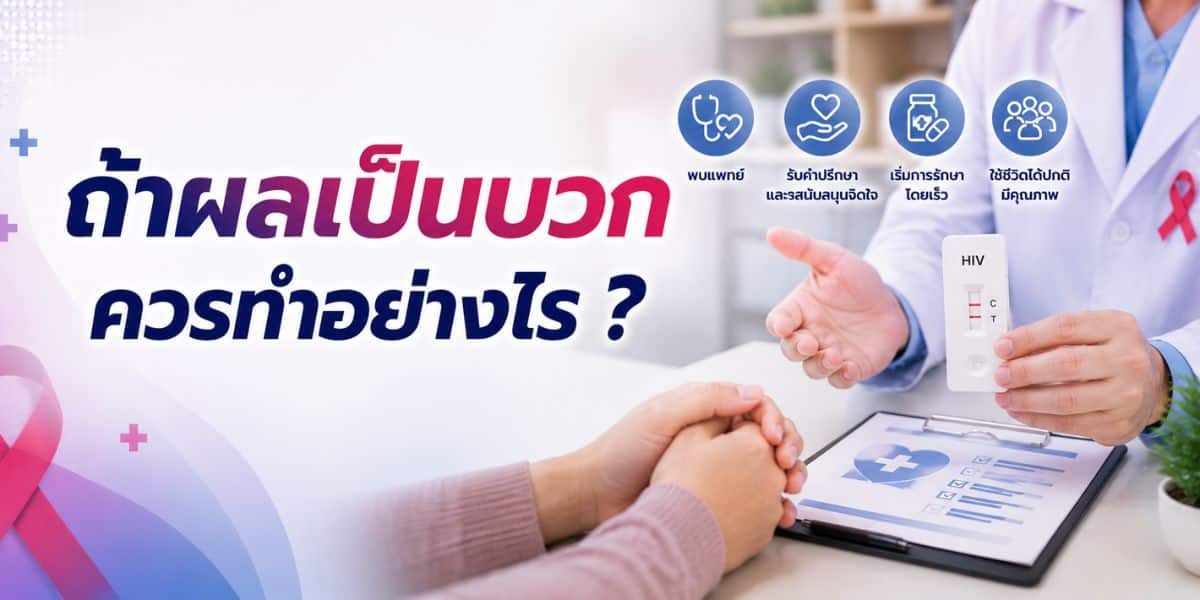
This is the part people worry about most and have the least information about. The truth is you will not have to navigate the next steps alone.
Step 1 — Receive your result with a counselor
An anonymous clinic won't just hand you a result slip and be done. A counselor sits down with you, explains what the result means, answers your questions, and gives you time to steady yourself. During this time there's no pressure to make any decision on the spot.
Step 2 — Decide about entering treatment
This is the point where anonymity ends, because claiming antiretroviral medication under your coverage requires your national ID number. You have options:
- Use your state health coverage — this requires revealing your identity, but you get medication and follow-up testing free of charge, ongoing. See The cost of testing and treatment.
- Pay for treatment yourself — this preserves more privacy, but comes with ongoing costs.
- Choose a healthcare facility outside your local area — this lowers the chance of running into someone you know.
Step 3 — A guided referral
Most clinics have a referral system that helps coordinate the next steps. Some have a staff member accompany you on the first day, which greatly eases the anxiety. Don't hesitate to ask for this help, because it's already part of the team's job.
Step 4 — Start medication as soon as possible
The current guideline is to start antiretroviral therapy as soon as the result is confirmed, without waiting for your CD4 count to drop. Read what you should know before starting at HIV antiretroviral medication: how to take it and what side effects to expect.
Why does Thailand have this kind of service?
Anonymous clinics didn't come from simple kindness. They came from a lesson in epidemiology.
At the height of the epidemic, what became clear was that the people at highest risk were often the ones least able to access services, not because they didn't know they should get tested, but because walking in to test carried too high a social cost — the risk of being fired, cut off by family, or gossiped about in the community.
When services were designed to remove that social cost, the result was that people who had previously been out of reach started coming in to test. That meant earlier diagnosis, earlier treatment, and less onward transmission.
In other words, privacy isn't a luxury; it's a public health tool, and that's why this approach is used in many countries around the world.
Frequently asked questions
Does an anonymous clinic require a national ID card?
Not for anonymous testing. But if your result is positive and you want to start treatment using your health coverage, you'll need to reveal your identity at that stage.
Is testing at an anonymous clinic free?
It depends on the clinic and on whatever programs are running at the time. Some are free, some charge a service fee, so it's best to ask before you go.
Will my result go into the state health system?
At a genuinely anonymous testing service, the test record is not linked to your national ID. Data-handling practices vary between providers, so you can ask the facility how it stores and shares your information.
What should I do if I lose my code?
Contact the clinic right away. Some have a backup way to verify you, but others can't recover it. The best safeguard is to take a photo of it on day one.
Can people under 18 use the service?
Age and consent requirements vary by service. It's best to contact the clinic confidentially before visiting to ask what applies to you.
Are there anonymous clinics outside the major cities?
Full-service clinics tend to be in big cities, but many provinces have community clinics that offer a similarly high level of privacy. See an example at HIV testing in Chiang Mai.
Is an anonymous test as reliable as one at a hospital?
A licensed service that follows the national testing algorithm can provide reliable testing; you can ask which assay and follow-up process it uses. The main difference from a hospital is how the recipient's information is recorded.
Summary
Anonymous clinics exist because the public health system accepts one truth: if fear of stigma keeps people from getting tested, having the best service in the world is useless.
For anyone who has hesitated for a long time out of fear of being found out, this is an option designed specifically for you. The one limitation worth knowing in advance is that anonymity covers the testing stage, while long-term treatment will eventually mean entering the regular system, a step where staff are always there to walk alongside you.
Read on: How much does an HIV test cost? · The HIV window period · Early symptoms of HIV
Find a friendly clinic near you at Love2Test.org
Verified references
Links and relevance to the article’s main topic were reviewed on 13 August 2026. Each source supports only the scope stated in the original document and does not replace personalised medical, legal, or service advice.
- Love2Test: Clinic and appointment directory Accessed 13 August 2026
- กรมควบคุมโรค: แนวทางตรวจ HIV/ซิฟิลิส/HBV/HCV พ.ศ. 2568 Accessed 13 August 2026
- CDC: Getting Tested for HIV Accessed 13 August 2026