Love Foundation × Grindr: Free HIV Self-Tests in Thailand
Love Foundation, Grindr for Equality and CHC are expanding discreet access to free HIV self-tests across 73 Thai provinces, with counselling and referral support.
อ่านภาษาไทย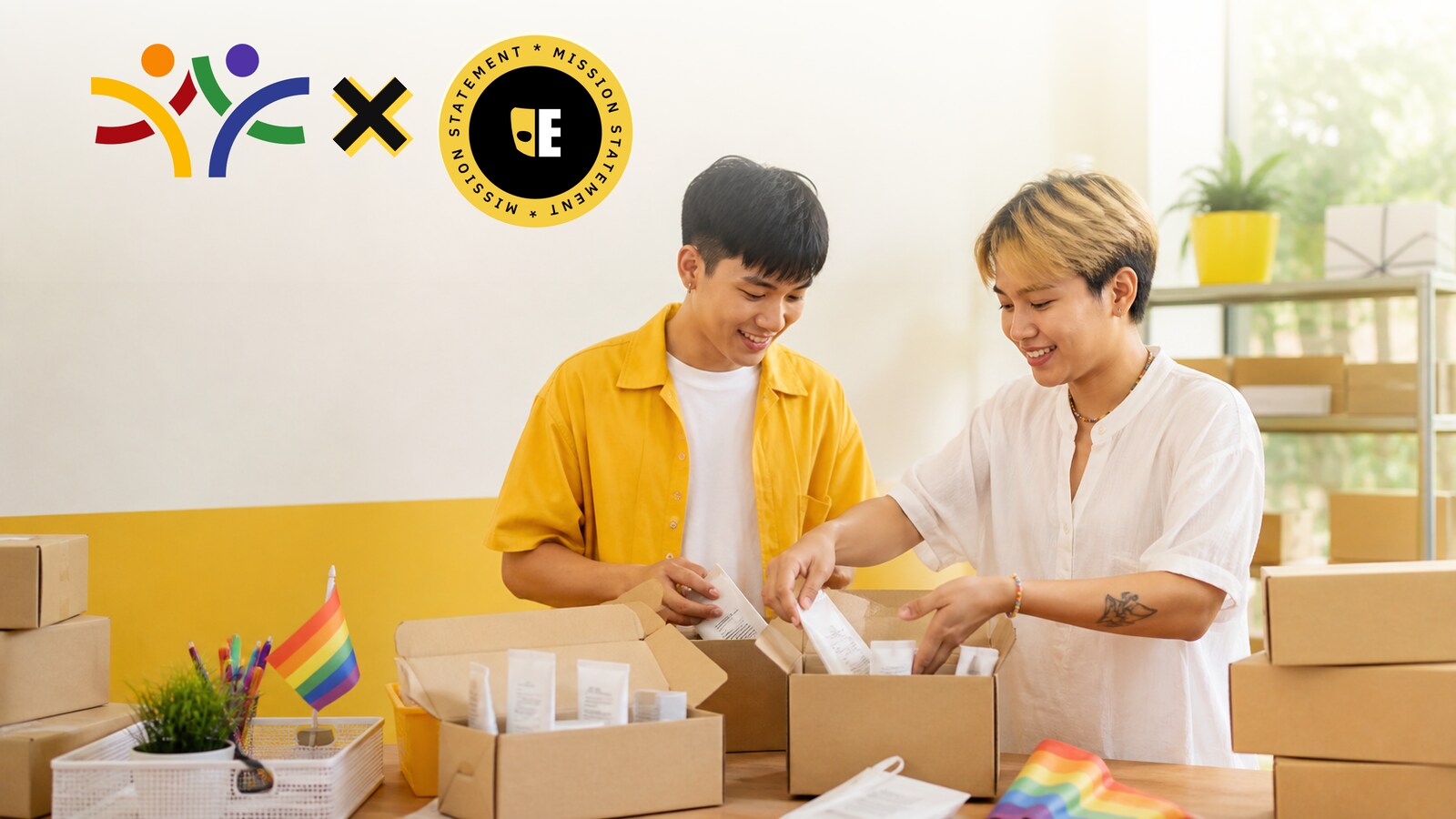
Contents
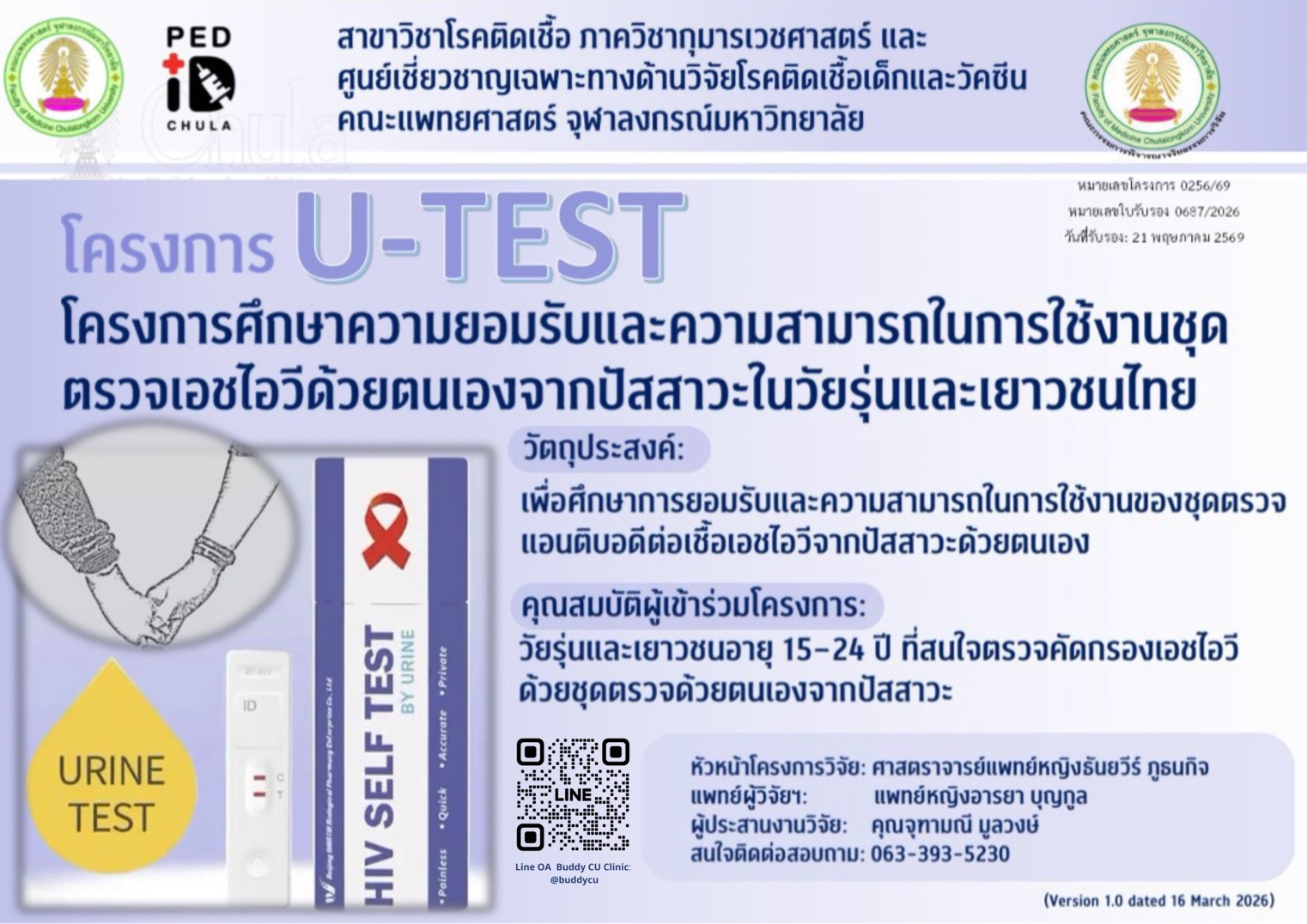
Love Foundation × Grindr for Equality brings together the reach of a global digital platform and community-led health services in Thailand. Through the campaign, eligible people can request an HIV self-test, condoms and lubricant online without travelling long distances. The Community Health Committee (CHC) prepares and dispatches discreet parcels and provides a route to counselling, confirmatory testing and other services when support is needed.
The purpose is broader than mailing supplies. The campaign addresses barriers that can delay HIV testing: privacy concerns, distance, travel costs, inconvenient service hours and fear of judgement. Preliminary program reporting indicates that requests reached 73 provinces and that approximately 65% of assessment respondents had never tested for HIV before. That finding suggests that a trusted digital doorway, connected to a community team, can reach people who may not yet use conventional facility-based testing.
Key points about the partnership
- People who meet current program criteria can request an HIV self-test and prevention supplies online, delivered in packaging that does not identify the contents.
- Grindr for Equality connects users from an in-app pathway to a Thai partner service. Orders and care are handled by the service organization rather than being processed as an HIV test inside the Grindr app.
- Love Foundation and Love2Test connect digital access with health information, clinics and referral pathways.
- CHC reviews requests, packs and dispatches parcels, answers questions and helps arrange confirmatory testing when a screening result is reactive.
- An HIV self-test is a screening tool, not a diagnosis. A reactive result requires confirmatory testing through a qualified service.
Why a digital pathway can expand access
The presence of a test kit or clinic does not automatically make testing accessible. Someone in a smaller district may need to travel for hours. Another person may be unable to take time away from work, live in a community where clinic visits feel highly visible or worry that a provider will judge their identity or sexual life. Requesting a service from a phone and receiving a sealed parcel at a chosen address can remove several of those steps.
Grindr for Equality (G4E) has operated as Grindr’s formal social-impact initiative since 2015. It uses in-app communication, technology and partnerships with local organizations to connect users with resources that fit each country’s context. Grindr reports approximately 15 million average monthly active users across 190 countries and territories. This reach can place trusted health information in a digital space that people already use, rather than expecting everyone to find services independently.
International experience shows the potential of this model. In the United States, Together TakeMeHome distributed more than one million HIV self-tests; nearly half were ordered through Grindr’s in-app route and one in four went to a first-time tester. Program figures from different countries should not be compared as if the populations and methods were identical. The transferable lesson is that a platform can become an effective health doorway when a trusted community organization remains responsible for service delivery and follow-up.
Who is who, and what does each partner contribute?
Four connected parts make this pathway work. Their roles are different, but together they take a person from seeing trusted information online to requesting a test, receiving a parcel and reaching counselling or clinical care when needed.
Grindr for Equality (G4E)
Grindr’s social-impact initiative uses in-app communication, technology and local partnerships to connect users with relevant resources. In this campaign, G4E helps users discover the Thai service pathway; it does not perform tests, make diagnoses or dispatch the kits.
Love Foundation
A Thai foundation working across HIV, sexual health, diversity and community rights. It develops non-stigmatizing information, coordinates partnerships and connects digital access with health services that can provide continuing care.
Love2Test
A sexual-health information and service network that helps people find clinics, arrange HIV and STI testing and explore prevention services such as PrEP and PEP. It provides a bridge from self-testing to facility-based care when that next step is needed.
CHC
The Community Health Committee is the community team handling the operational pathway: reviewing requests, preparing supplies, packing and dispatching parcels, answering questions about the kit and helping arrange confirmatory testing and referral.
In short: Grindr for Equality creates visibility, Love Foundation coordinates the access model, Love2Test connects information with care, and CHC manages delivery and follow-up support.
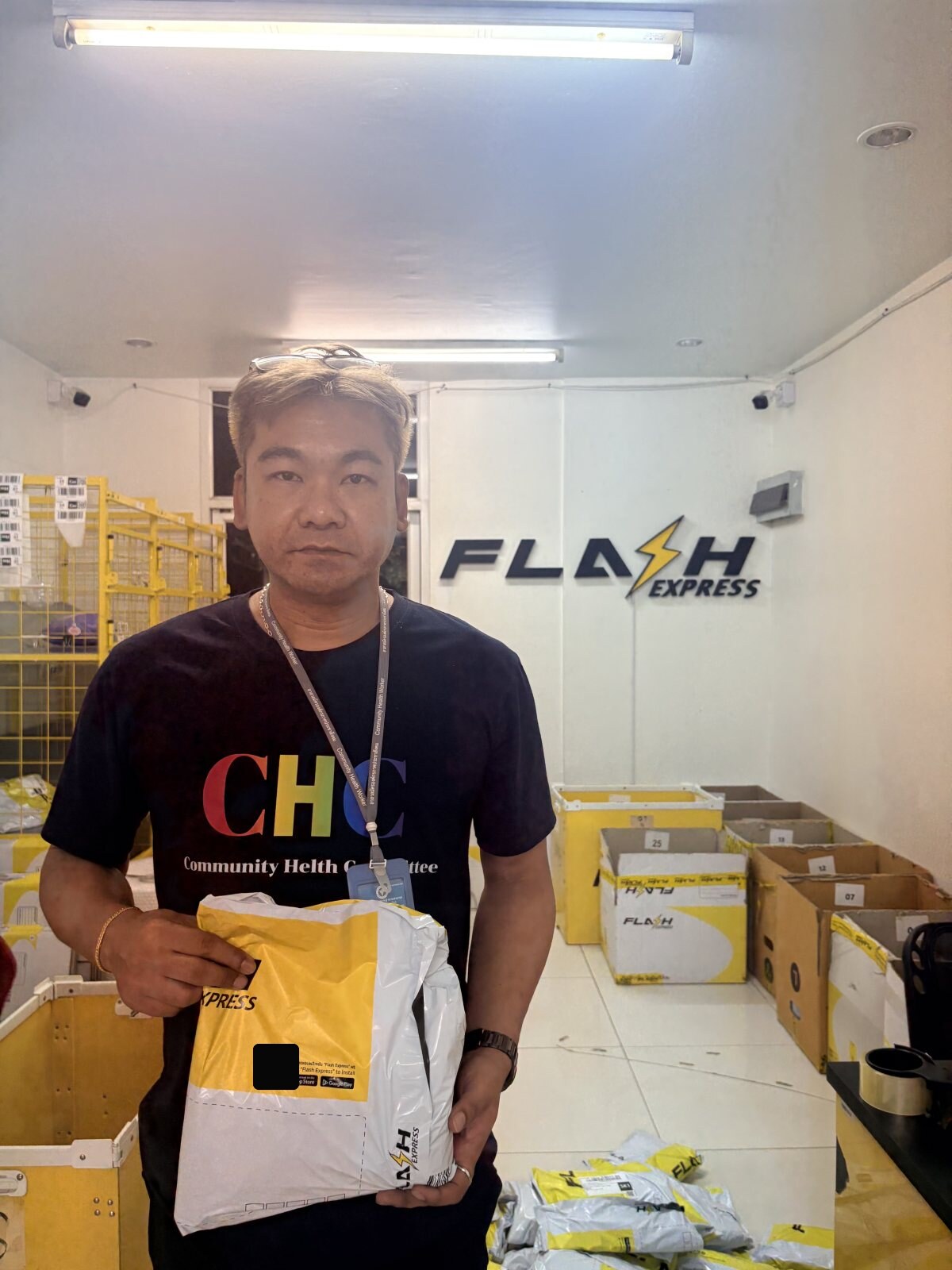 A CHC team member brings a prepared parcel into the delivery process.
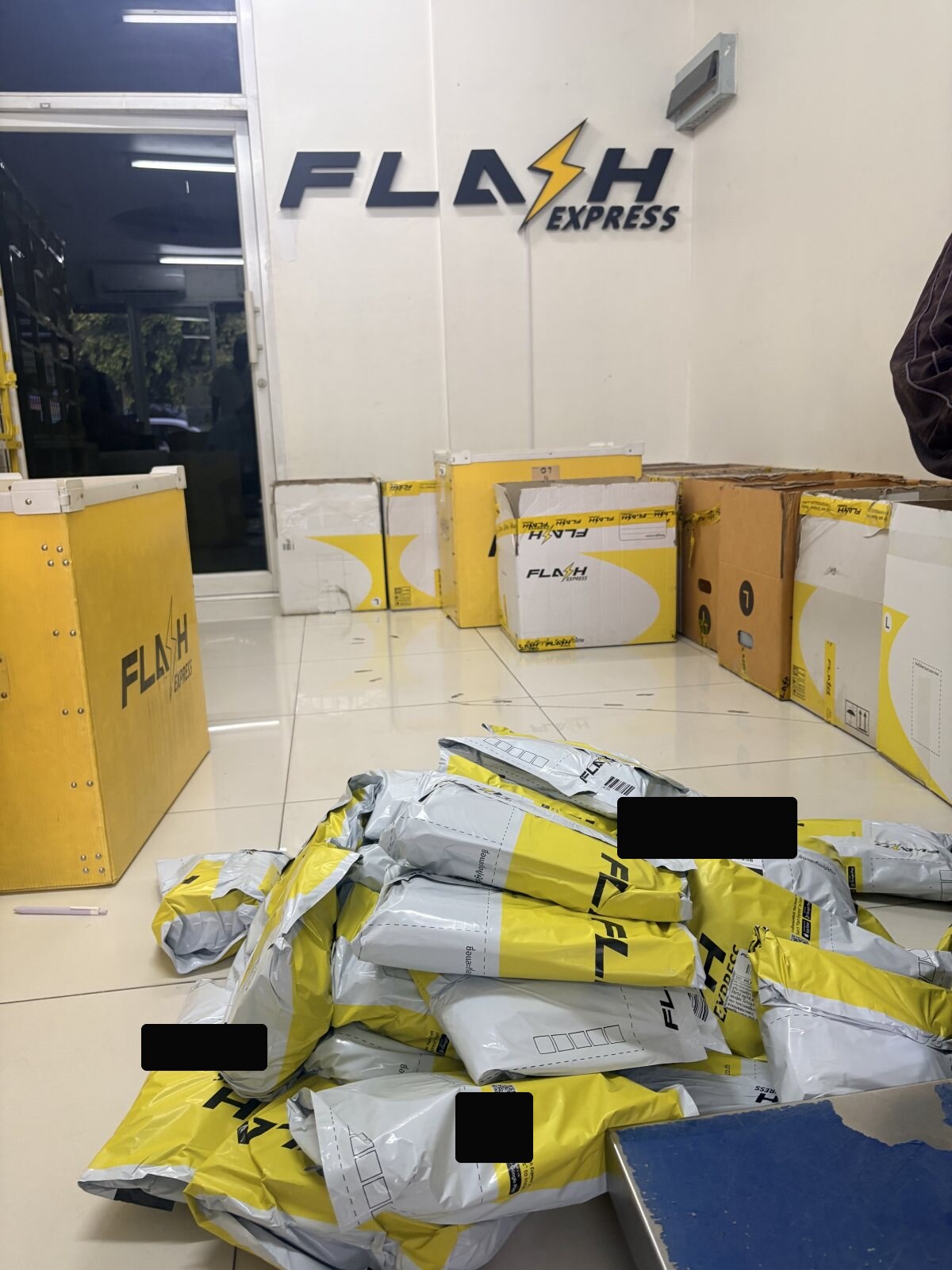 Project parcels prepared for delivery to recipients across multiple provinces.
Community-led work continues after a parcel is packed. The team checks the contents, provides tracking information, answers questions about using the kit and helps the recipient plan the next step. If a result is reactive, the person can be referred for confirmatory testing at an appropriate clinic or hospital and connected to treatment if HIV is confirmed. If the test is non-reactive, support may still be useful for understanding the window period, deciding whether to repeat the test and considering prevention options.
Preliminary results from Thailand
Data note: The figures below come from an aggregated, non-identifiable Love Foundation and CHC operational report for the April–September 2026 reporting cycle. They are preliminary and may change after quality review or closure of the reporting period. A service request, an item dispatched and an individual recipient are different measures and should not be added together or treated as interchangeable.
| IndicatorPreliminary result | |
| Total service requests | 1,008 |
| Geographic reach | 73 of Thailand’s 77 provinces |
| HIV self-tests dispatched | 939 |
| Condom requests | 731 |
| Lubricant requests | 696 |
| Requested all three items | 59% of service requests |
| Respondents who had never tested for HIV | 65% |
| Respondents younger than 25 | 45%; median age 25 |
Earlier program records also describe 841 dispatches between March and June 2026 and 69 facility-based service encounters across 22 partner clinics. In August, the program recorded 644 requests—almost four times the July volume. This increase indicates that platform communication can generate demand quickly. A complete evaluation should also examine successful delivery, voluntary result reporting, confirmatory testing and sustained linkage to prevention or treatment.
What does a 65% first-time testing figure mean?
First-time testing matters because the greatest value of expanded access may be reaching people who do not yet know their status. Among respondents who reported never having tested, approximately 51% were younger than 25. A low-friction, private pathway may be especially useful for younger adults who have not established a regular relationship with a clinic.
Together TakeMeHome reported that approximately one in four US kit recipients were first-time testers, while the preliminary Thai campaign figure is 65%. The difference is notable but does not demonstrate that one program performs better than another. Sampling, eligibility, survey response and health-system context differ. Responsible use of the figure means asking who was reached, who remains underserved and whether a first test becomes the beginning of appropriate repeat testing and continuing care.
Risk information should improve services, not label people
The campaign assessment collects information to plan services in aggregate, not to define a person by a risk category. Among respondents, 92% reported sex within the previous six months, 50% reported more than one partner, 18% reported always using condoms and roughly eight in ten did not know or were unsure of a partner’s HIV status. These findings help explain why sending an HIV self-test, condoms and lubricant together can be more useful than offering only one item.
A respectful assessment asks about circumstances and prevention without assuming risk from someone’s gender identity, sexual orientation or occupation. Women, men, transgender people and non-binary people may all benefit from sexual-health services. The campaign’s respondents reflected that diversity: 49% identified as women, 45% as men, and more than 60 identified as transgender or non-binary.
The PrEP gap: turning a test into continuing prevention
Half of assessment respondents had never heard of PrEP and only 6% reported currently using it. Awareness was uneven: men who have sex with men reported greater familiarity with PrEP than respondents categorized as the general population. Including PrEP information and a counselling route in the parcel can turn a single testing event into an opportunity for longer-term prevention planning.
PrEP is HIV prevention medication for people who do not have HIV. HIV testing and a clinical assessment are required before starting, with follow-up determined by the method used. PrEP does not prevent every other sexually transmitted infection or pregnancy. Readers can use the main PrEP guide and the sexual-health clinic directory to prepare questions and confirm current services before an appointment.
Using an HIV self-test safely
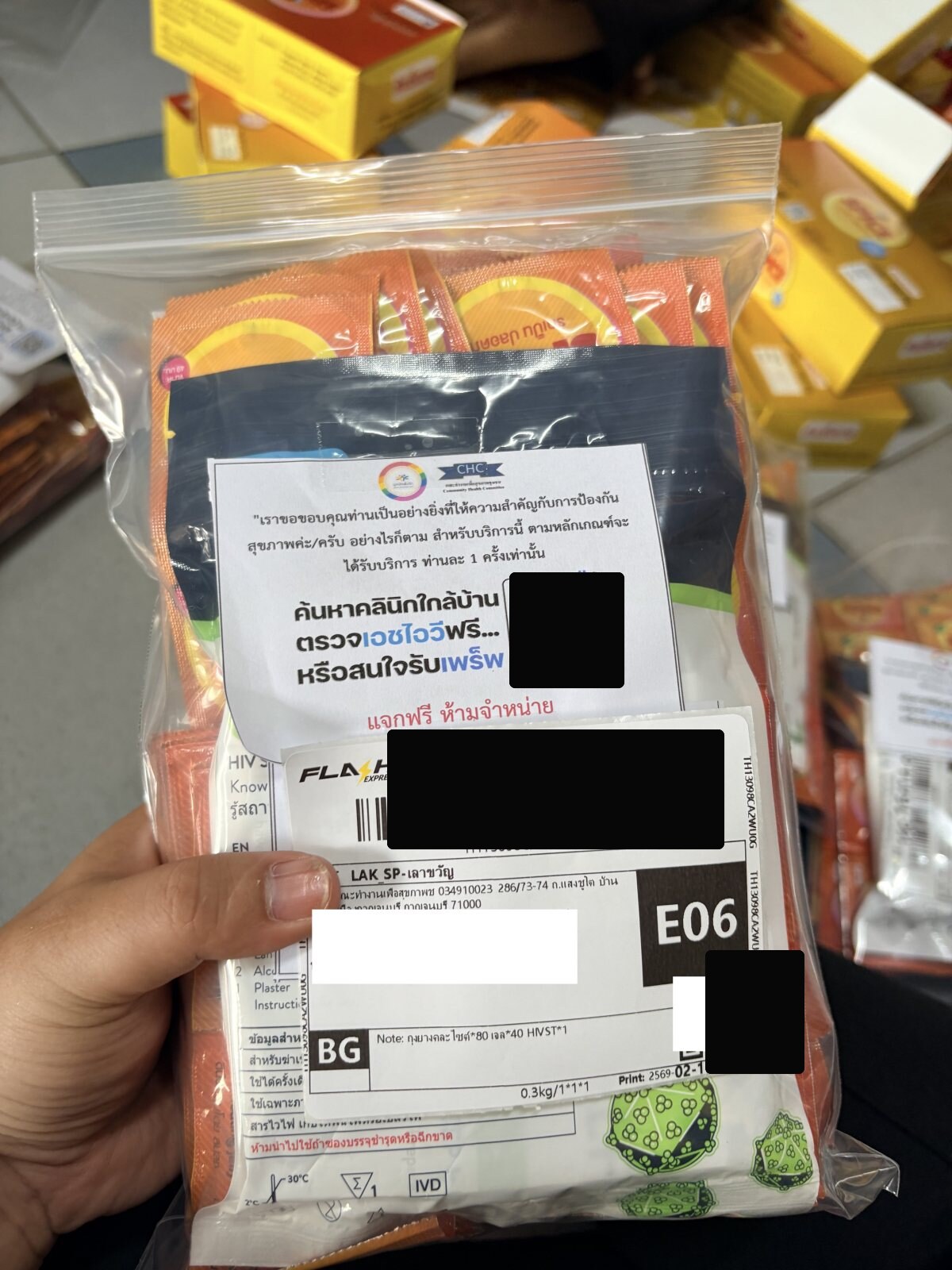 An example of the supplies included in a real project parcel. Recipients should read the instructions supplied with their specific test before use.
- Check the expiry date and packaging: do not use a kit if the pouch is open, damaged or appears to have been stored incorrectly.
- Read the full instructions before starting: finger-stick and oral-fluid self-tests have different procedures.
- Use a timer and read the result in the stated interval: reading too early or too late can lead to misinterpretation.
- Consider the window period: a non-reactive result soon after a possible exposure may be too early for the test to detect HIV. Ask when repeat testing is appropriate.
- Arrange confirmatory testing after a reactive result: do not diagnose yourself from one self-test. Contact the program team or a qualified service.
For practical testing information, read HIV self-testing: use and results and the main page on eligibility, use and privacy for HIV self-test delivery. This article is a partnership case study and should not replace current program criteria or the instructions supplied with a test kit.
Privacy and health information
Grindr’s help center states that, where available, an in-app link connects users to a partner organization, that the partner processes the test-kit order and that Grindr does not store personal health information related to those orders. For the Thai campaign, users should read the privacy notice and consent information presented by Love2Test or CHC before submitting details and confirm that they are using an official domain.
Confidential service depends on verifiable safeguards: packaging that does not identify the contents, restricted data access, collection of only necessary information, clear retention practices and lawful handling of test information. A recipient does not need to share a result in a dating app or with another person unless they choose to do so.
How to request a kit
Check current eligibility and stock through the CHC free HIV self-test page. Applicants generally need to be at least 18 years old and live in Thailand, but program criteria, supply, delivery coverage and campaign dates can change. To arrange clinic testing, PrEP, PEP or STI screening, use Love2Test’s clinic finder or read the guide to free HIV services in Thailand.
If a possible HIV exposure occurred within the past 72 hours, do not wait for a self-test or for the window period to end. Seek urgent assessment for PEP as soon as possible. After sexual assault or another emergency, attend a hospital or contact an appropriate emergency and support service in your area.
Impact beyond the number of parcels
The partnership illustrates a model in which each participant contributes its strongest capability: a global platform communicates when users are ready to engage, Thai digital-health infrastructure connects that interest with a service, and a community team makes delivery and follow-up work in practice. Future success should therefore be measured not only in clicks or parcels but also in first-time testing, confirmatory testing, linkage to treatment when needed, PrEP access and anonymous user experience.
In July 2026, Grindr for Equality committed to connecting ten million LGBTQ+ people worldwide to HIV prevention by 2028. Thailand shows how such a global commitment becomes useful when local organizations lead implementation and when services reflect the language, rights and everyday realities of people in the country.
Frequently asked questions
Does Grindr dispatch the kit or see my result?
The Grindr pathway connects a user with a partner service. The service organization handles ordering, delivery, counselling and follow-up. Read the partner’s privacy notice before submitting details. You do not need to send a test result to Grindr.
Does a reactive self-test mean I definitely have HIV?
No. An HIV self-test is a screening test. A reactive result needs confirmatory testing through a qualified service. The program team can help with counselling and referral.
Does a non-reactive result definitely mean I do not have HIV?
The timing of the test matters because different tests have different window periods. If testing occurred too soon after a possible exposure or there has been another exposure, ask a service when to repeat the test and how to prevent HIV while waiting.
Can everyone receive a free kit?
Eligibility depends on age, residence, program criteria and available stock. Check the latest information directly with CHC or Love2Test. Free services and other fees can vary by provider and health entitlement.
Sources and review notes
- Grindr for Equality — mission, capabilities and partnerships
- Grindr for Equality — health and HIV self-testing partnerships
- Grindr for Equality commits to connecting 10 million people to HIV prevention by 2028, 27 July 2026
- Together TakeMeHome reaches one million HIV self-test kits, Grindr, 13 October 2025
- Grindr Help Center — At-home HIV and STI testing
- Grindr Help Center — HIV/STI testing services, including Love2Test in Thailand
- Love2Test — HIV self-testing, result interpretation and confirmatory testing
- CHC — current eligibility and free HIV self-test request pathway
- Aggregated Love Foundation and CHC operational report for the April–September 2026 reporting cycle, used for the Thai campaign figures in this article.
Information reviewed on 1 September 2026. This article provides general information and does not replace individualized medical advice. Eligibility, stock and service pathways can change.