How Long Is the HIV Window Period, and When Can a Test Detect It?
The HIV window period differs by testing method, ranging from 10 to 90 days. Learn when to test so you can trust the result, with a schedule for planning…
อ่านภาษาไทย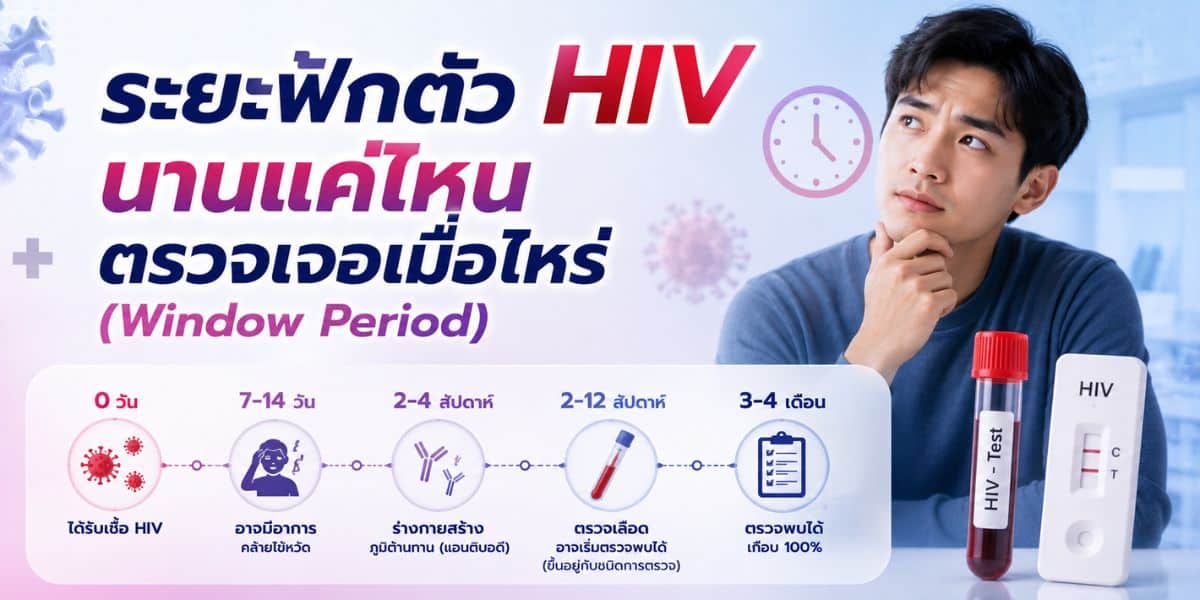
Contents
"I had a possible exposure 5 days ago — can I test right now?" This is one of the most common questions from people worried about HIV, and the short answer is: you can test, but the result may not yet be reliable.
The reason is something called the window period — the time after HIV has entered the body but before a test can detect it. This article explains exactly how many days each testing method requires and how to plan your testing to get an answer as soon as possible without sacrificing accuracy.
What is the HIV window period?
The window period is the time between the day you are exposed to the virus and the day a test can reliably detect it.
This gap exists because most HIV tests do not look for the virus directly. Instead they look for antibodies, which are what the body produces to fight the virus, and the body needs several weeks to make enough of them to be detected.
A common misunderstanding: the window period is not the same as the period before symptoms appear, and it is not the same as a period when the virus cannot be transmitted. During the window period the amount of virus in the blood can be very high, and transmission risk can be high during acute infection, which may overlap with the window period — even while a test result is still negative.
The window period for each type of HIV test
This is the heart of the article. The figures below are based on CDC guidelines.
| Testing method | What it detects | Can detect from | Conclusive at |
|---|---|---|---|
| NAT (Nucleic Acid Test) | The virus's genetic material directly | 10–33 days | 33 days |
| Antigen/antibody test from a vein (lab) | p24 antigen + antibodies | 18–45 days | 45 days |
| Antigen/antibody fingerstick test (rapid) | p24 antigen + antibodies | 18–90 days | 90 days |
| Antibody test / self-test kit | Antibodies only | 23–90 days | 90 days |
NAT — the fastest, but not used for routine screening
NAT detects the virus directly, so it can find it the earliest, at around 10 days. But it is expensive and takes longer to process, so it is generally not used to screen the general public. Instead, a diagnostic HIV NAT is used when there is a clear high-risk exposure or symptoms of acute infection; the HIV RNA viral load test used during care is a separate test for monitoring people already in treatment.
Lab antigen/antibody test — the standard used in Thailand
This is the method most hospitals and clinics in Thailand use. It detects both the p24 antigen (a part of the virus that appears early) and antibodies, which shortens the window period to 18–45 days. A negative result at 45 days with no further exposure is considered highly reliable.
Self-test kits — convenient, but you have to wait longer
HIV self-test kits approved by Thailand's FDA are mostly antibody tests, which have a window period of up to 90 days. Their advantage is a high level of privacy, making them a good fit for people who are not yet ready to visit a health facility. But it is important to understand that a negative result in the first month cannot yet rule out infection.
When should you test? A schedule based on your exposure date
| Time since exposure | What to do |
|---|---|
| 0–72 hours | See a doctor to start PEP immediately. Do not wait. |
| 3–10 days | During roughly the first 10 days, testing is usually too early to rule out HIV. Contact a healthcare provider to discuss PEP, baseline testing, and a follow-up plan. |
| 2–3 weeks | You can start antigen/antibody testing, but a negative result still needs to be repeated. |
| 4–6 weeks | Take a lab antigen/antibody test; the result is now highly reliable. |
| 3 months (90 days) | Repeat the test to confirm. Whether a negative result is conclusive depends on the test used and on any PEP, PrEP, or new exposure — check with a provider. |
When you need to wait longer than usual
If you have taken PEP, the antiretroviral medication can delay antibody production, so testing may need to continue longer. After PEP, follow the testing schedule your provider sets — typically HIV testing about 4–6 weeks and 12 weeks after the exposure (roughly one month and three months after starting PEP), adjusted to the test used and local guidance.
Why testing too early is more dangerous than you might think
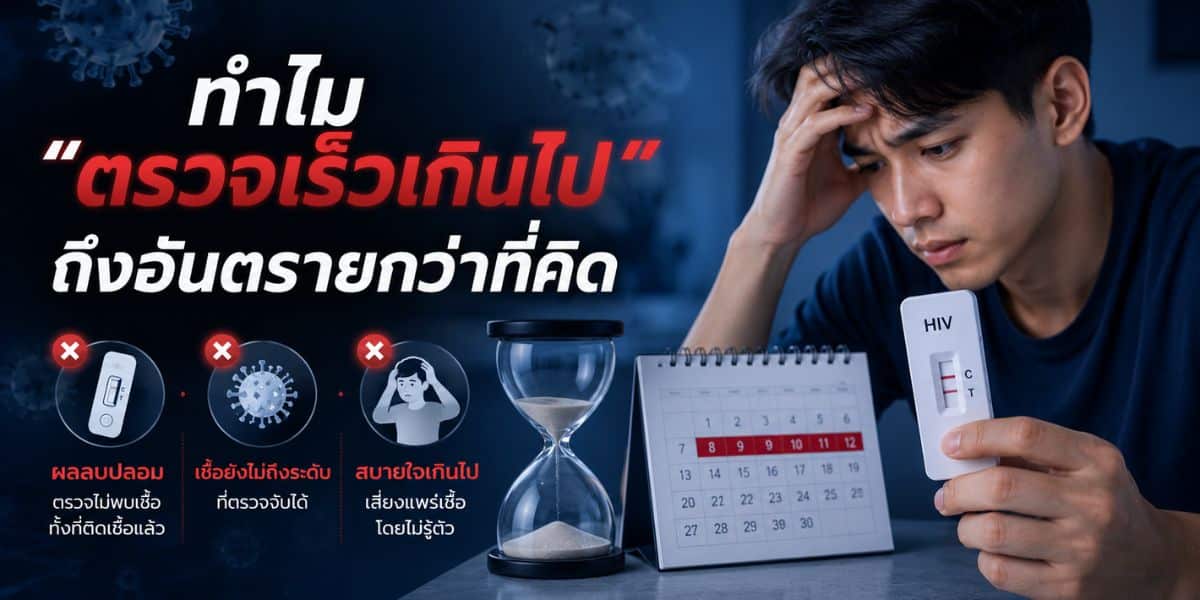
The problem is not the test itself — it is the interpretation of the result.
- Risk 1 — false reassurance. You test negative at 7 days, believe you are in the clear, and so you neither retest nor protect yourself.
- Risk 2 — transmitting HIV without knowing. During the window period the amount of virus can be high, so trusting a too-early negative result puts your partner at risk too.
- Risk 3 — missing the chance for early treatment. Starting treatment early leads to clearly better long-term outcomes.
What to do while you wait
Take care of your mental health
The 1–3 months of waiting for results can be a period of intense anxiety, when many people cannot sleep and search their symptoms online over and over, which only adds to the stress. If you are at that point, the articles HIV and Mental Health and Understanding Anxiety may help. Talking with a trained counselor directly can help far more than reading on your own.
Protect your partner
While you still don't know your result for certain, use a condom every time and avoid donating blood.
Don't retest every week
Testing too often does not give you an answer any sooner — it just builds up anxiety. A sensible plan is to test at around 4–6 weeks and to confirm with a repeat test at 3 months.
Where to get tested
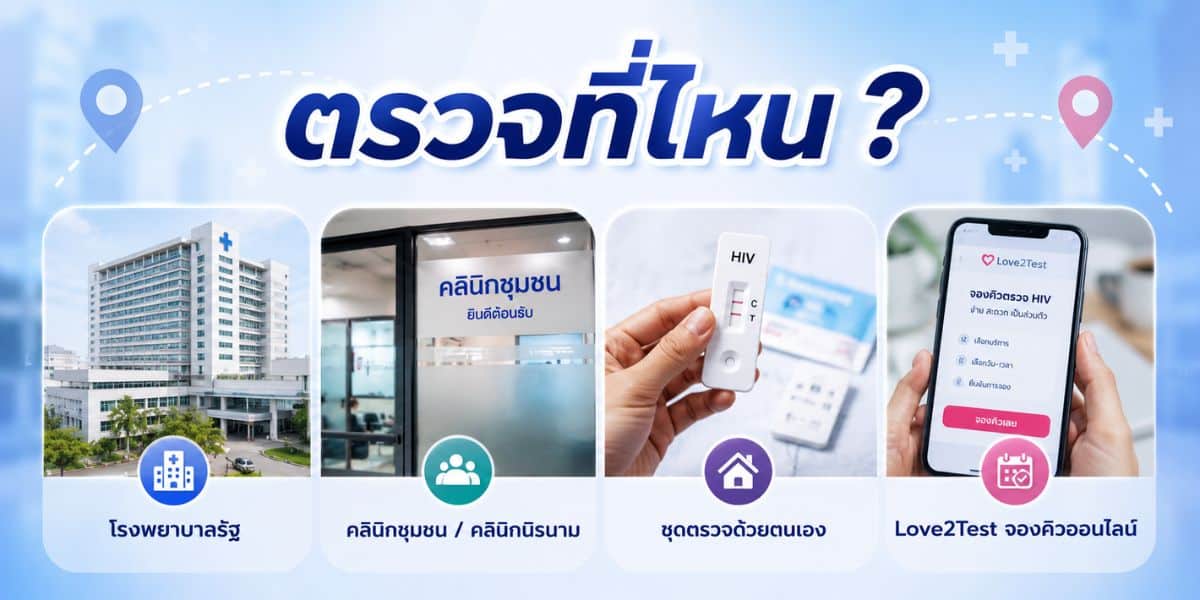
Thailand offers many options, and most of them are free of charge.
- Public hospitals — every Thai citizen has the right to test for free twice a year.
- Community clinics / anonymous clinics — no need to reveal your identity, a good fit for anyone concerned about privacy.
- Self-test kits — test at home, but you have to wait up to 90 days for a conclusive result.
- Love2Test — book an appointment online with partner clinics across the country.
If you are in the north, see the details for your area in where to get an HIV test in Chiang Mai.
Frequently asked questions about the HIV window period
How long is the HIV window period?
It depends on the testing method, ranging from 10 days (NAT) to 90 days (antibody tests). The method most commonly used in Thailand is the antigen/antibody test, at 18–45 days.
I tested negative 14 days after exposure — can I trust it?
Not with 100% certainty. You should retest at least after the 45-day mark, and confirm again at 90 days if the exposure was high risk.
Why do some sources say 3 months and others say 1 month?
Because they are talking about different testing methods. The 3-month recommendation is a safe figure that covers every method, while 1 month applies when you test with a lab antigen/antibody test.
Can you transmit HIV to others during the window period?
Yes. Transmission risk can be high during acute infection, which may overlap with the window period, because the amount of virus in the blood can be very high.
I'm taking PEP — can I test right away?
You can test to check your baseline status, but a conclusive result takes longer. After PEP, follow the testing schedule your provider sets — typically HIV testing about 4–6 weeks and 12 weeks after the exposure (roughly one month and three months after starting PEP), adjusted to the test used and local guidance.
Summary
The window period is nothing to fear — it is something to understand so you can time your test correctly. The simple rules are:
- Exposed within 72 hours → see a doctor to start PEP immediately.
- Take your first test at 4–6 weeks with an antigen/antibody test.
- Confirm with a repeat test at 3 months.
- While you wait, protect yourself every time and look after your mental health.
Read more about early HIV symptoms and how to read Anti-HIV test results.
Book a free HIV test anywhere in the country at Love2Test.org
Verified references
Links and relevance to the article’s main topic were reviewed on 13 August 2026. Each source supports only the scope stated in the original document and does not replace personalised medical, legal, or service advice.
- CDC: Getting Tested for HIV Accessed 13 August 2026
- กรมควบคุมโรค: แนวทางตรวจ HIV/ซิฟิลิส/HBV/HCV พ.ศ. 2568 Accessed 13 August 2026
- WHO: HIV and AIDS fact sheet Accessed 13 August 2026