How to Take HIV Antiretroviral Medication and What Side Effects to Expect
Most side effects of antiretroviral therapy appear in the first 2 to 6 weeks and ease on their own.
อ่านภาษาไทย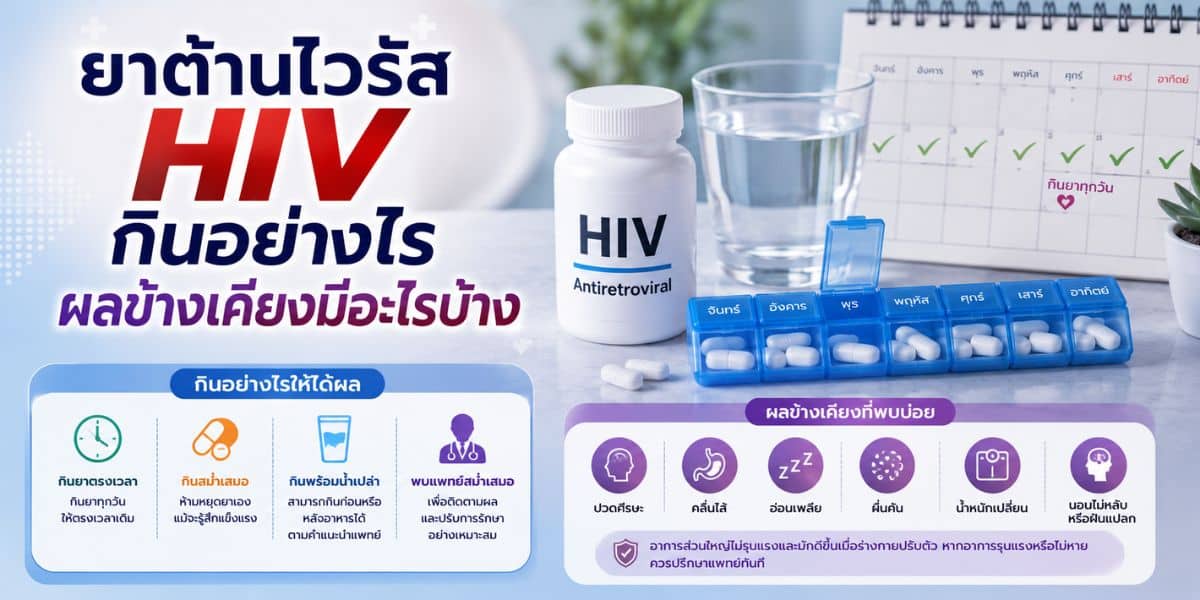
Contents
Worry about side effects is one of the top reasons people living with HIV hesitate to start antiretroviral therapy, or stop taking it partway through — a decision that does far more harm than the side effects they fear.
The truth to know before reading on is that today's antiretroviral medicines are completely different from the drugs of 20 to 30 years ago. Where people once had to take dozens of pills a day with severe side effects, most people today take just one pill a day and experience very few side effects.
How Antiretroviral Medication Works
Antiretroviral medication does not kill HIV directly. Instead, it stops the virus from multiplying at various stages of its life cycle. When the virus cannot multiply, the amount in the blood falls until it is undetectable, and the immune system gradually recovers.
The reason several medicines are taken together is that attacking the virus at multiple points at once makes it much harder for the virus to become resistant. Today several medicines are combined into a single pill, so this does not mean taking many pills.
| Drug class | How it works | Commonly used examples |
|---|---|---|
| NRTI | Blocks the copying of the virus's genetic material | Tenofovir, Lamivudine, Emtricitabine |
| NNRTI | Inhibits the copying enzyme through a different mechanism | Efavirenz, Rilpivirine, Doravirine |
| INSTI | Blocks the insertion of the viral gene into the cell | Dolutegravir, Bictegravir |
| PI | Inhibits the assembly of new virus particles | Darunavir, Atazanavir |
Most first-choice regimens today are built around an INSTI drug, because it suppresses the virus quickly, has a high barrier to resistance, and has fewer side effects than older medicines.
Common Side Effects in the Early Weeks
Most side effects occur in the first 2 to 6 weeks and gradually improve on their own as the body adjusts. This is the period when people most often stop their medication, even though those who get through it usually have no further problems.
| Symptom | Usually resolves within | How to manage it |
|---|---|---|
| Nausea, upset stomach | 2–4 weeks | Take with food; eat smaller, more frequent meals |
| Headache | 2–4 weeks | Drink enough water; get enough rest |
| Fatigue | 4–6 weeks | Adjust the time you take your medication; gradually increase activity |
| Insomnia, unusual dreams | 2–6 weeks | Ask your doctor about the best time to take your medication |
| Diarrhea | 2–4 weeks | Drink oral rehydration solution; avoid greasy foods |
| Mild rash | 1–2 weeks | Monitor it; if accompanied by fever, see a doctor immediately |
| Dizziness | 2–4 weeks | Stand up slowly; take care when driving in the early weeks |
Nervous-System Side Effects From Certain Drugs
Some medicines, especially older NNRTIs such as Efavirenz, can cause grogginess, unusually vivid dreams, or mood changes in the early weeks. They are often taken before bed so that these effects pass while you sleep.
Today many places have switched to newer medicines that cause this problem far less often. If you are given a medication that leaves you feeling unwell, you should tell your doctor so the regimen can be adjusted — do not stop the medication yourself.
About Body Weight
Some drug classes are associated with weight gain in certain people, a topic that is currently being studied. If you notice an unusually large change in your weight, tell your doctor so it can be assessed alongside other factors, such as the recovery of your nutritional status after starting treatment, which is also a normal occurrence.
Danger Signs That Require Immediate Medical Care
Most side effects are not serious, but some symptoms require you to see a doctor right away, without waiting for an appointment.
- Rash together with fever, mouth sores, red eyes, or peeling skin — this may be a severe allergic drug reaction.
- Yellowing of the skin or eyes, or very dark urine — this may be drug-induced hepatitis.
- Severe abdominal pain — especially pain that radiates through to the back.
- Shortness of breath, palpitations, or unusual whole-body weakness.
- A large drop in urine output, or swelling in the legs and face — this may be related to kidney function.
- Thoughts of self-harm, or severe mood changes — seek emergency help immediately by contacting your local emergency services or going to the nearest emergency room.
These symptoms are uncommon, but it is worth knowing them so they are not left unaddressed. If you have any of the symptoms above, contact your care team immediately and do not stop your medication on your own before getting advice, except when your doctor has told you to stop.
The Most Important Thing: Never Stop Your Medication on Your Own
If you remember only one thing from this article, let it be this.
When you stop antiretroviral medication, HIV in the latent reservoir can begin multiplying again within a few weeks. The consequences are:
- Your viral load rebounds — and you can transmit the virus to others again.
- Your CD4 count falls — the immunity built up over many months is set back.
- Risk of drug resistance — this is a serious harm: resistance can limit future treatment options and may stay in the virus's resistance history.
Both stopping and taking doses inconsistently can let the virus rebound and, in some cases, develop resistance. Contact your care team before making any change to your treatment.
Read more about the mechanism that lets the virus return in Can HIV Be Cured?
What to Do If You Forget a Dose
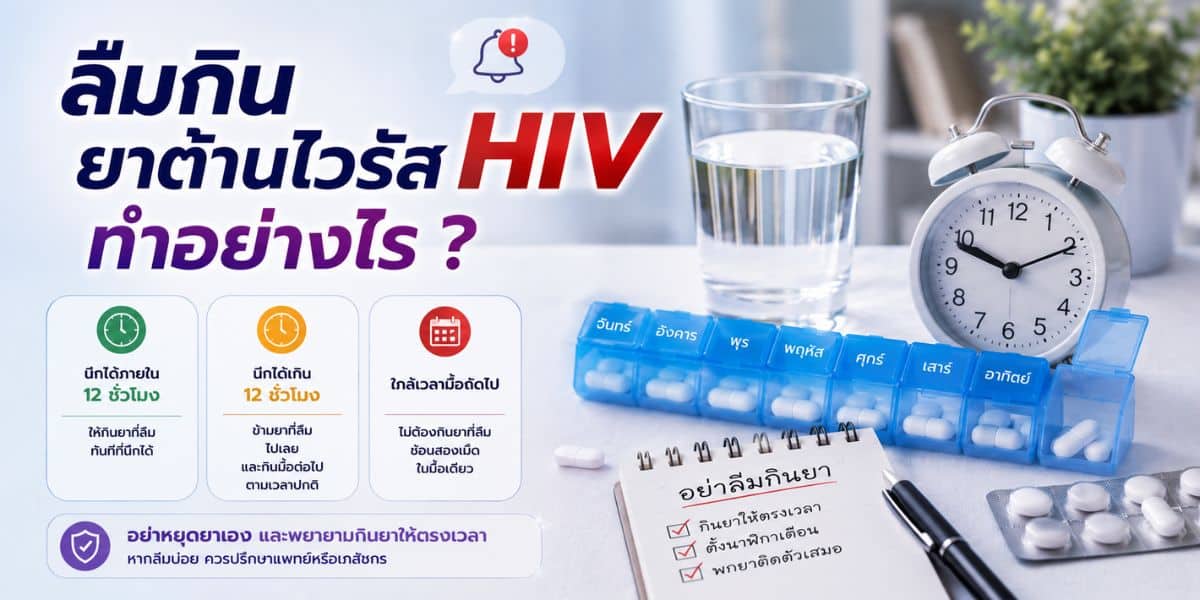
This happens to everyone. What matters is knowing what to do.
- Follow the missed-dose instructions for your specific regimen. In general, take the dose when you remember unless it is close to the time of your next dose, and never take a double dose unless your clinician or the medicine's instructions tell you to.
- You forget so often that it becomes a problem — tell your doctor; there may be a regimen that fits your daily rhythm better.
Techniques That Really Help
- Set an alarm on your phone for the same time every day.
- Tie taking your medication to a routine you already have, such as brushing your teeth at night.
- Use a weekly pill organizer so you can clearly see whether you have missed a dose.
- Always keep a 2–3 day backup supply in your bag.
- Prepare enough medication before a long trip or a long holiday.
- Set reminders ahead of time for medication pickup appointments.
Medications and Foods to Watch Out For
Antiretroviral medication interacts with certain substances that people often do not think are relevant.
| What to watch out for | The problem it may cause |
|---|---|
| Antacids and stomach-coating medicines | Greatly reduce the absorption of some drug classes; you must space out the timing |
| Calcium, iron, zinc, multivitamins | Bind to some drug classes so they cannot be absorbed |
| Certain tuberculosis medicines | Lower the level of antiretroviral medication in the blood |
| Certain herbal remedies | May reduce the effectiveness of antiretroviral medication |
| Some anticonvulsants and cholesterol-lowering drugs | Interact with each other |
| Birth control pills | Effectiveness may change |
The safest rule: always tell people you are taking antiretroviral medication — whether you are seeing a dentist, buying medicine at a pharmacy, or starting a new supplement — and do not start any herbal remedy or supplement without consulting the pharmacist or doctor caring for you.
How to Monitor Your Progress
Effective treatment is measured by the numbers, not by how you feel.
- Viral load — should drop clearly within the first 3 months and become undetectable within about 6 months.
- CD4 count — rises gradually, and may take many months to several years to return to a normal level.
- Liver and kidney function — checked periodically as scheduled by your doctor.
Details on how to read these values are in CD4 and Viral Load and Reading Your Blood Test Results.
When Your Viral Load Becomes Undetectable
Once you suppress the virus to an undetectable level continuously, you will not transmit the virus sexually to others, following the principle of U=U (Undetectable = Untransmittable), a conclusion confirmed by large research studies.
What U=U does not cover, and where people often misunderstand:
- It does not prevent other sexually transmitted infections, so condoms remain useful for preventing other STIs and pregnancy.
- It does not prevent pregnancy.
- You must keep the virus suppressed continuously — not just once and then stop your medication.
The Mental-Health Issues That Are Often Overlooked
The factor that most often leads people to take their medication irregularly is usually not physical side effects but feelings — depression, loneliness, or the sense that taking medication every day is a repeated reminder of something they wish to forget.
If you feel this way, it is not a weakness, and it is something you can talk about with your care team. Many places have counselors who work specifically on this. Read more in HIV and Mental Health and Living With HIV.
Long-Term Side Effects to Monitor

Beyond the early symptoms, there are some things to watch for over the long term, which is why your doctor schedules periodic blood tests even when you feel perfectly well.
| System | What to watch for | How to monitor it |
|---|---|---|
| Kidneys | Reduced kidney function from certain drug classes | Blood and urine tests as scheduled |
| Bones | Reduced bone density | Risk assessment, with additional testing in some people |
| Liver | Elevated liver enzymes | Liver function tests as scheduled |
| Blood lipids and blood sugar | Changing levels | Periodic lipid and blood sugar tests |
| Heart and blood vessels | Risk that accumulates with age | Control blood pressure and lipids, and quit smoking |
What is important to understand correctly is that these risks can be managed through monitoring and by adjusting the regimen when necessary, and they are nothing compared to the damage caused by letting the virus destroy the immune system without treatment.
The factor that most affects the long-term health of people living with HIV today is usually not the virus or the medication, but the same things that matter for everyone: smoking, blood pressure, blood lipids, and body weight.
Special Situations That Need Individualized Care
Pregnancy and Breastfeeding
People who are pregnant can use antiretroviral medication, and they should, because suppressing the viral load during pregnancy reduces the chance of passing the virus to the baby to less than 1%. Some regimens may need to be adjusted, so tell your doctor as soon as you know you are pregnant or are planning to have a child.
People Who Also Have Tuberculosis
Some tuberculosis medicines interact significantly with antiretroviral medication. The dose may need to be adjusted, or a compatible regimen chosen. This must be done under close medical supervision — never adjust it yourself.
People Who Also Have Hepatitis B
Some antiretroviral medicines act against both HIV and hepatitis B, which is an advantage, but it also means that stopping the medication on your own can trigger a severe flare-up of hepatitis. Read more in Hepatitis B.
Older Adults and People With Several Chronic Conditions
The more different medicines you take, the greater the chance of drug interactions. Carry a list of all your medications and show it to everyone who provides your care.
People Who Use Drugs or Are in a Chemsex Context
Some substances interact with antiretroviral medication so that their levels in the blood rise to dangerous levels. This is something to discuss openly with your doctor. Your care team's role is to help keep you safe, not to judge you. Read more in Understanding Chemsex.
Frequently Asked Questions
Will antiretroviral medication make me gain weight?
Some drug classes are associated with weight gain in certain people, and part of it is the normal recovery of nutritional status. If you are worried, talk to your doctor for an assessment — do not stop your medication on your own.
Do I have to take it at exactly the same time?
You should take it at close to the same time every day. A small variation is fine, but consistency is the single most important factor in treatment.
Can I drink alcohol?
An occasional small amount is usually not a problem for people with normal liver function, but heavy drinking affects the liver and often leads to missed doses. Talk to your doctor based on your own health.
I feel awful on my medication — can I switch regimens?
Yes. There are now many alternative regimens. Tell your doctor how the symptoms are disrupting your life. Do not just endure it or stop your medication on your own.
Do I really have to take it for life?
Under current guidelines, yes, because the virus lies dormant in your cells and returns when you stop. But most modern medicines are a single pill a day, and long-acting injectable treatment is already available in some settings for eligible people; availability in Thailand varies.
Does antiretroviral medication cost anything?
It is free of charge for people covered by any of Thailand's government health schemes. See The Cost of Testing and Treatment.
Summary
The side effects of today's antiretroviral medication are mostly mild and occur only during the first 2 to 6 weeks, while the benefits are a life that is long and close to that of the general population, and not transmitting the virus to the people you love.
What is far more dangerous than the side effects is stopping your medication on your own or taking it irregularly, because it can lead to drug resistance, which limits future treatment options.
If you are struggling with symptoms that disrupt your life, remember that the answer is not to stop your medication but to tell your care team what is happening, because there are now enough options to find a regimen that fits your body and your life.
For advice on treatment and access to services, contact Love2Test.org
Verified references
Links and relevance to the article’s main topic were reviewed on 13 August 2026. Each source supports only the scope stated in the original document and does not replace personalised medical, legal, or service advice.
- NIH HIVinfo: HIV Treatment Basics Accessed 13 August 2026
- NIH HIVinfo: HIV Medicines and Side Effects Accessed 13 August 2026
- WHO: HIV and AIDS fact sheet Accessed 13 August 2026