What Is an Anti-HIV Test? How to Read Your Results in 5 Minutes
Learn what an Anti-HIV test detects, how non-reactive and reactive results differ, why confirmatory testing is required, and what CD4, viral load, HBsAg…
อ่านภาษาไทย
Contents
You are holding a blood test report that says Anti-HIV: Non-reactive, but you are still unsure what it means. This is common: laboratory reports often use technical terms without explaining them.
This guide explains what an Anti-HIV test looks for, the difference between a reactive and a positive result, why some people need a three-assay confirmation process, and what other values on the same blood test report may mean.
What does Anti-HIV mean?
On many laboratory reports, Anti-HIV is a label for HIV screening. Depending on the assay used, the test may detect antibodies alone or both antibodies and p24 antigen. An antibody-based test looks for the immune system's response rather than directly detecting the whole virus.
This distinction has two important implications:
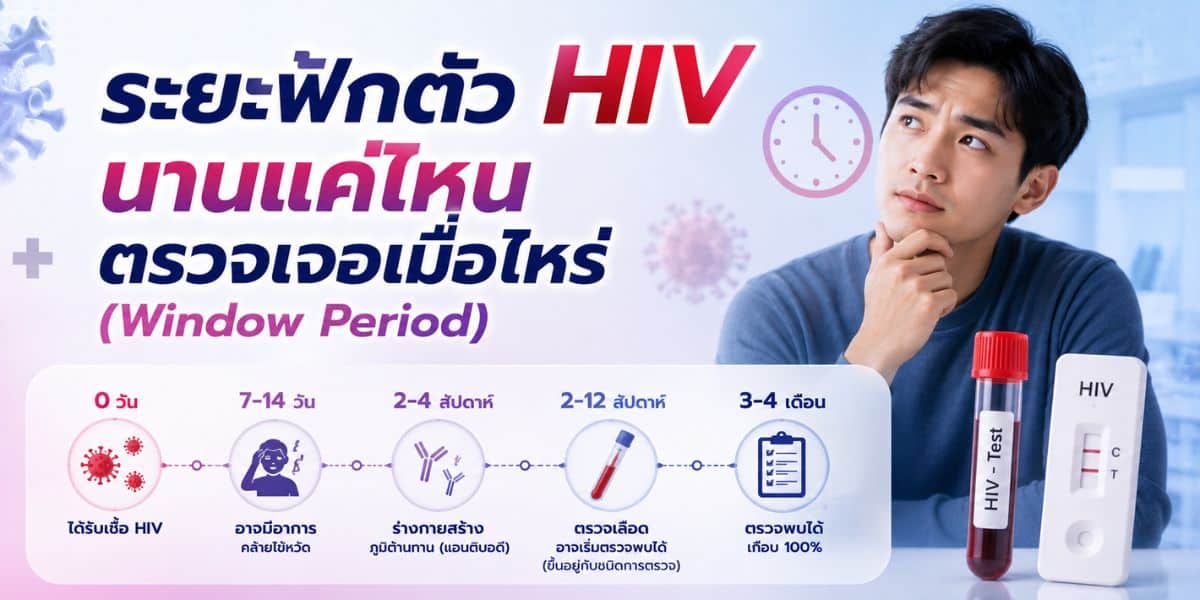
- The body needs time to produce enough antibodies for a test to detect. This time is called the window period.
- Detecting HIV antibodies means the immune system has responded to HIV; it does not mean the body has eliminated the virus.
Many laboratory tests used today are antigen/antibody combination (Ag/Ab) tests. These detect both HIV antibodies and p24 antigen, a component of the virus that can appear earlier than antibodies. A laboratory report may still label the result “Anti-HIV” even when a combination test was used.
How do HIV test generations differ?
You may see a test described as “fourth generation” on a report or hear the term from a healthcare provider. The generations differ in what they detect and how early they may detect HIV.
| Test | What it detects | Typical detection timeframe | Current use |
|---|---|---|---|
| First–second generation | IgG antibodies only | About 6–12 weeks | No longer in routine use |
| Third generation | IgG and IgM antibodies | About 3–4 weeks | Still used in some settings |
| Fourth generation | HIV antibodies and p24 antigen | About 18–45 days | A primary laboratory standard today |
| Nucleic acid test (NAT) | HIV genetic material | About 10–33 days | Used in specific situations |
Newer laboratory test generations can generally detect HIV earlier, which shortens the waiting period. Ask which type of test was used because its window period directly affects how a non-reactive result should be interpreted.
How to read an Anti-HIV test result
Only a few terms usually appear on the report, but they have distinct meanings.
| Term on the report | What it means | What happens next |
|---|---|---|
| Non-reactive / Negative | No HIV antibody or antigen marker was detected by that test | Repeat testing may be needed if the test was taken during its window period |
| Reactive | The screening test detected a signal, but this is not yet a diagnosis | Follow-up testing is always required |
| Positive (after confirmation) | Follow-up testing has confirmed HIV | Connect with HIV care and begin treatment promptly |
| Indeterminate / Inconclusive | The available results do not provide a clear conclusion | Repeat testing as advised by a healthcare professional |
A non-reactive result does not always rule out HIV
A non-reactive result means that the test did not detect HIV markers at the time of testing. It can rule out HIV from a particular exposure only when:
- the full window period for that type of test has passed; and
- there have been no further possible exposures during that time.
For example, a non-reactive result 10 days after a possible exposure may be too early to rule out HIV. Follow the recommended repeat-testing schedule for the test you received.
A reactive result is not the same as an HIV diagnosis
Laboratories deliberately use the word reactive rather than positive for an initial screening result. Screening tests are designed to be highly sensitive so they are less likely to miss HIV. As a result, an initial test can occasionally be reactive even when follow-up testing does not confirm HIV.
A single reactive screening result is therefore not an HIV diagnosis. Wait for confirmatory testing and speak with a healthcare provider or trained counselor before drawing conclusions.
Why is confirmatory testing required?
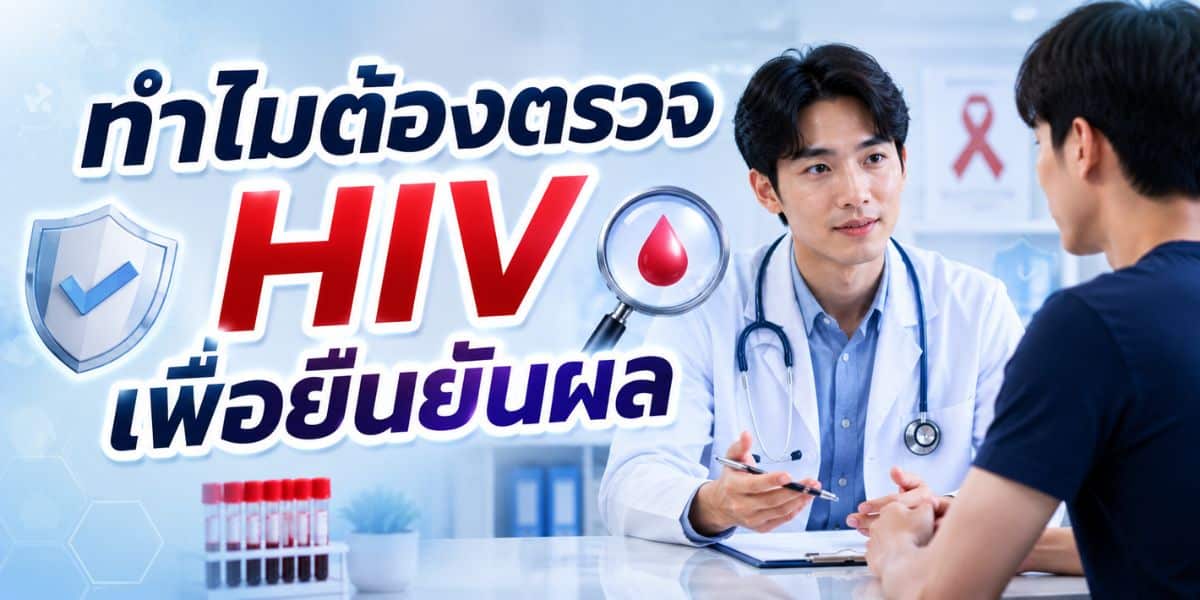
Thailand uses a three-assay testing algorithm. Each step uses a different testing principle or antigen preparation, reducing the chance that the same source of error will affect every result.
| Step | Assay | Result | Interpretation |
|---|---|---|---|
| 1 | A1 (screening) | Non-reactive | No HIV markers detected; the testing process ends unless repeat testing is needed because of the window period |
| 1 | A1 | Reactive | Proceed to A2 |
| 2 | A2 (first follow-up assay) | Reactive | Proceed to A3 |
| 3 | A3 (second follow-up assay) | All three assays reactive | Report a confirmed positive result |
| 3 | A3 | Results do not agree | Report an inconclusive result and arrange repeat testing |
This process explains why some people wait longer for their results or are asked to provide another blood sample. Being asked to test again does not mean the final result will be positive.
What can cause false-positive or false-negative results?
False-positive results
A false-positive result is a reactive screening result in someone whose follow-up testing does not confirm HIV. It is uncommon, but it can occur. Factors that may sometimes contribute to cross-reactivity include:
- pregnancy;
- autoimmune conditions such as systemic lupus erythematosus (SLE) or rheumatoid arthritis;
- another viral infection occurring at the same time;
- recent receipt of certain vaccines;
- a history of blood transfusion or organ transplantation; or
- participation in an HIV vaccine trial.
This is one reason a reactive screening result must always be followed by the full confirmation process.
False-negative results
A false-negative result occurs when a test is non-reactive even though HIV is present. The main possible causes include:
- Testing too early — by far the most common reason.
- Taking PEP or PrEP, which can sometimes affect how quickly HIV markers become detectable.
- A test kit that has deteriorated or was used incorrectly, particularly with self-testing.
- Severe immune suppression that limits antibody production.
Tell the testing provider if you are taking or recently took PrEP or PEP so they can select an appropriate testing approach and follow-up schedule.
Other results commonly listed on the same blood test report
An HIV test report may include results for other infections or markers. The following table provides a quick guide.
| Test | What it assesses | Result generally expected |
|---|---|---|
| Anti-HIV | HIV markers | Non-reactive |
| VDRL / RPR | Syphilis screening | Non-reactive |
| TPHA / TPPA | Treponemal antibodies used as part of syphilis testing | Non-reactive |
| HBsAg | Current hepatitis B infection | Negative |
| Anti-HBs | Immunity to hepatitis B | Positive generally indicates immunity |
| Anti-HCV | Antibodies to hepatitis C | Non-reactive |
| CD4 count | Number of CD4 immune cells | A typical reference range is about 500–1,600 cells/mm³ |
| HIV viral load | Amount of HIV in the blood | Undetectable for a person receiving effective treatment |
A common source of confusion: Anti-HBs and HBsAg
These tests have similar names but assess different things.
- A positive HBsAg result suggests a current hepatitis B infection and should be assessed by a healthcare professional.
- A positive Anti-HBs result generally indicates immunity following vaccination or recovery from a past infection. Other hepatitis B markers may be needed for a complete interpretation.
Read more about hepatitis B and hepatitis A, B, and C.
How are CD4 count and viral load different?
These two measurements are important for people receiving HIV care:
- CD4 count provides information about the strength of the immune system. A higher count is generally better.
- Viral load measures the amount of HIV in the blood. A lower viral load is better.
The goal of HIV treatment is to reduce the viral load until it is undetectable. As treatment controls the virus, the CD4 count can gradually recover. Read more about CD4 count and viral load and understanding CD4 levels.
How to read a rapid HIV test
A rapid test that provides a result in 20–30 minutes usually displays lines on a test device rather than producing a laboratory report.
| What you see | What it means |
|---|---|
| A line at C only | The result is non-reactive, and the control indicates that the test worked |
| Lines at both C and T | The result is reactive and requires follow-up testing |
| A line at T only | The result is invalid; use a new test |
| No line appears | The result is invalid; use a new test |
C stands for control. This line must appear to show that the test worked. T stands for test and is the line used to indicate a reactive result.
Common mistakes when reading a rapid test include:
- Reading the test too late. A faint mark that appears after the time specified in the instructions may not be a valid result.
- Reading the test too early. The lines may not yet have fully developed.
- Dismissing a faint T line. If a T line appears within the manufacturer’s reading window, however faint, treat the result as reactive and seek follow-up testing.
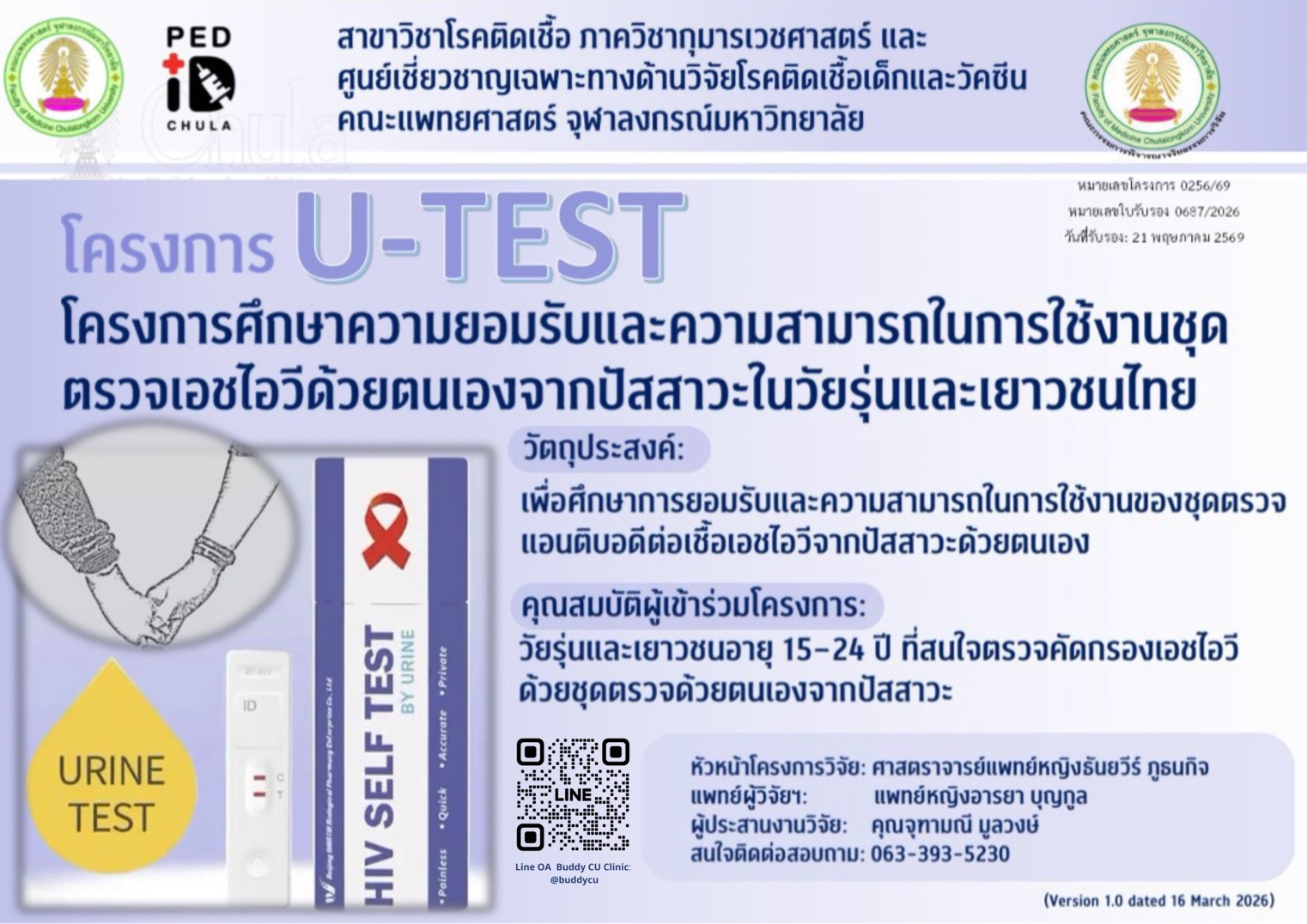
How does an HIV self-test differ from a laboratory test?
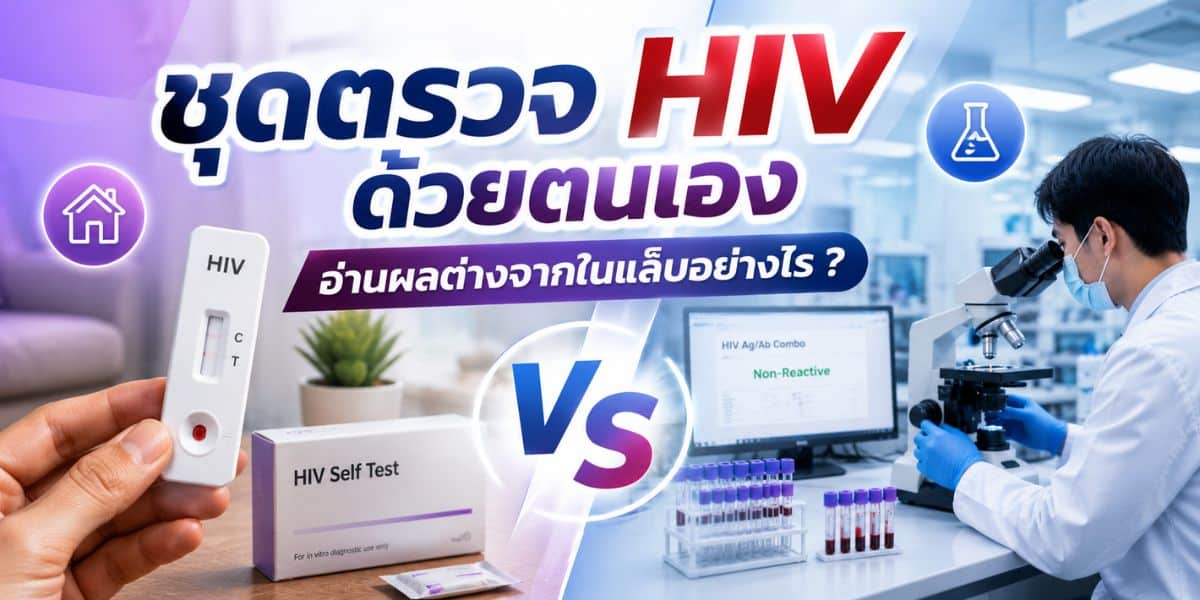
HIV self-tests approved by the Thai Food and Drug Administration use the same general principle as other rapid tests, but they have additional limitations.
| Issue | Common laboratory test | HIV self-test |
|---|---|---|
| What it detects | HIV antibodies and p24 antigen | Usually HIV antibodies only |
| Window period | About 18–45 days | About 23–90 days |
| Sample | Blood from a vein | Finger-stick blood or oral fluid |
| Is a reactive result a diagnosis? | No; the result must be confirmed through the testing algorithm | No; visit a healthcare facility for follow-up testing |
| Risk of user error | Low when performed by trained staff | Higher because correct collection, timing, and interpretation depend on the user |
Common self-testing errors include collecting too little blood, using the wrong number of drops, storing the kit in excessive heat, and reading the result at the wrong time. Read the complete instructions before starting and follow the instructions for that specific test.
Common terms on an HIV test report
| Term | Meaning |
|---|---|
| Reactive / Non-reactive | Terms used for the result of an initial screening test |
| Screening | The first stage of testing |
| Confirmatory / follow-up testing | Additional testing used to determine whether an initial reactive result confirms HIV |
| Ag/Ab combination test | A test that detects both HIV antigen and antibodies |
| p24 antigen | A viral protein that may become detectable early after HIV acquisition |
| Seroconversion | The period during which the body develops detectable antibodies |
| Undetectable | A viral load below the test’s limit of detection |
| copies/mL | A unit used to report the amount of virus in the blood |
| cells/mm³ | A unit used to report the CD4 cell count |
| Titer | A measure of antibody concentration; it may be used to monitor response to syphilis treatment |
Examples: interpreting an HIV test report
Example 1
Anti-HIV: Non-reactive — tested 20 days after a possible exposure using a fourth-generation test
Interpretation: No HIV markers were detected, but the test was taken before the full 18–45-day window period had passed. Repeat testing after 45 days is recommended.
Example 2
Anti-HIV: Non-reactive — tested 95 days after a possible exposure, with no further exposures
Interpretation: The window periods listed for the available test methods have passed. This result indicates no evidence of HIV from that event.
Example 3
Anti-HIV: Reactive (A1) — awaiting follow-up results
Interpretation: No diagnosis can be made yet. Wait for the A2 and A3 results and ask to speak with a trained counselor if you need support.
Example 4
Anti-HIV: Inconclusive — repeat testing scheduled in two weeks
Interpretation: The result is unclear. It may reflect a false-reactive result or testing very early after HIV acquisition, before markers are fully detectable. Repeat testing at the scheduled time is needed to reach a conclusion.
Frequently asked questions
What does Anti-HIV non-reactive mean?
It means that the test did not detect HIV antibodies or antigen at the time of testing. It can rule out HIV from a particular exposure only after the full window period for that test has passed.
What is the difference between reactive and positive?
Reactive describes an initial screening result that still requires follow-up. Positive is used after the required testing algorithm has confirmed HIV.
Why might I need another blood draw?
You may need another sample because the screening test was reactive and requires follow-up, the results were inconclusive, or the first sample was insufficient. Being called back does not mean that the final result is positive.
Can taking PrEP affect my HIV test result?
PrEP or PEP can sometimes affect the timing of detectable HIV markers. Always tell the testing provider if you are taking or recently took either medication so they can choose appropriate tests and interpret the results correctly.
Two hospitals gave me different results. Which should I trust?
Rely on a result that has completed the full testing algorithm, and take both reports to a qualified healthcare professional for review. Do not try to resolve conflicting results from one report alone.
Does an Anti-HIV test check for other sexually transmitted infections?
No. Syphilis, gonorrhea, and chlamydia require separate tests. Learn more about sexually transmitted infections.
Summary
An Anti-HIV report is easier to understand once you know the key terms. Non-reactive means that no HIV markers were detected, but the window period must still be considered. Reactive means that the screening test detected a signal that needs follow-up; it is not a final diagnosis. Positive is used only after the required confirmation process has been completed.
You do not have to interpret a test report alone. A healthcare provider or trained counselor should explain the result clearly, and you have the right to ask questions until you understand what it means and what to do next.
Read next: HIV window period · HIV testing in Chiang Mai · Can HIV be cured?
Book a free HIV test anywhere in Thailand through Love2Test.org.
Verified references
Links and relevance to the article’s main topic were reviewed on 13 August 2026. Each source supports only the scope stated in the original document and does not replace personalised medical, legal, or service advice.
- CDC: Getting Tested for HIV Accessed 13 August 2026
- กรมควบคุมโรค: แนวทางตรวจ HIV/ซิฟิลิส/HBV/HCV พ.ศ. 2568 Accessed 13 August 2026
- WHO: HIV and AIDS fact sheet Accessed 13 August 2026