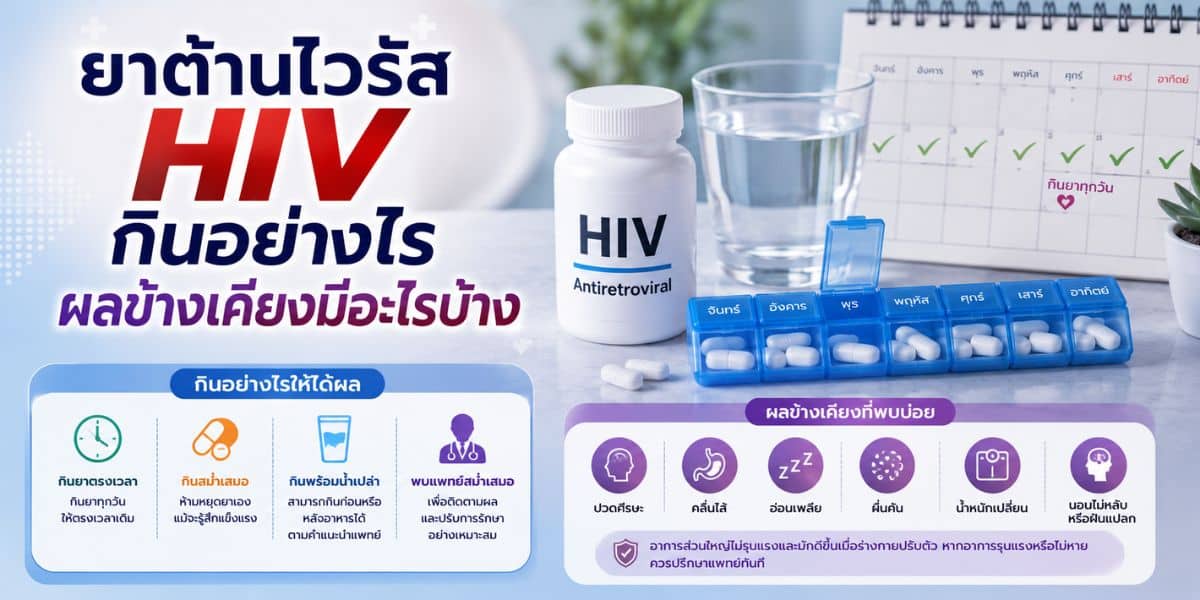
IRIS: Immune Recovery After Starting HIV Treatment
Worsening symptoms after starting ART may be IRIS, but they need prompt medical assessment to tell IRIS apart from a drug reaction, treatment failure…
อ่านภาษาไทย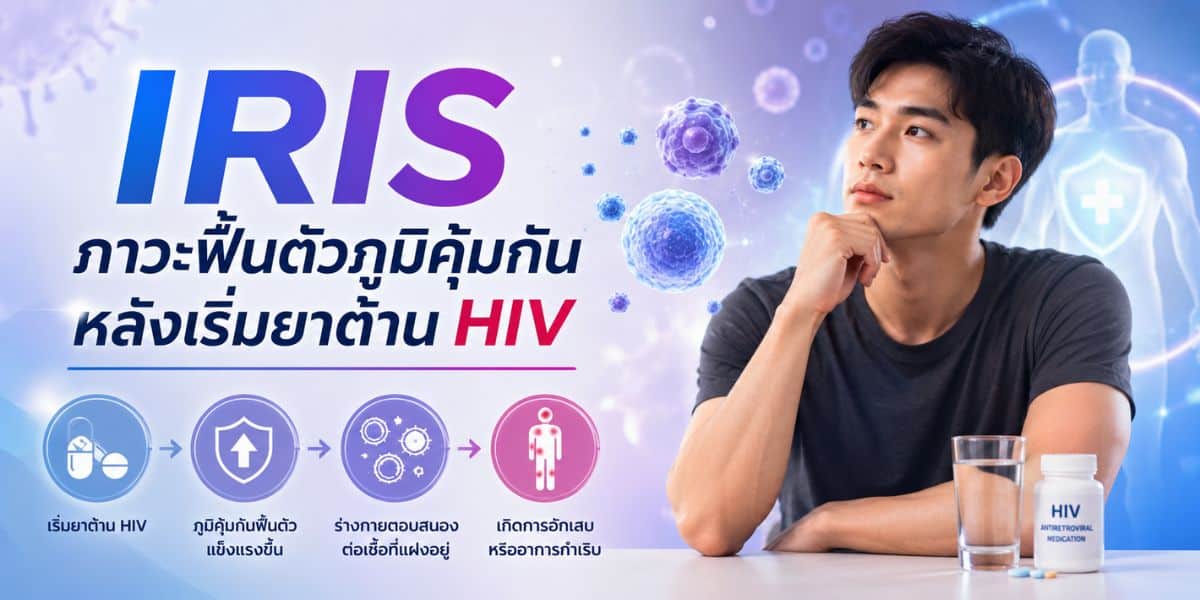
Contents
You start antiretroviral therapy, and within a few weeks your symptoms take a turn for the worse — fever, swollen lymph nodes, or symptoms that had been improving now flaring up worse than before.
This situation often leads people to conclude right away that "the medication isn't working" or "the medication is making me worse," and to stop taking it on their own — a very dangerous decision. In many cases, what is actually happening is a condition called IRIS, which is a sign that the medication is working, not the opposite.
What is IRIS?
IRIS stands for Immune Reconstitution Inflammatory Syndrome — the inflammatory syndrome that occurs as the immune system recovers.
Put simply: before starting treatment, a person's immune system is too weak to respond to the pathogens hidden in the body, so those pathogens sit there quietly without causing obvious symptoms.
When antiretroviral therapy begins to work, the viral load drops rapidly and the immune system recovers, seeing the hidden pathogens for the first time. The result is intense inflammation in the areas where the pathogens are present, which shows up as symptoms that look like a disease flare.
Here is a way to picture it: imagine a house left unguarded for a long time, where intruders have moved in with no one to drive them out. When the guards finally return to work, a clash breaks out — loud and chaotic. But that noise is a sign that the guards are back on the job, not a sign that the house is falling apart. Even so, do not diagnose this yourself — severe symptoms can be a medical emergency, so let a doctor confirm what is happening.
When does it occur?
IRIS usually occurs 2–12 weeks after starting antiretroviral therapy, most commonly during the first 4–8 weeks.
This timing lines up with the moment when the viral load in the blood falls rapidly and the CD4 count begins to rise. Those are positive changes in the numbers, but they can bring on temporary clinical symptoms.
Who is at higher risk?
| Risk factor | Why |
|---|---|
| Very low CD4 count before starting treatment | The more the immune system is damaged, the more hidden pathogens are present |
| Very high viral load before starting treatment | The change after starting treatment is more severe |
| Already have an opportunistic infection | Especially tuberculosis and certain fungal infections |
| Only recently started treatment for an opportunistic infection | The infection is not yet fully controlled |
| Responds to antiretroviral therapy very quickly | The immune system recovers faster than the body can adjust |
This is why Thailand's treatment guidelines require screening for tuberculosis and opportunistic infections before antiretroviral therapy is ever started — a step that many people wonder about the purpose of.
It is also why detecting HIV early, before the CD4 count drops significantly, meaningfully reduces the risk of IRIS.
The two types of IRIS
| Type | Characteristics | Example |
|---|---|---|
| Paradoxical IRIS | A disease that is already known and being treated flares up worse | Someone being treated for TB has improved, but after starting antiretroviral therapy develops fever and enlarged lymph nodes again |
| Unmasking IRIS | A disease that was hidden and unknown now appears | A person never knew they had TB; after starting antiretroviral therapy the symptoms become clear |
Both types share the same principle: the recovering immune system begins to respond to the pathogen. The main distinction is whether the underlying infection was already diagnosed and treated before ART began.
Symptoms depend on which underlying infection is involved
IRIS has no symptoms of its own; it shows up according to the organ where the pathogen is present.
| Pathogen involved | Common symptoms |
|---|---|
| Tuberculosis | Fever returns, enlarged and painful lymph nodes, increased cough, worsening lung infiltrates on X-ray |
| Fungal infection of the brain | Severe headache, nausea, raised pressure inside the brain |
| CMV infection in the eye | Blurred vision, reduced vision, eye inflammation |
| Shingles and herpes | Flare-up of a blistering rash |
| Hepatitis B or C | Elevated liver enzymes |
| Fungal infection of the lungs | Increased shortness of breath and fever |
| Skin infection | An existing rash or lesion flares up; see Rash and skin symptoms |
The symptoms found in almost every case are fever and enlarged lymph nodes.
How to tell it apart from other conditions
When symptoms worsen after starting treatment, there are several possibilities, and sorting them out is the doctor's job — not something to diagnose on your own.
| Possible cause | Clues that help distinguish it | What to do |
|---|---|---|
| IRIS | Viral load is dropping well, CD4 is rising, symptoms appear in the first 2–12 weeks | Treat the inflammation; do not stop antiretroviral therapy |
| Antiretroviral therapy not working | Viral load does not drop | Assess adherence and drug resistance |
| Drug allergy | Rash with fever, mouth ulcers, red eyes, peeling skin | See a doctor immediately; the offending drug may need to be stopped |
| A new opportunistic infection | New symptoms that were not present before | Test for the pathogen and treat it |
| Treatment of the existing infection not working | The pathogen is resistant to the drug being used | Adjust the medication treating that infection |
The clearest clue is the blood results — if the viral load is falling and CD4 is rising while symptoms worsen, that points more to IRIS than to treatment failure. See how to read these values at CD4 and viral load.
How is it treated?

The most important principle: do not stop antiretroviral therapy
In most cases, the doctor will have you continue antiretroviral therapy, because stopping it lets the virus multiply again, sets the immune system back, and raises the risk of drug resistance — which is permanent damage.
Stopping treatment is an option only when IRIS is severe enough to be life-threatening, and it is a decision made by the doctor, not the patient.
What doctors usually do
- Confirm it really is IRIS — through blood tests and testing for other pathogens that could be the cause
- Fully treat the underlying pathogen — for example, continuing tuberculosis medication or antifungal medication
- Control the inflammation — in some severe cases, anti-inflammatory medication may be considered under close supervision
- Manage the symptoms — such as fever reducers and pain relievers
- Monitor more closely — more frequent appointments during this period
Please note: anti-inflammatory medication is not right for every case of IRIS, and in some situations it can be dangerous. This decision must be made only by a doctor who examines the person directly. Do not buy or take these medications on your own.
How long does IRIS last?
It is usually a temporary condition. Symptoms often improve within a few weeks to a few months, as the immune system finds its balance and the underlying pathogen is brought under control.
Most people who get through this phase go on to normal long-term treatment with good outcomes — having IRIS does not mean treatment will fail.
How can the risk be reduced?
- Test for HIV as early as possible — this is the most effective step, because starting treatment while the CD4 count is still relatively high keeps the risk of IRIS low. See when to get tested
- Screen for opportunistic infections before starting treatment — especially tuberculosis
- Start treatment on the schedule the doctor sets — for some opportunistic infections, that infection may need to be treated for a while before antiretroviral therapy begins
- Keep appointments during the first 3 months — this is the period that needs the most watching
- Report symptoms right away — do not wait for the next appointment
The side that gets discussed less: the emotional impact
For someone who has only recently learned their test result and then finds their condition getting worse after starting treatment, the emotional response is often more intense than the physical symptoms.
Many people read it as "it's too late to treat this" or "my body won't accept the medication," which can lead to despair and to stopping treatment — even though what is really happening is a sign that the immune system is coming back to life.
If you are in this phase, tell your care team how you are feeling, not just your physical symptoms. Understanding what is happening can go a long way toward easing fear. Read more at HIV and mental health and Living with HIV.
What should you do if symptoms worsen after starting treatment?
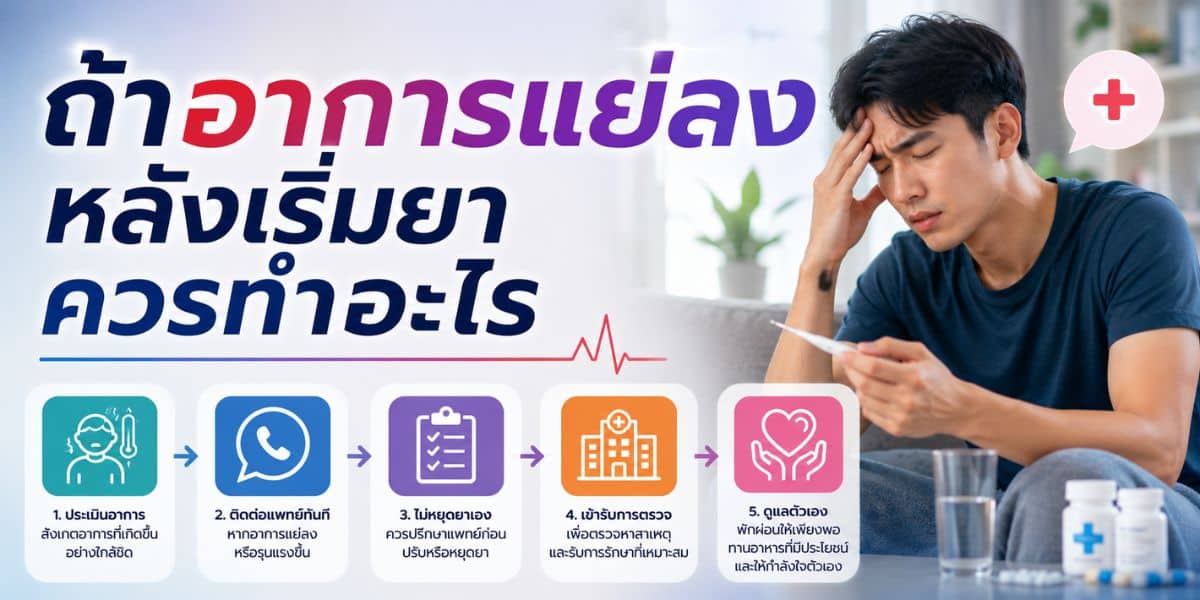
- Do not stop your medication on your own — this is the most important point
- Contact your care team immediately — no need to wait for an appointment
- Write down your symptoms — when they started, what they are like, whether they are getting worse or better
- Tell them how many weeks you have been on antiretroviral therapy — this is key information that helps the doctor consider IRIS
- Go to the hospital immediately if there are danger signs — severe headache, vision changes, trouble breathing, seizures, or becoming drowsy and less responsive
For the danger signs from medication that need to be told apart, read Antiretroviral drugs and side effects.
Frequently asked questions
Does IRIS mean the medication isn't working?
On the contrary, IRIS happens because the medication is working so well that the immune system recovers quickly. You can confirm this from a falling viral load and a rising CD4 count.
If you get IRIS, do you have to stop the medication?
In most cases, no. The doctor will have you keep taking it and treat the inflammation alongside it. Stopping is an option only in very severe cases, and it is the doctor's decision.
Does it happen to everyone who starts treatment?
No. It is more common in people who start treatment when their CD4 count is very low or who already have an opportunistic infection. People who are diagnosed and begin treatment early have a low risk.
How long does it last?
It is usually temporary, improving within a few weeks to a few months.
Can it be prevented?
The risk can be lowered by testing for HIV early and screening for opportunistic infections before starting antiretroviral therapy.
How is it different from a drug allergy?
A drug allergy usually comes with a rash plus fever, mouth ulcers, or peeling skin, and it tends to appear sooner. IRIS, by contrast, usually shows up as a flare of a pathogen hidden in a specific organ. Telling them apart requires a doctor's assessment.
IRIS in the Thai context
What makes IRIS especially important in Thailand and this region is tuberculosis, the opportunistic infection most often found alongside HIV.
People who have both HIV and tuberculosis at the same time are the group at highest risk for IRIS, which is why the treatment guidelines lay out the steps in such detail.
- Screen every patient for tuberculosis before starting antiretroviral therapy — not only those with a cough
- Treat the tuberculosis, then start antiretroviral therapy at the appropriate time — when to start ART in someone with TB depends on the site and severity of the TB and the clinician's assessment, so the two are not always started at once
- Follow up closely during the first 3 months
Another group to watch for is people who come in for their first medical visit when their CD4 count is already very low — often those who have never tested for HIV before and only learn their status once they are seriously ill.
The system-level conclusion is clear: the sooner people test for HIV, the smaller the burden of IRIS on the health system, because those who start treatment while their immune system is still strong hardly ever face this condition. See free HIV testing services in Thailand.
Summary
IRIS is a temporary worsening of symptoms after starting antiretroviral therapy. It happens because the recovering immune system responds to pathogens that were hiding in the body — a sign that treatment is working, not failing.
Two immediate priorities are: do not stop your medication on your own, and contact your care team immediately when your symptoms change.
In the bigger picture, IRIS is one more reason early HIV testing matters so much — because people who start treatment before their immune system is badly damaged hardly ever face this condition.
Book a free HIV test anywhere in the country at Love2Test.org
Key points to remember
- IRIS is a temporary worsening of symptoms from the recovering immune system — not the medication failing
- It usually occurs 2–12 weeks after starting treatment, most commonly at 4–8 weeks
- The risk is high for people with a very low CD4 count or an existing opportunistic infection
- Tuberculosis is the most commonly involved pathogen in the Thai context
- The clue that helps distinguish it is a falling viral load and a rising CD4 count while symptoms worsen
- In most cases, antiretroviral therapy does not need to be stopped
- The best prevention is testing for HIV as early as possible
Verified references
Links and relevance to the article’s main topic were reviewed on 13 August 2026. Each source supports only the scope stated in the original document and does not replace personalised medical, legal, or service advice.
- NIH HIVinfo: HIV Treatment Basics Accessed 13 August 2026
- NIH HIVinfo: HIV Medicines and Side Effects Accessed 13 August 2026
- WHO: HIV and AIDS fact sheet Accessed 13 August 2026