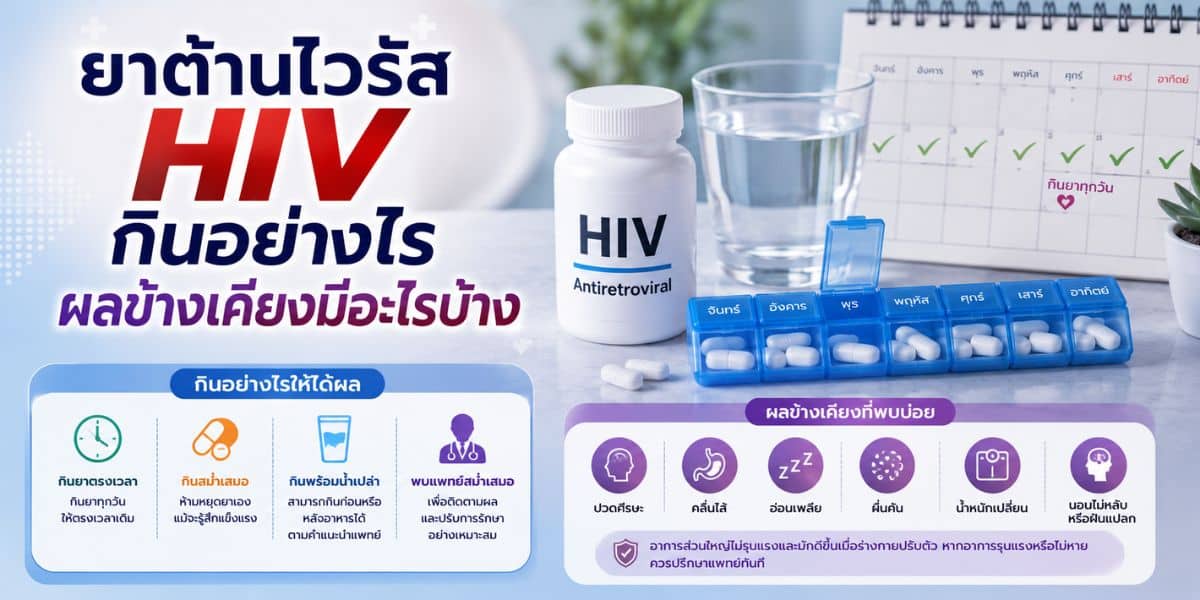
Thailand's HIV Treatment Guidelines: An Easy-to-Understand Guide
Understand HIV treatment in Thailand: confirmed diagnosis, timely ART, individual regimens, follow-up, transfer of care and entitlement checks.
อ่านภาษาไทย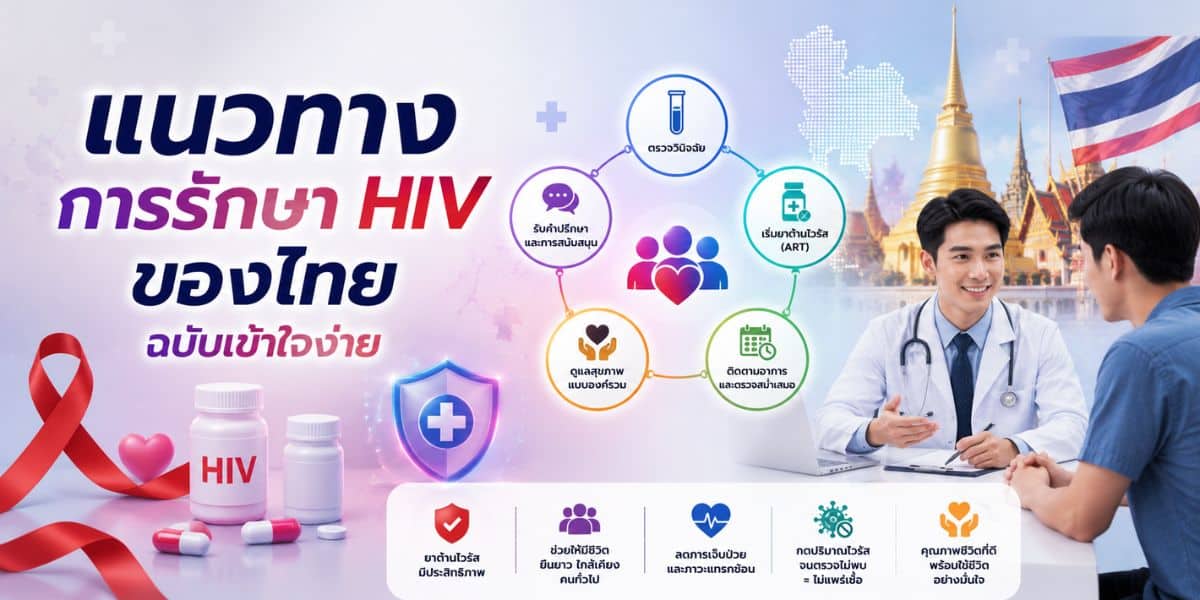
Contents
Does a reactive screening test alone mean I should start someone else’s ART?
No. A reactive screen needs the appropriate diagnostic pathway. Connect with a treatment service promptly, but do not share or choose medicines yourself. Bring previous tests, medications, hepatitis history and any symptoms.
Is the same-day start option compulsory or suitable for everyone?
No. The team considers readiness, symptoms, possible opportunistic infections and other medicines. Do not wait for a low CD4 count to seek care, but do not assume that every clinical situation uses the same start date.
Are treatment, tests and transfers automatically free at every Thai hospital?
No. Confirm the entitlement, participating facility, referral requirements and items covered. Non-Thai residents and travellers may have different arrangements. Arrange records and enough prescribed medicine before a transfer to avoid an unintended treatment gap.
When you learn that your blood test is positive, the question that immediately follows is: "So what do I do next?" — and in Thailand today, the answer is far clearer than it has ever been.
Thailand's HIV treatment guidelines have changed significantly over the past decade. Where treatment once had to wait until the immune system had dropped to a certain level before starting medication, the current principle is start treatment as early as possible, with nothing to wait for.
This article explains what the current approach looks like, what you can expect from day one through long-term care, and what rights you have.
The core principles of the current approach
1. Test and Treat — find it, treat it right away
In the past, starting antiretroviral therapy meant waiting until your CD4 count fell to a set threshold. But medical evidence clearly shows that starting early is better in every respect — for immune recovery, for the risk of complications, and for reducing transmission.
The guiding principle today is therefore that everyone living with HIV should receive antiretroviral therapy, no matter what their CD4 count is.
2. Same-Day ART — start treatment the same day you learn your result
Many healthcare facilities in Thailand can start you on medication the very day your result is confirmed, provided you are ready and there is no medical reason not to.
The reasoning behind this policy is easy to understand — the longer the gap between "learning the result" and "starting treatment," the higher the chance that someone drops out of care, whether out of fear, because they are not yet emotionally ready, or because everyday life gets in the way.
That said, you have the right to take time to gather yourself. Same-day start is an option that is available to you, not something you are forced into.
3. The goal is to suppress the virus until it is undetectable
The goal of treatment is not simply "to give medication," but to bring the amount of virus in the blood down until it is undetectable and to keep it there. This leads to two outcomes at once: the immune system recovers, and the virus is not transmitted sexually, following the principle of U=U.
Your first day in care: what to expect
| Step | What happens |
|---|---|
| Confirm the blood result | Always complete the national three-assay testing algorithm first |
| Counseling | Explain the result, answer questions, assess readiness |
| Take a history and physical exam | Assess symptoms, existing conditions, and current medications |
| Baseline blood tests | CD4, liver and kidney function, complete blood count |
| Screen for co-infections | Tuberculosis, hepatitis B and C, syphilis |
| Choose the drug regimen | Based on co-existing conditions, current medications, and pregnancy |
| Receive medication and schedule follow-up | Explain how to take it and what to watch for |
How to read the various values on these blood test results is explained in What is Anti-HIV and how do you read the blood test results?
Why clinicians assess for tuberculosis when starting ART
This is a step people often wonder about. The answer is that tuberculosis is the most common co-infection in people living with HIV, and if antiretroviral therapy is started while undiagnosed tuberculosis is present, the immune system can recover so quickly that the tuberculosis flares up severely.
In addition, some tuberculosis medications interact significantly with antiretroviral drugs. This does not always mean antiretroviral therapy is delayed until screening is fully complete — whether treatment starts right away or the tuberculosis is treated first depends on the type and severity of the tuberculosis and the clinician's assessment of each person.
The first-line drug regimens
Regimens are selected under current local guidance, considering resistance, hepatitis B, pregnancy, kidney function, interactions and treatment history. Neither one tablet nor one drug combination is right for everyone. Updates to an international guideline do not establish Thai approval, stock or entitlement.
The follow-up schedule after starting treatment
Ask for a written plan for clinical review, viral load and any CD4, kidney, liver or other monitoring needed. Timing depends on the regimen, response and health conditions. An overview table cannot guarantee viral suppression by a particular month or require every test at every visit.
When treatment doesn't work
If the virus is still not suppressed after a period of time, the doctor will assess the situation in the following order:
- Assess adherence to the medication — you can speak frankly with your doctor about this; no one is judging you, and it is essential information for making the right decision.
- Check for drug interactions — antacids, calcium, iron, and certain herbal remedies can greatly reduce the absorption of antiretroviral drugs.
- Test for drug resistance — to see which drugs the virus has become resistant to.
- Switch to a second-line regimen — choosing drugs the virus is not yet resistant to.
The reason inconsistent adherence is so dangerous is that it leads to drug resistance, which can limit future treatment options and may stay in the virus's resistance history.
Rights and costs
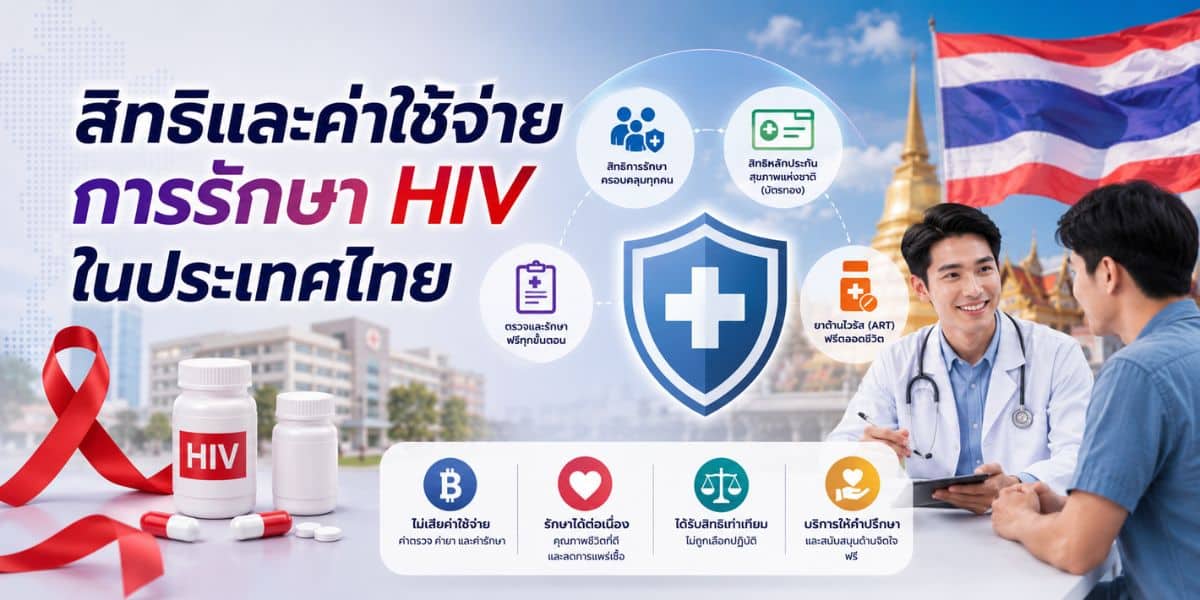
Check the specific health entitlement and facility, including consultation, medicine, laboratory, referral and follow-up charges. Do not infer coverage from nationality alone or assume that all care is free for travellers. Ask the receiving facility to confirm arrangements before transferring.
Situations that need special care
People who are pregnant
People who are pregnant should receive antiretroviral therapy, because suppressing the viral load during pregnancy reduces the chance of passing the virus to the baby to less than 1%. The baby will receive preventive medication after birth and be monitored at intervals. Tell your doctor as soon as you know you are pregnant or are planning to have a child.
People who also have tuberculosis
TB type, severity, possible meningitis, immune status and interactions affect the plan for starting ART alongside TB treatment. Seek coordinated care promptly; do not delay or restart either treatment using a general timetable from an article.
People who also have hepatitis B
Some antiretroviral drugs act against both viruses, which is an advantage — but it also means that stopping the medication on your own can cause a severe hepatitis flare-up. See Hepatitis B.
Young people and older adults
Both groups have particular considerations. Young people often face challenges with adherence and with disclosing their status, while older adults often have chronic conditions and other medications where drug interactions must be watched.
A national goal you are part of
Thailand is working toward the international target known as 95-95-95, which means:
- 95% of people living with HIV know their status — through expanded testing services.
- 95% of those who know their status are on antiretroviral therapy — through the immediate-treatment policy.
- 95% of those on treatment achieve viral suppression — through follow-up and support.
These figures are not just a matter of policy. When the proportion of people with a suppressed viral load is high enough, the overall rate of new infections falls as well — so taking your medication consistently has an impact that reaches far beyond your own health. Read more at Progress in HIV control.
What the treatment guidelines don't tell you
Medical documents can tell you which drugs to use and what to test for and when, but they don't tell you how to cope with your feelings.
- The first month is often the hardest — both adjusting to the medication and adjusting to new information about yourself.
- You don't have to tell anyone — disclosing your status is your right, not your obligation.
- Depression is common and treatable — and it directly affects adherence to your medication. Read HIV and mental health.
- Having someone who understands helps more than you might think — see Living with HIV.
What to ask at each appointment with your doctor
Time with your doctor is limited, so preparing your questions in advance helps you get the most out of it.
- "What is my latest viral load — is it undetectable yet?" — this number tells you whether the treatment is working.
- "Is my CD4 rising as it should?"
- "Are my liver and kidneys still normal?" — especially if you have been on medication for a long time.
- "Is the regimen I'm taking now still the most suitable one?" — newer regimens with fewer side effects keep coming out.
- "Do any of the medications or supplements I'm taking interact with each other?" — bring a full list with you.
- "Are there any additional vaccines I should get?" — such as flu or hepatitis vaccines.
- "What age-appropriate screenings should I have?" — people living with HIV have recommendations for certain cancer screenings that differ from the general population.
What to do if you've missed an appointment or missed doses
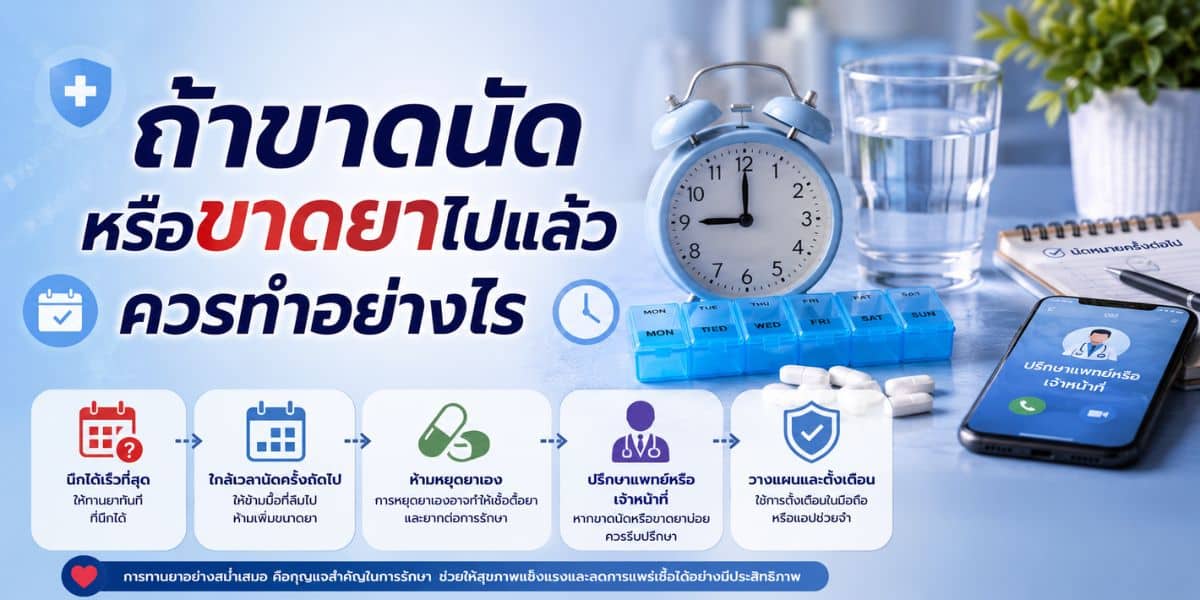
This happens to many people, and it is often followed by feelings of guilt strong enough that people don't dare go back — which only makes the problem worse.
Missing doses for a few days
Go back to taking your medication as usual right away and contact your healthcare facility to get more. Do not take a double dose to make up for it.
Missing doses for weeks or months
Contact your HIV clinic as soon as possible for advice tailored to you; don't delay seeking care because you feel embarrassed. The team may need to assess whether the virus has become resistant, and a blood test may be needed before deciding on a regimen.
Having been out of care for a long time
You can always come back, and you will not be blamed. The care team understands well that life gets in the way — a job change, family problems, depression, or the sheer fatigue of having to take medication every day.
The only thing worse than being off medication for a long time is never coming back because of embarrassment. The sooner you return, the more treatment options you have left.
Frequently asked questions
Do I have to wait until my CD4 is low before starting treatment?
No. The current approach is to start treatment as soon as the result is confirmed, no matter what your CD4 count is.
Can I start treatment the same day I learn my result?
Yes, at many healthcare facilities, if you are ready and there is no medical reason not to. But you also have the right to ask for time to gather yourself first.
How many pills do I take a day?
Combination tablets can reduce pill burden, but the number of pills and dosing schedule depend on the actual regimen. Ask the care team for instructions and an interaction check rather than copying another person’s prescription.
Is the medication different between public and private hospitals?
Both should follow national clinical standards, but the available regimens, specialist services, waiting times, and costs may differ.
What do I do if I move to another province?
Notify your current facility in advance to request that your records be transferred, and request enough backup medication to cover the transition. Don't let yourself run out.
Once the virus is suppressed, can I stop treatment?
No. If you stop the medication, the virus lying dormant will come back and multiply within a few weeks. See Can HIV be cured?
Summary
Confirm the diagnosis, connect promptly to care, agree on an individual treatment and monitoring plan, and arrange continuity when travelling or moving. Effective ART supports long-term health. Confirm costs and eligibility directly; an educational article is not a coverage guarantee.
Verified references
Links and relevance to the article’s main topic were reviewed on 13 August 2026. Each source supports only the scope stated in the original document and does not replace personalised medical, legal, or service advice.
- กรมควบคุมโรค: Thailand National Guidelines on HIV/AIDS Treatment and Prevention 2021/2022 Accessed 13 August 2026
- กรมควบคุมโรค: HIV INFO HUB—การรักษา Accessed 13 August 2026
- NIH HIVinfo: HIV Treatment Basics Accessed 13 August 2026