How are HIV rashes and HIV bumps different from common rashes?
An acute HIV rash may appear as small red or discolored spots on the torso, typically without itching, and often occurs alongside flu-like symptoms.
อ่านภาษาไทย
Contents
When a rash appears after a possible HIV exposure, many people search for images online and compare them with their own skin. This often increases anxiety without providing a reliable answer.
The truth is that no type of rash can confirm HIV by appearance alone. Some patterns may prompt a clinician to consider acute HIV alongside other possible causes. This article explains how an acute HIV rash may appear, how it can differ from allergic rashes or rashes caused by common viral illnesses, and when to seek testing or medical care.
This article focuses on the first group because it is a common concern after a possible recent exposure.
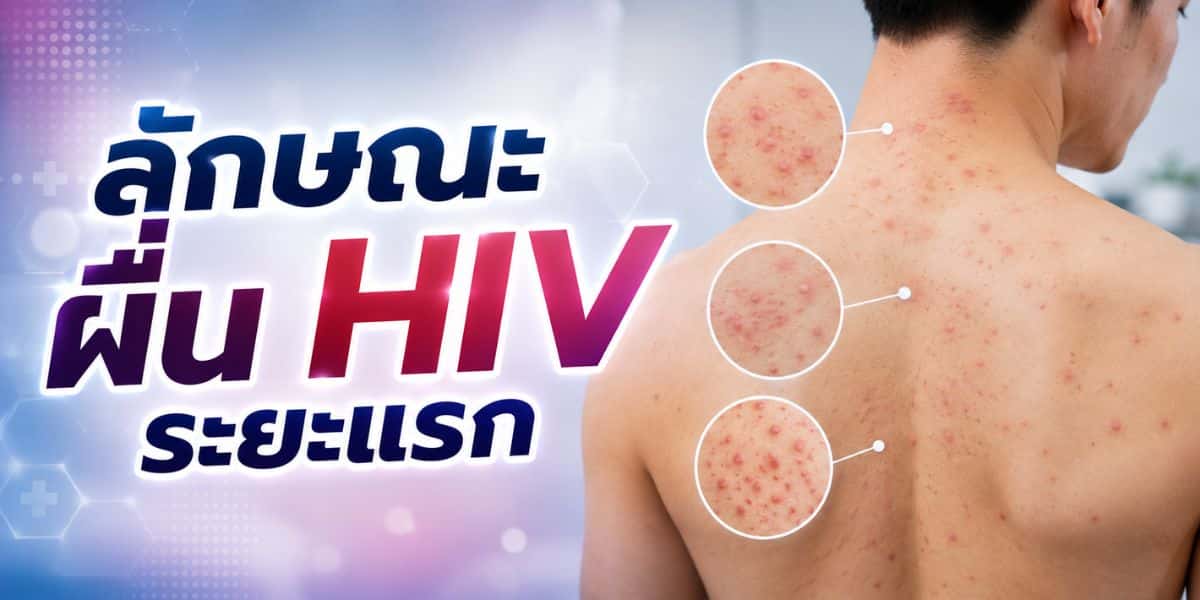 An acute HIV rash may have the following characteristics:
This table is only a preliminary guide; it is not a diagnostic tool. Many other conditions can cause overlapping skin findings.
Find private HIV testing near you
* Prices and free services vary by provider. Please check the details before booking.
Find a provider

Start taking care of yourself with an HIV test
* Prices and free services vary by provider. Please check the details before booking.
Find testing near me
What is an HIV rash, and what causes it?
HIV-related rashes can be divided into 3 main groups, which have different causes and timeframes of occurrence| Group | When does it occur? | Cause |
|---|---|---|
| 1. Acute rash | 2–4 weeks after HIV acquisition | Immune response to a rapidly multiplying virus |
| 2. Antiretroviral drug rash | First few weeks after starting medication | Drug hypersensitivity reaction |
| 3. Rash related to immunosuppression | Advanced untreated HIV | Fungal infections, herpes, shingles, or skin cancer |
Characteristics of HIV rash in the early stage
An acute HIV rash may have the following characteristics:
- Color — red or pink. In people with darker skin, it may appear as a darker purple or more intense brown
- Shape — flat, small, or slightly raised bumps, often no larger than 1 centimeter
- Distribution — Usually appears mainly on the torso and may spread to the face, neck, arms, palms, and soles
- Itching — Usually not itchy or only slightly itchy, which helps distinguish it from many allergic rashes
- Duration — Lasts about 1–3 weeks and goes away on its own without scarring
- Common accompanying symptoms — Fever, sore throat, swollen lymph nodes, and body aches
How do HIV-related bumps differ from acne or heat rash?
People searching for “HIV bumps” often mean multiple small, slightly raised spots that appear around the same time. The table below offers a basic comparison.| Feature | Acute HIV rash | Heat rash | Allergic rash | Acne |
|---|---|---|---|---|
| Itching | Usually not itchy, or only slightly itchy, which helps distinguish it from many allergic rashes | Very itchy | Very itchy | Not itchy but can be painful |
| Location | Mainly the body, possibly reaching palms and soles | Covered, humid areas | Areas exposed to an allergen | Face, back, and chest |
| Fever present | Often present | None | None | None |
| Enlarged lymph nodes | Often present | None | None | None |
| Pus | None | None | None | Often present |
Which skin findings are more suggestive of other conditions?
Secondary syphilis
Secondary syphilis is one of the conditions most likely to resemble an acute HIV rash and is often overlooked. Its rash commonly involves the palms and soles, usually does not itch, and may appear about 6–8 weeks after the primary chancre has healed. Read more at syphilis symptoms and treatment. Because syphilis and HIV share some transmission routes, clinicians often recommend testing for both at the same time.Herpes simplex
Herpes differs from an acute HIV rash because it usually causes clusters of fluid-filled blisters, often preceded by pain, tingling, or burning. Read more at herpes virus infection.HPV warts
HPV warts are firm, slow-growing bumps that may last for months. Unlike an acute HIV rash, they do not usually disappear on their own within 1–3 weeks. See HPV warts.Rashes caused by common viral illnesses
Dengue, measles, rubella, and many other viral infections can cause a rash with fever. This is another reason why appearance alone is not enough to determine the cause.Rashes in people living with HIV long-term
For people who know they are living with HIV and are receiving care, a rash may have different causes.Rash caused by antiretroviral medication
Some antiretroviral medications can cause a rash in the first few weeks. Most are not severe and go away on their own. However, if the rash occurs along with high fever, mouth sores, red eyes, or skin peeling, seek medical attention immediately because this may be a serious drug reaction. Do not stop antiretroviral medication without first contacting your healthcare provider.Rash from immunosuppression
When the CD4 count becomes very low, fungal skin infections, shingles, or chronic dermatitis may occur. These problems should be assessed by a healthcare professional, who can also review the treatment plan. Learn more at opportunistic infectionsIRIS
In people who start antiretroviral therapy with severe immunosuppression, skin symptoms may temporarily worsen as the immune system begins to recover. This is known as immune reconstitution inflammatory syndrome (IRIS) and does not necessarily mean that treatment is ineffective.What to do if you have a rash
- Do not compare with images on the internet — Most online images are of severe, atypical cases, which can lead to incorrect self-assessment in both directions
- Review risk history — Have you had sexual intercourse without a condom or shared needles in the past 2–4 weeks? See how HIV is and is not transmitted
- Observe accompanying symptoms — Do you have fever, sore throat, or swollen lymph nodes? Read early HIV symptoms
- If a possible exposure occurred within the past 72 hours — Seek medical care for PEP as soon as possible
- Get an HIV test — Choose the appropriate testing time based on the HIV window period
- Do not self-treat with topical steroids — Steroids can worsen some infectious rashes; ask a healthcare professional first.
When should you seek medical attention
- The rash spreads quickly within a few hours
- A fever above 38.5°C
- Skin blistering or peeling
- Sores in the mouth, red eyes, and rash
- Difficulty breathing, facial or lip swelling
- A rash that does not resolve within 3–4 weeks
Common questions about HIV rash
Does HIV rash itch?
An acute HIV rash is often not itchy or only mildly itchy. Intense itching is more commonly associated with an allergic rash or heat rash, although symptoms alone cannot identify the cause.Where does an acute HIV rash usually appear?
It often appears first on the torso and may spread to the face, neck, arms, palms, or soles.If the rash appears as a single spot, is it HIV?
A single spot is not a typical pattern of acute HIV rash, but symptoms cannot determine HIV status. Acute HIV rash more often involves multiple spots and may occur with fever or other flu-like symptoms.If the rash has gone away, does that mean I do not have HIV?
No. An acute rash can resolve on its own within 1–3 weeks even if HIV is present. A rash disappearing cannot confirm or rule out HIV; an HIV test is required.If I have no rash, does that mean I do not have HIV?
No. Many people with HIV do not develop a rash during the acute stage.Summary
An acute HIV rash may appear as small red or discolored spots or slightly raised bumps on the torso, sometimes with fever and swollen lymph nodes, and may resolve within 1–3 weeks. However, these findings overlap with many other conditions, especially secondary syphilis. The practical takeaway is this: if you have had a possible exposure, a rash is a reason to seek appropriate testing—not to keep comparing images online. Book a free HIV and sexually transmitted infections (STIs) test appointment at Love2Test.orgVerified references
Links and relevance to the article’s main topic were reviewed on 13 August 2026. Each source supports only the scope stated in the original document and does not replace personalised medical, legal, or service advice.
- WHO: HIV and AIDS fact sheet Accessed 13 August 2026

Written and reviewed by
Love Foundation Editorial Team
Health and community-rights editorial team
Published 4 August 2026
Last updated 14 August 2026