


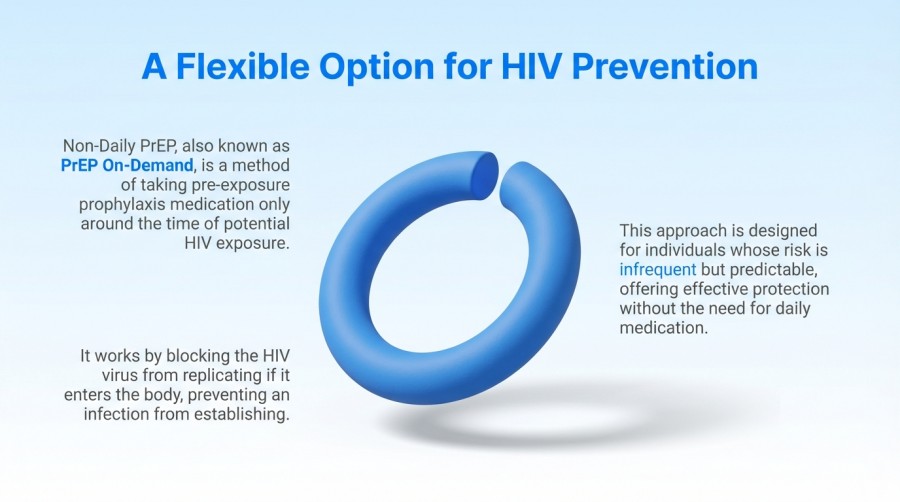
Non-Daily PrEP, also known as PrEP On-Demand, is a flexible HIV prevention option designed for people who face HIV risk only occasionally and are able to plan ahead. Traditionally, PrEP has been associated with daily medication use. However, Non-Daily PrEP allows individuals to take medication only around the time of potential exposure, following a structured dosing schedule known as 2-1-1. When used correctly, this approach provides effective protection against HIV without the need for daily medication, making it well suited to people whose risk is infrequent but predictable.
What is Non-Daily PrEP ?
Non-Daily PrEP is a form of pre-exposure prophylaxis taken before HIV exposure. The medication works by blocking HIV replication if the virus enters the body, preventing it from establishing infection. This method is particularly suitable for individuals who can anticipate sexual activity in advance. By ensuring sufficient drug levels before and after exposure, Non-Daily PrEP offers a reliable prevention strategy when taken as recommended.
How to Take Non-Daily PrEP (2-1-1 Method)
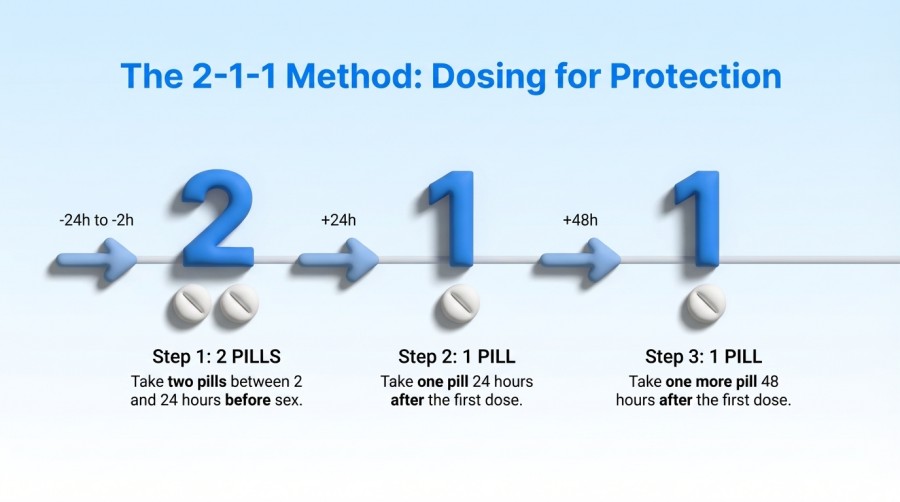
Non-Daily PrEP follows a specific dosing schedule:
- Take 2 pills 2–24 hours before sexual activity
- Take 1 pill 24 hours after the first dose
- Take 1 pill 48 hours after the first dose
This regimen helps maintain protective drug levels during the period of risk and shortly afterward.
Who is Non-Daily PrEP Suitable For?
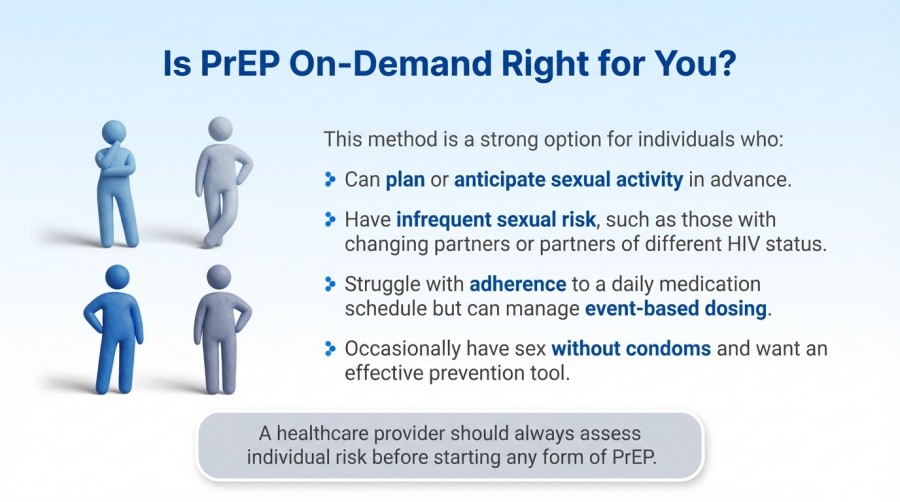
Non-Daily PrEP may be appropriate for individuals such as:
- People with multiple or changing sexual partners
- Individuals with partners of different HIV status
- Sex workers
- People who inject drugs
- Men who have sex with men
- Individuals who have used PEP multiple times
- People who occasionally have sex without condoms
A healthcare provider should assess individual risk before starting PrEP.
Benefits of PrEP On-Demand
Non-Daily PrEP offers several advantages:
- No need to take medication every day
- Suitable for people who struggle with daily adherence
- Ideal for those with infrequent or planned HIV risk
Different Ways to Use PrEP
There are two main PrEP options, each suited to different lifestyles:
Daily PrEP
- One pill every day at the same time
- Recommended for ongoing or frequent risk
- Maintains constant drug levels for maximum protection
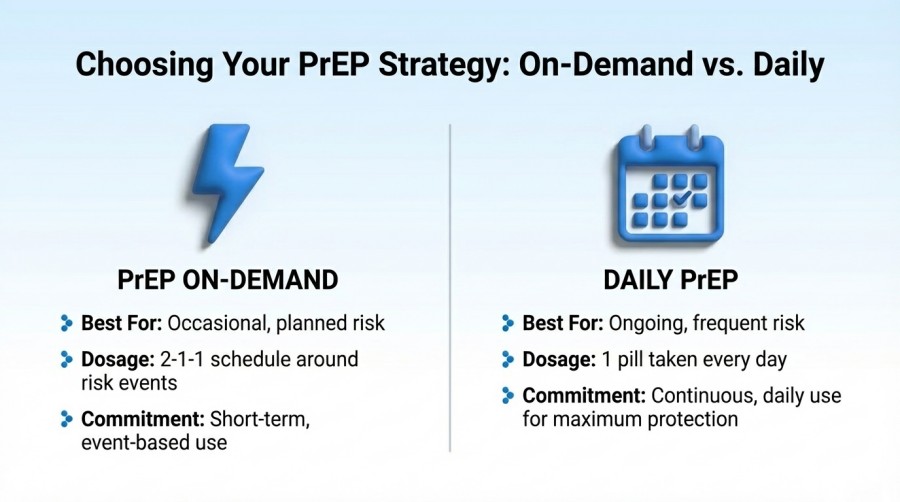
Non-Daily PrEP
- Taken only during periods of expected risk
- Uses the 2-1-1 dosing schedule
- Suitable for occasional, planned exposure
Choosing the right method depends on individual risk patterns and medical advice.
How to Access PrEP Safely?
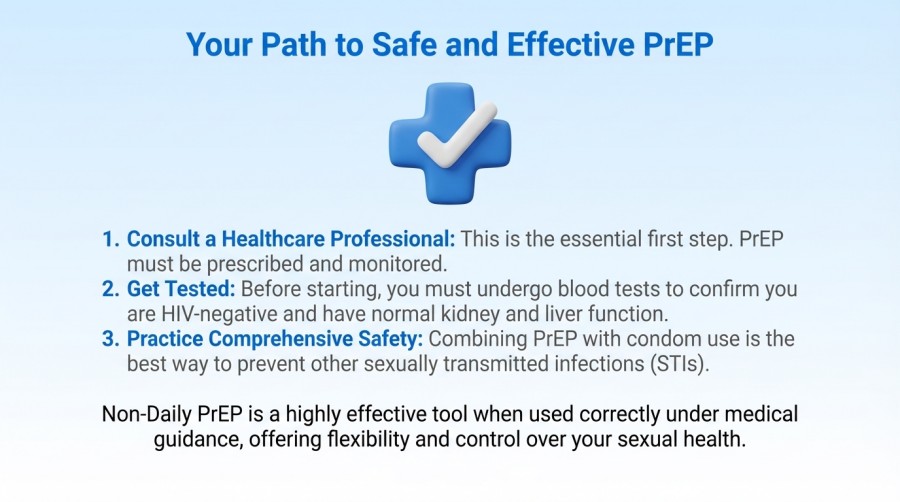
Before starting PrEP, individuals must consult a healthcare professional and undergo blood tests to confirm:
- HIV-negative status
- Normal kidney and liver function
Ongoing follow-up and regular testing are essential to ensure continued safety and effectiveness.
Who Should Not Use PrEP?
Although PrEP is highly effective, it may not be suitable for everyone. Extra caution or avoidance is advised for individuals who:
- Have chronic liver disease
- Have impaired kidney function
- Are allergic to TDF or FTC
Safe PrEP use requires proper health screening, risk assessment, and ongoing medical supervision.
Related Article
PrEP On-damand vs. Daily PrEP
| Feature | PrEP On-damand | Daily PrEP |
|---|---|---|
| Timing | 2–24 hours before risk | At least 7 days before risk |
| Dosage | 2-1-1 schedule | 1 pill daily |
| Duration | Short-term use | Continuous use |
| Cost | Generally lower | Generally higher |
| Suitable for | Occasional risk | Ongoing risk |
Side Effects of PrEP
Most PrEP users experience no side effects. Mild symptoms such as nausea, headache, diarrhea, or reduced appetite may occur during the first 2–3 weeks and usually resolve on their own. If symptoms are severe or persistent, medical advice should be sought immediately.

Conclusion
Non-Daily PrEP is an effective and flexible HIV prevention option for individuals with occasional, predictable risk. When taken correctly using the 2-1-1 method, it significantly reduces the risk of HIV infection while eliminating the need for daily medication. However, choosing the right PrEP strategy should always be based on accurate information, personal risk assessment, and guidance from healthcare professionals. Combining PrEP with condom use remains essential for preventing other sexually transmitted infections and maintaining overall sexual health.
References:
- วิธีการกิน ยา PrEP แบบกินทุกวัน vs กินเฉพาะก่อนเสี่ยง ต่างกันอย่างไร?
- PrEP ตามความต้องการนั้นมากเกินไปหรือไม่?
- 2-1-1: ทำความเข้าใจ PrEP On-Demand เพื่อป้องกัน HIV
Last Updated on 29/12/2025 by ทีมที่ปรึกษา มูลนิธิเพื่อรัก