How Are HPV and Cervical Cancer Connected?
Nearly all cervical cancer cases are linked to persistent high-risk HPV infection. Because abnormal cells usually develop over many years, regular screening…
อ่านภาษาไทย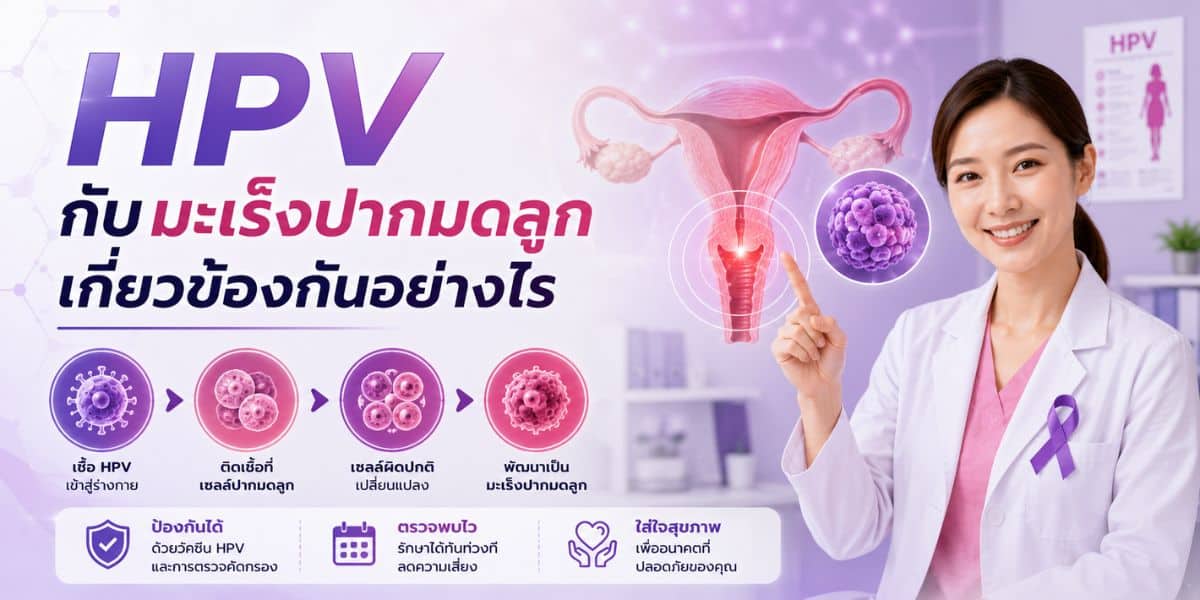
Contents
Cervical cancer is one of the most common cancers among Thai women, and it is a cancer that is almost entirely preventable — through both vaccination and screening.
Nearly all cases of this cancer are caused by HPV infection, a virus so common that most people who have ever been sexually active have caught it at some point without realizing it.
The good news is that most HPV infections clear on their own. The part that deserves attention is the small share that do not clear: over many years, these can progress to cancer — a span long enough for the changes to be detected and treated in time, if you get screened.
What is HPV?
HPV stands for Human Papillomavirus, a group of more than 200 strains. It spreads through skin-to-skin contact and contact with the mucous membranes of the genitals, mouth, and anus.
A few things to understand first:
- It is extremely common — most people who have ever been sexually active will be infected with at least one strain of HPV during their lifetime.
- Most infections cause no symptoms — and clear on their own within 1 to 2 years thanks to the body's immune system.
- It can spread even when using condoms — because it passes through skin contact. Condoms greatly reduce the risk but do not cover it completely.
- Penetrative sex is not required — genital skin-to-skin contact alone can transmit it.
Read more of the basics at What is HPV? and HPV symptoms and risks.
High-risk versus low-risk strains
Not every strain causes cancer, which is why grouping them matters.
| Group | Common strains | What they cause |
|---|---|---|
| High risk | 16, 18, and roughly 12 others | Cancers of the cervix, anus, throat, and genitals |
| Low risk | 6, 11 | Genital warts; do not cause cancer |
Strains 16 and 18 alone cause about 70% of all cervical cancers, which is why every HPV vaccine covers at least these two strains.
Strains 6 and 11, meanwhile, cause about 90% of genital warts — which are bothersome and hard to treat but do not turn into cancer. This is something people very often worry about more than they need to.
How long does it take to go from infection to cancer?
This is the most reassuring part, because the process is very slow.
| Stage | Time frame | What happens |
|---|---|---|
| HPV infection | Starting point | Usually no symptoms |
| The body clears the virus on its own | Within 1 to 2 years | Happens to most people; it ends here |
| Persistent infection | More than 2 years | Occurs in a minority; this is the group to watch |
| Precancerous cell changes | Several years later | Detectable by screening; treatable and curable |
| Cervical cancer | Usually 10 to 20 years | Occurs if screening is never done |
Because these changes often develop over 10 to 20 years, screening can detect and treat precancerous lesions before they progress. Follow the screening interval recommended for your age, test type, previous results, and health history. People living with HIV may need a different schedule. Treatment of precancerous lesions is highly effective, especially when abnormalities are found and managed early.
Women who are diagnosed with advanced cervical cancer are, for the most part, those who have never been screened or have not been screened in a very long time.
Symptoms — why screening matters before symptoms appear
Early stage
There are no symptoms at all. Neither HPV infection nor precancerous cell changes cause pain, produce a lump, or give any warning signs. This is the very reason screening is necessary.
Once symptoms do appear
- Abnormal vaginal bleeding, especially after sex
- Bleeding between periods, or after menopause
- Abnormal vaginal discharge that is foul-smelling or blood-tinged
- Pain during sex
- Persistent lower abdominal or lower back pain
These symptoms may appear after the disease has progressed. Do not wait for symptoms before screening; scheduled screening can find abnormalities at an earlier, more treatable stage.
Worth knowing: these symptoms are far more often caused by less serious conditions than by cancer — such as inflammation or polyps — but every case should be checked. Do not try to diagnose yourself.
Who is at higher-than-average risk?
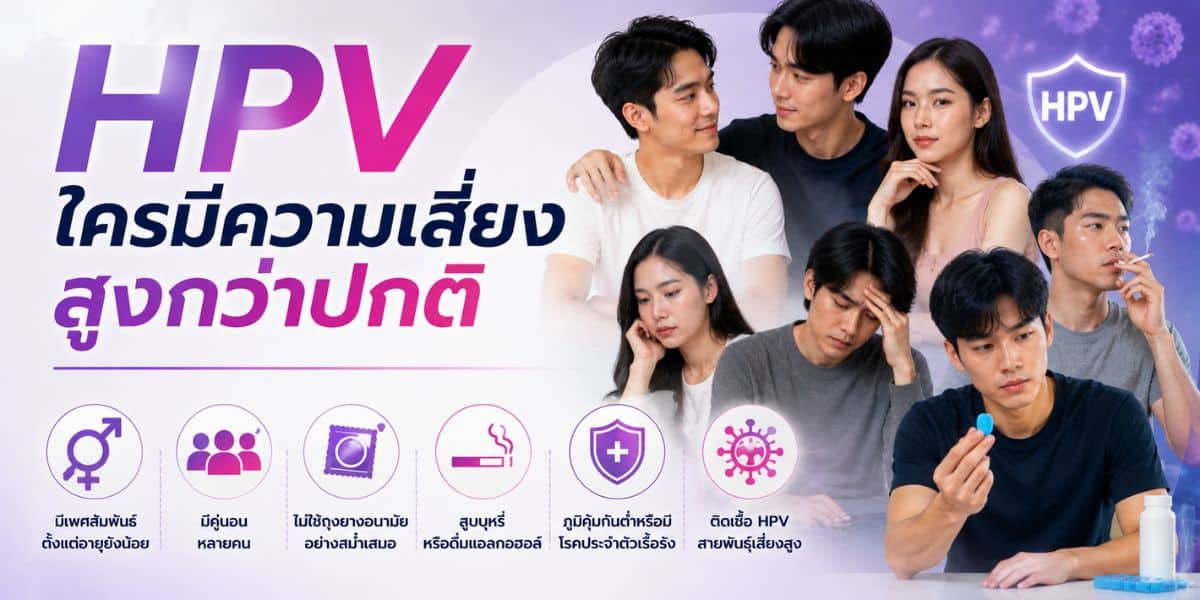
- People living with HIV — the risk is clearly higher and the disease progresses faster.
- People with a weakened immune system from other causes, such as after an organ transplant.
- People who smoke — this raises the risk significantly.
- People who have never been screened — in practice, this is the single biggest risk factor.
- People who have multiple sexual partners, or whose partner has multiple partners
- People who became sexually active at a young age
Why people living with HIV need to take extra care
When the immune system is weakened, the body has a harder time clearing HPV, so infections become persistent more often and abnormal cells can progress to cancer faster than in the general population.
For this reason, women and other people with a cervix living with HIV are advised to be screened more frequently than the general population, and should discuss an appropriate screening schedule with the doctor caring for them. Taking antiretroviral therapy consistently until the immune system recovers also helps reduce this risk. See Thailand's HIV treatment guidelines.
Screening
| Method | What it looks for | Advantages |
|---|---|---|
| HPV DNA Test | High-risk strains of HPV | Most sensitive; can be done at longer intervals |
| Pap Smear | Abnormal cells on the cervix | Widely used and inexpensive |
| Co-testing | Both of the above at once | Most comprehensive |
| VIA | Visible abnormalities after applying a solution | Can be done in resource-limited settings; immediate results |
When should screening start, and how often?
In general, women and other people with a cervix are advised to begin screening from around age 25 to 30 onward and to repeat it on the recommended schedule, which may be every 3 to 5 years depending on the method used and the previous result.
The recommended ages and frequencies are updated from time to time and vary by health coverage and by the policies in effect at any given time. Check with a health facility or the responsible agency for current requirements.
Does the test hurt?
Fear of this leads many women to put off screening. The reality is that it takes only a few minutes; most people feel mild discomfort rather than actual pain, and you can ask the staff to explain each step before it is done.
If you have had a bad experience before, or a history that makes internal exams difficult, you can tell the staff directly. Staff may be able to offer adjustments that make the examination more comfortable; discuss your needs before the test.
HPV vaccine
The HPV vaccine is one of the clearest success stories in preventing cancer through vaccination.
Who should get it?
- Girls before they become sexually active — this gives the highest protection. Thailand has a program to vaccinate female students in the upper primary grades.
- Boys — many countries have extended vaccination to boys as well, because HPV can also cause cancers in men and vaccinating them helps reduce transmission overall.
- Adults who have not yet been vaccinated — they still benefit, though less so if they have already been infected with certain strains.
- People living with HIV — should consult the doctor caring for them.
What the vaccine can and cannot do
What it can do: prevent infection with the strains the vaccine covers, which cause most cervical cancers.
What it cannot do: treat an existing infection, cover every strain, and it does not replace screening.
That last point is very important and often misunderstood — even after vaccination, you still need to be screened on schedule.
The eligibility rules, age ranges, and number of doses covered under different health benefits are updated from time to time. Check with a health facility for current information.
HPV in men
This is talked about far too little, even though men are affected too.
- Cancers of the mouth and throat — linked to HPV and trending upward.
- Anal cancer — the risk is higher among men who have sex with men, especially those living with HIV.
- Penile cancer — uncommon, but it does occur.
- Genital warts — common.
- Carrying and spreading the virus unknowingly — because there is no standard HPV screening test for men.
Vaccinating men, then, is not about "protecting women on their behalf" — it protects the men themselves as well.
What does an abnormal screening result mean?
Being told that a result is "abnormal" frightens people more than it should, because the word covers everything from minor changes that resolve on their own to conditions that genuinely need treatment.
| Result reported | What it means | Usual next step |
|---|---|---|
| Normal / Negative | No abnormal cells found | Repeat screening on the normal schedule |
| ASC-US | Slight, unclear cell changes | Add an HPV test, or schedule a repeat test |
| LSIL | Low-grade changes | Usually monitored; often clears on its own |
| HSIL | High-grade changes | Referred for colposcopy and biopsy |
| High-risk HPV positive | A cancer-causing strain was found | Further cell testing and closer follow-up |
What usually happens next
If the result indicates that further testing is warranted, the doctor will usually refer you for a colposcopy, a close-up examination of the cervix to pinpoint any abnormal areas, and may take a small biopsy for testing.
If high-grade abnormal cells are found, there are treatments that can be done on an outpatient basis, such as cryotherapy (freezing) or LEEP (removal with an electrical loop), which treat the changes before they become cancer and are highly effective.
This is the heart of screening — the goal is not to find cancer, but to find what is about to become cancer and deal with it first.
An abnormal result does not mean you have cancer
Many women with an ASC-US or LSIL result return to normal on their own within a year or two, with no treatment at all, because the body clears the HPV. What matters is to keep your follow-up appointments — which is exactly where most people drop out of the system, because they feel perfectly fine.
How to protect yourself
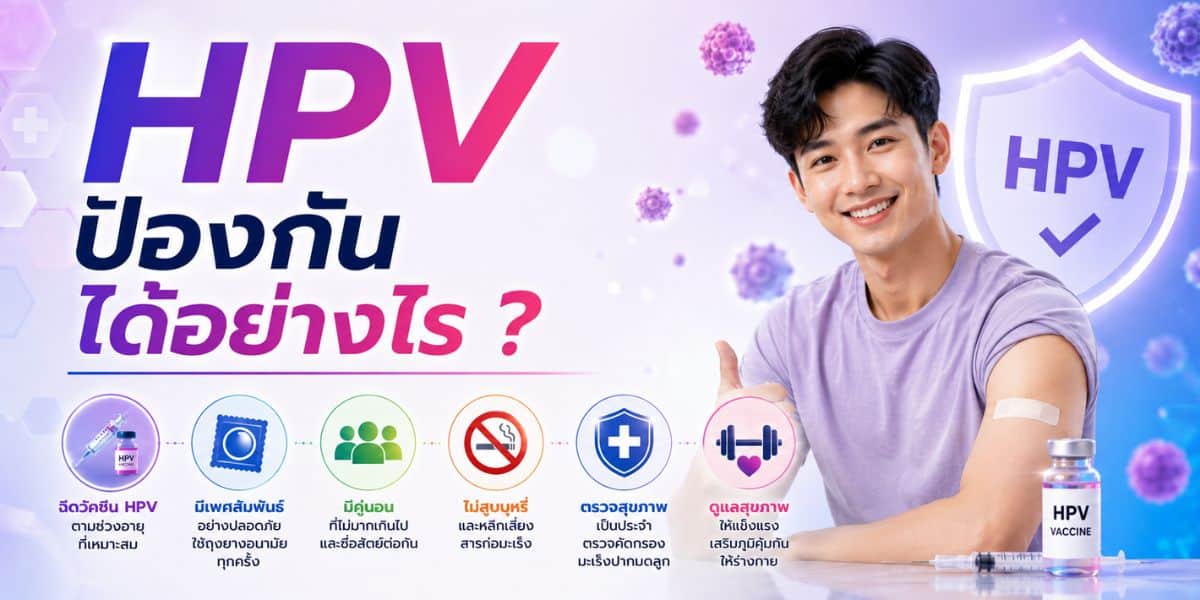
- Get the HPV vaccine — the earlier, before becoming sexually active, the more effective it is.
- Get screened on schedule — most important for those who are already sexually active.
- Use condoms — they greatly reduce the risk, even though they do not cover it completely.
- Do not smoke — smoking makes it harder for the body to clear the virus.
- Get tested for other sexually transmitted infections too — because other infections increase the risk.
- If you are living with HIV, take your medication consistently — a recovered immune system helps control HPV better.
Frequently asked questions
If I get HPV, will I definitely get cancer?
No. Most infections clear on their own within 1 to 2 years. Only a small share become persistent, and those take many more years to progress to cancer.
If I have genital warts, will they turn into cancer?
No. Genital warts are caused by low-risk strains that do not cause cancer. Even so, you should still be screened as usual, because it is possible to be infected with a high-risk strain at the same time.
If I have been vaccinated, do I still need screening?
Yes, because the vaccine does not cover every cancer-causing strain.
I am over 26 — is it too late to get vaccinated?
You can still benefit, though less than if you had been vaccinated before becoming sexually active. Consult a doctor for an individual assessment.
Can men be tested for HPV?
There is no standard HPV screening test for men in general. The main forms of protection are vaccination and condoms.
Can cervical cancer be cured?
If it is caught at the precancerous or early stage, the cure rate is very high. The earlier it is found, the better the outcome.
Summary
Nearly all cervical cancer cases are linked to persistent infection with high-risk HPV, and nearly all of it is preventable with two tools we already have: vaccination for those not yet infected, and screening for those who are already sexually active.
What still allows this cancer to take so many women's lives is not the absence of a way to prevent it, but the fact that people do not go get screened — for understandable reasons: embarrassment, fear, and the thought that "if there are no symptoms, it must be fine."
Given that this disease takes 10 to 20 years to develop, a few-minute test every few years is the most worthwhile investment there is.
Read more: What is HPV? · HPV warts · Sexually transmitted infections
Get tested for sexually transmitted infections and receive counseling at Love2Test.org
Verified references
Links and relevance to the article’s main topic were reviewed on 13 August 2026. Each source supports only the scope stated in the original document and does not replace personalised medical, legal, or service advice.
- CDC: About Genital HPV Infection Accessed 13 August 2026
- NCI: HPV and Cancer Accessed 13 August 2026