Is There a Vaccine That Helps Prevent Gonorrhea? Updates from the UK and Thailand
“Gonorrhea,” or Neisseria gonorrhoeae infection, is a sexually transmitted disease that many people assume is a distant concern.
อ่านภาษาไทย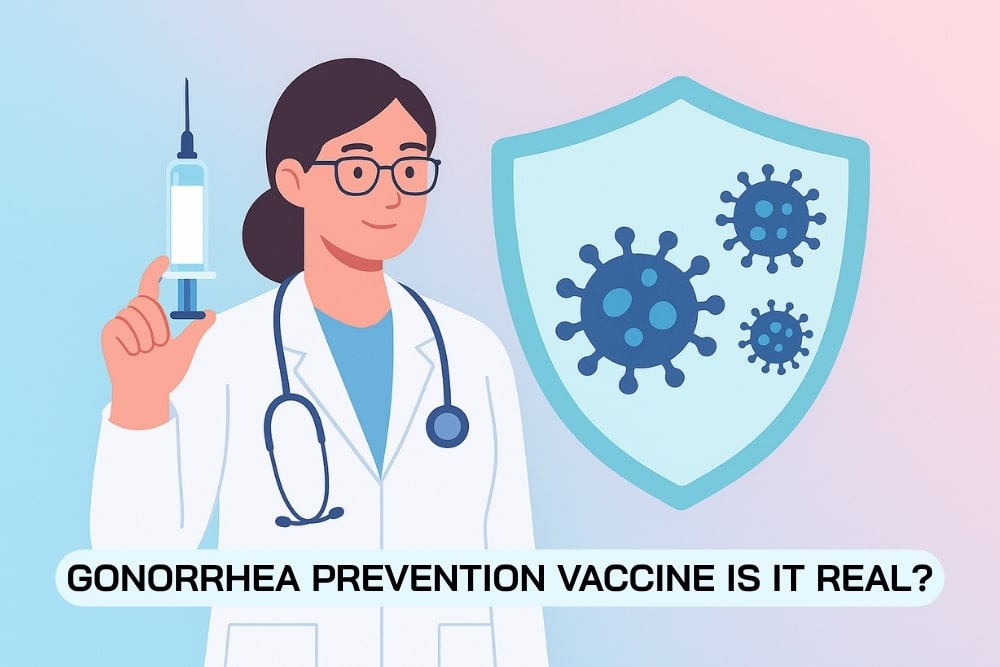
Contents
“Gonorrhea,” or Neisseria gonorrhoeae infection, is a sexually transmitted disease that many people assume is a distant concern. In reality, it has re-emerged as a major global health issue due to rising antibiotic resistance, making treatment increasingly difficult and often leading to recurrent infections. Interest has focused on whether meningococcal B vaccines may provide partial cross-protection against gonorrhoea. These are not gonorrhoea-specific vaccines, and availability, recommendations, and evidence differ by country. The discussion below was reviewed on 13 August 2026 and should be checked against current national guidance.
List of Contents
- What Is the Gonorrhea Vaccine?
- Gonorrhea Vaccine in Thailand
- Is Thailand Ready for the Gonorrhea Vaccine?
- Frequently Asked Questions about Gonorrhea
What Is the Gonorrhea Prevention Vaccine?
The Gonorrhea Prevention Vaccine refers to a vaccine designed to stimulate the immune system to fight Neisseria gonorrhoeae, the bacterium that causes gonorrhea. However, to date, no vaccine in the world has been officially approved specifically to prevent this infection. What brings renewed hope, however, is the discovery that vaccines used to prevent Meningitis B (Neisseria meningitidis serogroup B), such as Bexsero or 4CMenB, may provide cross-protection against gonorrhea to some extent — because the two bacteria share certain genetic similarities.
The UK Launches the First National Programme to Offer the 4CMenB Vaccine for Gonorrhea Prevention
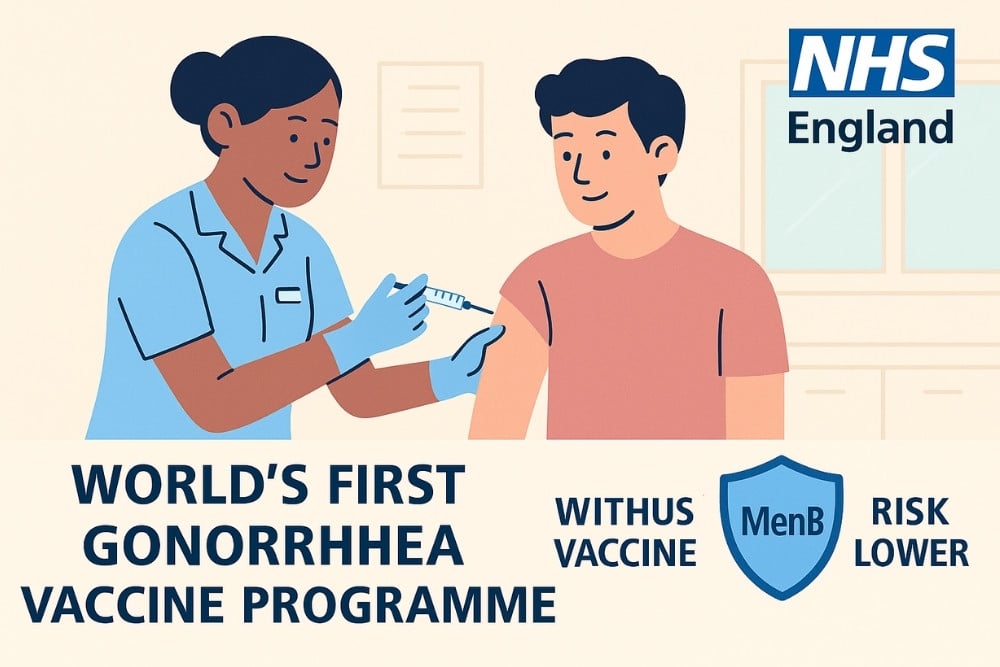
A global health milestone was announced in 2025 when NHS England officially launched the first national programme to offer the 4CMenB (Bexsero) vaccine for gonorrhea prevention. The program uses the Bexsero (4CMenB) vaccine, originally developed to prevent meningitis, after researchers observed that people who received it had an estimated 30–40% lower rates of gonorrhea infection (from observational studies, not full protection) compared to those who did not. This evidence led NHS England to expand the study to at-risk populations.
Program Details
- The rollout began in August 2025 at sexual health clinics across England.
- Priority groups: men who have sex with men (MSM) and individuals with a history of sexually transmitted infections (STIs) within the past 12 months.
- Objective: to prevent gonorrhea infection and reduce new cases over the next decade.
- NHS projections: the program could prevent over 100,000 cases within 10 years and save approximately £7.9 million in healthcare costs.
This initiative has gained global attention as it could mark the first step toward developing a dedicated gonorrhea vaccine in the future.
How Does the Bexsero Vaccine Work?
The Bexsero (4CMenB) vaccine is primarily used to protect against Neisseria meningitidis serogroup B, a major cause of meningitis. However, due to its genetic similarities with Neisseria gonorrhoeae, scientists believe that it may also offer partial protection against gonorrhea.
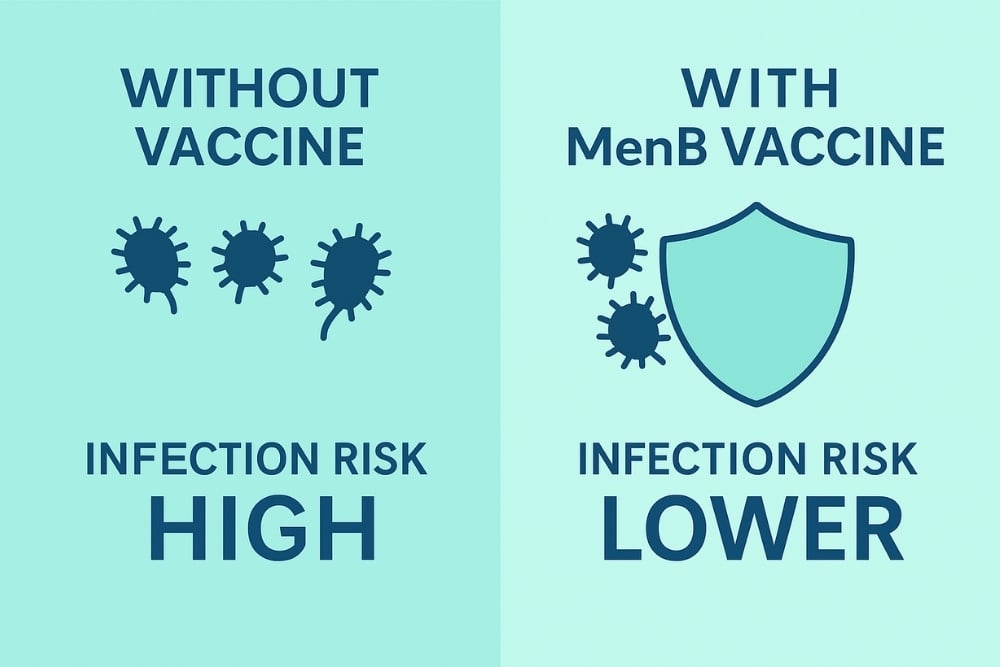
The vaccine contains four key surface proteins from the meningitis bacteria. When injected, it prompts the body’s immune system to produce antibodies that recognize these proteins. Because gonorrhea bacteria have similar surface structures, these antibodies may also respond when encountering Neisseria gonorrhoeae. This phenomenon is called cross-protection. Although the protection rate is not 100%, the ability to reduce infection risk by an estimated 30–40% (from observational studies, not full protection) represents a significant advancement for global public health.
Gonorrhea Prevention Vaccine in Thailand
In Thailand, the Bexsero (MenB) vaccine has already been approved for meningitis prevention, but not specifically for gonorrhea. However, some private clinics — such as Pulse Clinic and Shields Medical Center — have begun offering this vaccine to individuals seeking protection from sexually transmitted infections (STIs), citing international studies that show partial protection against gonorrhea.
Some clinics may offer this; anyone interested should ask a licensed provider and clearly understand that the Gonorrhea Prevention Vaccine in Thailand has not yet been officially approved by the Ministry of Public Health for gonorrhea prevention.
Why the World Needs a Gonorrhea Prevention Vaccine
- Increasing Antibiotic Resistance
- Gonorrhea bacteria in many countries, including Thailand, are now resistant to almost all major antibiotic classes — from penicillin and tetracycline to newer-generation cephalosporins. The World Health Organization (WHO) has listed Neisseria gonorrhoeae among the “Priority Pathogens” — antibiotic-resistant bacteria that pose the greatest threat to human health.
- Many Patients Show No Symptoms
- Especially among women, gonorrhea infection often occurs without noticeable symptoms. The bacteria may infect the cervix or fallopian tubes, potentially leading to pelvic inflammatory disease (PID) or infertility if left untreated.
- High Risk of Reinfection
- Even after successful treatment, gonorrhea can recur easily since the body does not develop lasting immunity to the bacteria. For this reason, a vaccine that could reduce reinfection risk — even partially — would be a vital step in reducing global transmission rates.
Related Article
- What is Chlamydia? What causes Chlamydia?
- Chlamydia a sexually transmitted disease that should not be ignored
Research Findings on the Gonorrhea Prevention Vaccine
| Country / Institution | Vaccine Studied | Findings / Summary | Additional Notes |
|---|---|---|---|
| New Zealand | MeNZB (early version of Bexsero) | Individuals vaccinated showed a 31% reduction in gonorrhea infections compared to unvaccinated groups. | First study to demonstrate “cross-immunity” between Meningitis B and gonorrhea. |
| Australia | 4CMenB (Bexsero) | Showed an estimated 30–40% reduction in gonorrhea infection risk (from observational studies, not full protection). | Study conducted among MSM (men who have sex with men) in Sydney and Melbourne. |
| United States | 4CMenB (Bexsero) | Preliminary data indicated similar reductions as in Australia. | Early-phase trials focused on safety and immune response. |
| United Kingdom (NHS England) | 4CMenB (Bexsero) | Ongoing Phase 2 and Phase 3 trials to measure efficacy and safety among high-risk populations. | The first national programme to offer the 4CMenB vaccine for gonorrhea prevention began in August 2025. |
Although the Gonorrhea Prevention Vaccine has not yet been proven to provide full protection, consistent results from multiple countries represent a promising signal for the future — and may lead to the development of a specific vaccine dedicated solely to gonorrhea in the near future.
Is Thailand Ready for the Gonorrhea Prevention Vaccine?
Currently, Thailand’s Ministry of Public Health has not included the MenB vaccine in the national immunization plan, as global studies are still ongoing. However, individuals can request MenB vaccination through private clinics after consulting with a doctor. Experts generally agree that the vaccine may benefit those at higher risk, such as:
- Men who have sex with men (MSM)
- Individuals with multiple or frequent new partners
- People previously diagnosed with an STIs within the past year
That said, vaccines should be viewed as a supplementary layer of protection, not the primary method. Condom use, regular STIs testing, and medical consultation remain the most effective ways to maintain sexual health.
Should You Get the Vaccine?
The answer depends on your personal risk and understanding of the available information.
If you belong to a high-risk group, receiving the MenB vaccine may help reduce your infection risk and could be a worthwhile preventive measure. However, if you already practice safer sex and undergo regular health checkups, the vaccine might not be immediately necessary. Most importantly, remember that the Gonorrhea Prevention Vaccine is not yet a dedicated gonorrhea vaccine and does not offer 100% protection.
Frequently Asked Questions about Gonorrhea
❓ How is gonorrhea different from chlamydia?
➭ Although the names sound similar, they are caused by different bacteria.
- Gonorrhea (the “real” gonorrhea) is caused by Neisseria gonorrhoeae.
- Chlamydia is caused by Chlamydia trachomatis.
Both infections share similar symptoms — such as painful urination and abnormal discharge — but laboratory testing is required to distinguish them accurately, since the treatments are different.
❓ Can women get gonorrhea even if they don’t show symptoms?
➭ Yes. In fact, many women with gonorrhea have no symptoms at all. The bacteria can infect the cervix and fallopian tubes, leading to Pelvic Inflammatory Disease (PID) or even infertility if left untreated. That’s why regular sexual health checkups are essential for early detection and prevention.
❓ Can gonorrhea spread through kissing or sharing personal items?
➭ Generally, the risk of transmission through kissing or sharing objects is extremely low, since the bacteria mainly live in bodily fluids such as semen or vaginal discharge. However, oral sex without a barrier method can transmit the infection to the throat (pharyngeal gonorrhea).
❓ Can gonorrhea come back after treatment?
➭ Yes, reinfection is possible❗Because the gonorrhea bacteria do not create lasting immunity, it’s possible to get infected again after sex without a condom with a partner who has gonorrhea. After treatment, it’s important to get retested to confirm recovery and always practice safer sex to prevent reinfection.
❓ Is gonorrhea testing painful, and how long does it take?
➭ Gonorrhea testing is not as painful as many people fear, and there are several testing methods, such as:
- Swab collection from the urethra (in men) or cervix (in women)
- Urine-based DNA testing (NAAT test) — a highly accurate, non-invasive method
Results are usually available within 1–3 days.
❓ Can gonorrhea be cured, and how long does treatment take?
➭ Yes, gonorrhea can be cured with antibiotics. The specific medicines used — such as Ceftriaxone or Azithromycin — must be chosen and prescribed by a clinician following current national treatment guidance, because the growing issue of antibiotic resistance makes proper treatment more important than ever. Patients must complete their prescribed medications and should never self-medicate with antibiotics. Symptoms typically improve within a few days after starting treatment, but it’s crucial to avoid sexual activity until fully cured to prevent spreading the infection.
Conclusion
The Gonorrhea Prevention Vaccine may not yet be perfect, but what is happening in the UK marks a historic turning point in medical science. The Bexsero (4CMenB) vaccine, originally designed to prevent meningitis, is now paving the way for humanity to fight gonorrhea — a disease once easily treated but now increasingly resistant to antibiotics. In the near future, a specific gonorrhea vaccine may become reality. Until then, the best protection remains safer sexual practices, regular STI testing, and professional medical guidance before vaccination. Because maintaining good sexual health is the foundation for confidence and well-being in every relationship.
References: ↪︎ World-first gonorrhea vaccine rolled out by NHS today to tackle surging STI levels – are you eligible? ↪︎ Recommendations on the gonorrhea prevention vaccine for the United Kingdom ↪︎ The world's first gonorrhea prevention vaccine, after infections in England surged to their highest level in a centuryVerified references
Links and relevance to the article’s main topic were reviewed on 13 August 2026. Each source supports only the scope stated in the original document and does not replace personalised medical, legal, or service advice.
- UKHSA: 4CMenB vaccine for prevention of gonorrhoea Accessed 13 August 2026
- CDC: About Gonorrhea Accessed 13 August 2026
- CDC: STI Treatment Guidelines Accessed 13 August 2026