How LGBTQ and Drag Life Changed After the Colorado Shooting
After the shooting at an LGBTQ+ nightclub in Colorado, drag queens across America are gradually hiring bodyguards and adding metal-detector screening…
อ่านภาษาไทย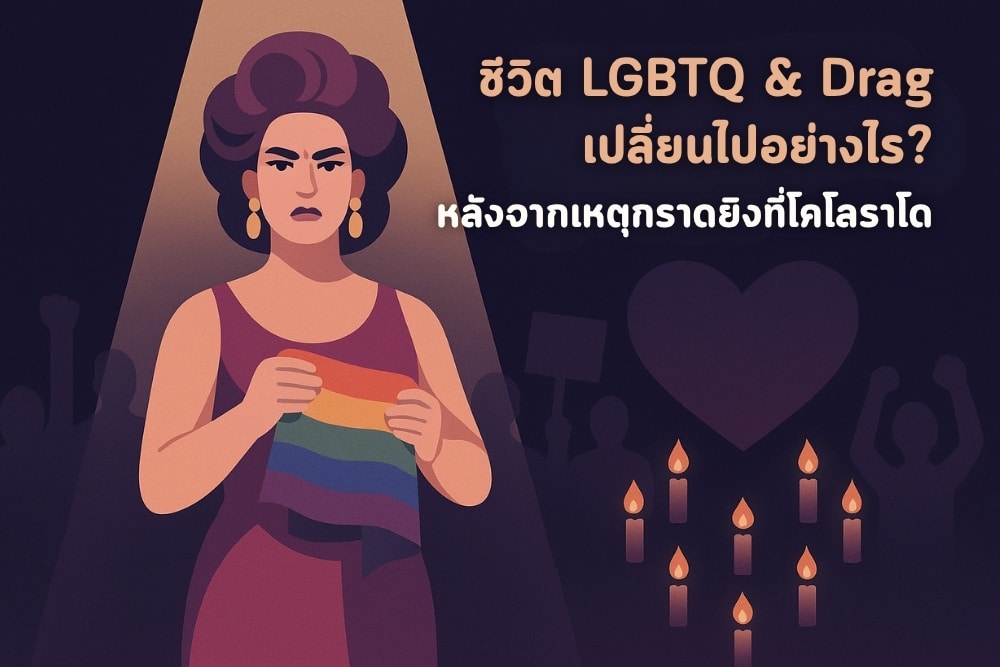
Contents
LGBTQ and Drag Life After the Colorado Shooting (Tag: Politics). Drag queens in America are gradually hiring bodyguards and adding metal-detector screening for audiences before each performance, following the shooting at an LGBTQ+ nightclub in the state of Colorado.
LGBTQ and Drag Life: Winners of RuPaul's Drag Race
Yvie Oddly, the winner of RuPaul's Drag Race Season 11 and also a Colorado resident, told reporters about the current situation. The performers' agency has begun conducting security checks at the club before shows, keeping security personnel on hand during performances, and making sure the venue can sound an alarm immediately if an incident occurs.
"It's sad and unfortunate that LGBTQ lives like ours have to reach this point, but safety screening is the first priority when we come to work in a space that is our community," the agency told her.
Jinkx Monsoon, a two-time winner of RuPaul's Drag Race in both Season 5 and All Winners, said that after this latest tragedy, Club Q was in the middle of a Drag Divas Night show when a gunman suddenly walked in and opened fire inside the club.
The death toll could have been higher than five had two patrons not worked together to bring the attacker down, while others helped their badly wounded friends. The attack led to renewed calls for greater safety around firearms and guns in the United States.
"We try to smile and make people happy during the holiday season, and the thing constantly running through my head is, 'I hope nobody comes to shoot me,'" Jinkx Monsoon told NBC News.
She has had to rely on bodyguards again because of this incident, having done so once before after the shooting six years ago at the Pulse LGBTQ+ nightclub in Florida, where 49 people were killed.
NBC spoke with several drag queens who are widely known across the United States. They discussed how attacks on drag queens are escalating today, whether physical, verbal, political, or even through new laws being enacted.
The Art of LGBT Life and Drag Goes Back More Than Several Decades
It surged back into the spotlight and became widely famous after transgender people and drag queens grew more visible and took on a larger role in society, which in turn drove greater activism for gay rights in the United States. The Department of Homeland Security has warned that the LGBTQI+ community may become a target of violence, even as the U.S. Congress moves to pass legislation on same-sex marriage.
Latrice Royale, one of the drag queens with more than 30 years in the industry and another well-known figure from RuPaul's Drag Race, said: "Back in the day, before we came out on television screens, before we appeared on various channels and daytime media, we worked in what was called 'underground' - it wasn't something you would see out in the open."
Today, drag brunch (a performance where drag queens entertain guests over a daytime meal) and story hours (where drag queens work in libraries and read stories to children) are hugely popular, and also very dangerous, because they have become targets for attacks.
Alaska, the winner of RuPaul's Drag Race All Stars 2, also spoke about this. She said she now has to put safety first, whether that means bodyguards or even a police car parked on standby near the venue on the nights she performs.
"It's heartbreaking that we have to carry these thoughts in our heads while we're having fun and celebrating during a drag show. Why do we have to sit there worrying about where the exit is, which way is the safest route to take cover if something happens? It's frightening and depressing, but that has simply become the reality."
Read other interesting articles
Reference: The Guardian
Verified references
Links and relevance to the article’s main topic were reviewed on 13 August 2026. Each source supports only the scope stated in the original document and does not replace personalised medical, legal, or service advice.
- US Department of Justice: Club Q hate-crime case Accessed 13 August 2026
- OHCHR/UN: Ending violence and discrimination against LGBTI people Accessed 13 August 2026
- OHCHR: LGBT rights fact sheet Accessed 13 August 2026