Thailand's Marriage Equality Act Published in the Royal Gazette: A Summary of the Key Points
September 24, 2024, will be remembered in Thai history as a day of major social progress.
อ่านภาษาไทย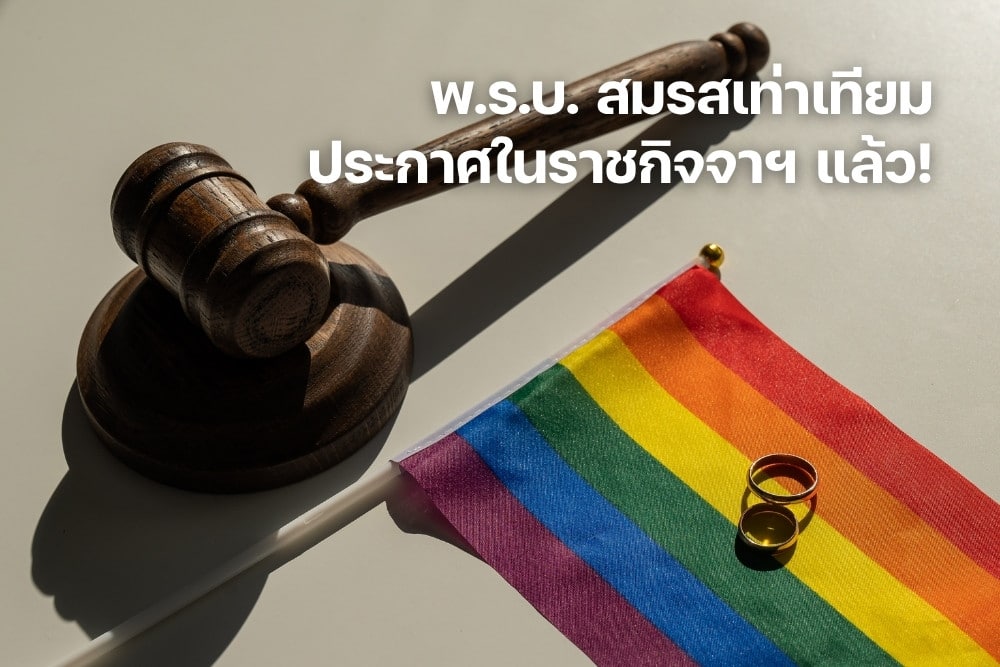
Contents
Thailand has officially entered a new chapter of social equality. The Royal Gazette has published the Act Amending the Civil and Commercial Code (No. 24), B.E. 2567 (2024) — known to the public as the "Marriage Equality Act" — which will take effect on January 23, 2025. This law is a major milestone that allows couples of every gender to register their marriage and receive equal legal rights. Beyond reflecting Thailand's progress on human rights, it also signals a society that is more open, embraces diversity, and respects love in all its forms.
The enactment of this law is a tremendous victory for the LGBTQ+ community, transgender women, and human rights advocates in Thailand.
Key Provisions of the Marriage Equality Act
This new law amends the Civil and Commercial Code with several important changes, as follows:
- Recognition of marriage between people of the same sex: The law replaces the words "man" and "woman" with "person," meaning that any two people can marry regardless of gender. This allows same-sex couples to register their marriage legally for the first time in Thailand.
- A change in terminology: Spouses will no longer be referred to as "husband and wife." Instead, the gender-neutral term "spouses" (couple) will be used.
- A higher minimum age for engagement and marriage: The new law raises the minimum age for engagement and marriage from 17 to 18, in line with international standards for preventing child marriage.
- Marriage registration between Thai and foreign nationals: The law allows Thai citizens to register a marriage with a foreign national under Thai law, reducing the legal complexity involved in cross-national marriages.
- The right to adopt children: Same-sex spouses will have the right to jointly adopt children, just like different-sex spouses.
- The right to claim compensation and to file for divorce: The new law also guarantees the right to claim compensation and grounds for divorce for all couples, regardless of gender.
Social Changes Brought by the Marriage Equality Act
The enactment of this marriage equality law will bring about social change in many areas:
Legal Equality
Recognizing marriage between people of the same sex is an important step toward legal equality for LGBTQ+ people in Thailand. Same-sex couples will receive the same legal rights and protections as different-sex spouses, including inheritance rights, the right to make medical decisions, and the right to various welfare benefits.
International Relations
Passing this law demonstrates Thailand's commitment to promoting human rights and gender equality. This may help strengthen the country's image on the international stage and could benefit diplomatic relations with countries that are advanced on LGBTQ+ rights.
Social Acceptance
The law helps promote greater acceptance of gender diversity in Thai society. State recognition of same-sex couples' relationships will help reduce stigma and discrimination against the LGBTQ+ community over the long term.
Protection of Children
Raising the minimum age for marriage to 18 will help protect children and young people from premature marriage, in line with global efforts to end child marriage.
Economic Benefits
Recognizing marriage equality may benefit the Thai economy, especially in the tourism and hospitality industries. Thailand could become a popular destination for same-sex couples from around the world to hold their weddings. In addition, wedding-related businesses — such as event planning, photography, and honeymoon travel — may benefit from the increase in demand.
Challenges and Concerns Regarding the Marriage Equality Act
Although passing the marriage equality law is a significant victory, there are still challenges and concerns to consider:
Opposition from Conservative Groups
There may be opposition from conservative and certain religious groups that view marriage equality as conflicting with the traditional values of Thai society. Communication and public education will be needed to reduce potential misunderstandings and conflict.
Law Enforcement
Enforcing the law effectively and equitably is a major challenge. Government agencies and the officials involved will need training so they understand and apply the new law correctly.
Updating Related Laws and Policies
Other laws and policies related to marriage and family may need to be amended to align with the marriage equality law — for example, laws concerning social welfare, taxation, and social security.
Changing Social Attitudes
Although the law has changed, changing social attitudes may take longer. Combating discrimination and deeply rooted prejudice in society remains a long-term challenge.
The Role of Civil Society and the Media
Civil society and the media play an important role in supporting the effective implementation of the marriage equality law:
- Educating the public: Civil society organizations and the media should work to inform and build public understanding about the content and importance of the new law. Sharing the stories and experiences of same-sex couples helps foster understanding and acceptance.
- Monitoring enforcement: Civil society should act as a watchdog to monitor how the law is enforced and to report cases of discrimination, denial of access to education or employment, or other rights violations that may affect the LGBTQ+ community, so that genuine equality can be achieved.
- Supporting the LGBTQ+ community: Organizations working on LGBTQ+ rights should provide counseling and legal support for couples who wish to register their marriage or who face difficulties exercising their rights under the new law.
- Building networks and alliances: Building networks among civil society organizations, the media, and government agencies will help advance and monitor the enforcement of the marriage equality law more effectively.
Positive Changes in the Daily Lives of Same-Sex Couples
The enactment of the marriage equality law will directly change the daily lives of same-sex couples in many ways:
Legal and Financial Rights
Same-sex couples will receive the same legal and financial rights as different-sex spouses, such as:
- The right to inherit
- The right to make medical decisions on behalf of a spouse
- The right to welfare and social security benefits
- The right to file taxes jointly
- The right to be a beneficiary on a life insurance policy
Social Acceptance
Legal recognition will help increase social acceptance of same-sex couples' relationships, which may lead to:
- Less pressure and stress when disclosing a relationship to family, friends, and coworkers
- Greater confidence in expressing love in public
- Less discrimination in the workplace and in everyday life
Building a Family
The new law gives same-sex couples the opportunity to build a family legally by:
- Being able to jointly adopt children
- Having the legal right to raise children together
- Being able to use assisted reproductive technology under an equal legal framework
Travel and Immigration
A legally recognized marriage will make travel and immigration easier:
- Foreign spouses can more easily apply for a visa and the right to reside in Thailand
- Recognition of marital status abroad will be clearer
Preparing to Implement the Marriage Equality Act
When the marriage equality law takes effect on January 23, 2025, the relevant agencies will need to prepare in several areas:
Updating the registration system — The Department of Provincial Administration and civil registration offices will need to update the marriage registration system to accommodate the registration of same-sex couples, including revising the relevant forms and documents to be gender-neutral.
Training officials — Officials involved in marriage registration and public services will need training on the new law and appropriate procedures in order to prevent discrimination and misunderstanding.
Public information and outreach — Government agencies should produce public information materials and guides to educate the public about their rights and duties under the new law, including the marriage registration process for same-sex couples.
Updating internal policies and procedures — Both public agencies and private organizations will need to review and update their internal policies and procedures to align with the new law, especially regarding employee welfare and benefits.
Conclusion and a Look to the Future of the Marriage Equality Act
The enactment of the marriage equality law in Thailand is a major step forward in promoting human rights and gender equality. Thailand has emerged as a leader in Southeast Asia in officially recognizing the rights of the LGBTQ+ community. However, passing the law is only the beginning of change. The key challenge ahead is turning legal equality into equality in practice. Changing social attitudes and eliminating everyday discrimination is a process that takes time and cooperation from every part of society.
"At the same time, the passage of this Marriage Equality Act may inspire other countries in the region to consider recognizing the rights of the LGBTQ+ community more fully. Thailand has the opportunity to serve as a model for promoting equality and acceptance of gender diversity at the regional level."
Ultimately, enacting the marriage equality law is not only a victory for the LGBTQ+ community — it is also an important step toward a society that shows greater respect for human dignity and diversity. It affirms that love and commitment are not limited by gender, and that everyone should have an equal right to build a family and share a happy life together.
As we celebrate this achievement, we must recognize that much work remains to build a society that is truly equal and just. Passing the marriage equality law is only the start of a long journey, but it is an important first step that will carry Thailand toward a future in which everyone can live with dignity and equality, regardless of sexual orientation or gender identity.
Other Interesting Articles
- The Paradise of Thorns: When True Love Is More Than Just Happiness
- Pride Month 2024: A Diverse and Joyful Celebration
The success of the marriage equality law will be measured by the changes it brings to people's everyday lives, by a decline in discrimination, and by growing acceptance and understanding in society. We all have an important role to play in building a society that is equal and fair for everyone, and the enactment of the marriage equality law is a significant step on the journey toward that goal.
References:
Royal Gazette publishes the "Marriage Equality Act," effective January 23, 2025
- thaipbs.or.th/news/content/344580
Act Amending the Civil and Commercial Code (No. 24), B.E. 2567 (2024)
- ratchakitcha.soc.go.th/documents/36482.pdf
Why Thailand is friendlier to gender-diverse people than other Asian nations
- bbc.com/thai/articles/c84jzdg227mo
Verified references
Links and relevance to the article’s main topic were reviewed on 13 August 2026. Each source supports only the scope stated in the original document and does not replace personalised medical, legal, or service advice.
- ราชกิจจานุเบกษา: พ.ร.บ.แก้ไขเพิ่มเติมประมวลกฎหมายแพ่งและพาณิชย์ (สมรสเท่าเทียม) Accessed 13 August 2026