Syphilis: Symptoms, Testing, Treatment, and Prevention
Syphilis is another sexually transmitted disease caused by a bacterium called Treponema pallidum, which can live in any part of the body because it is so small.
อ่านภาษาไทย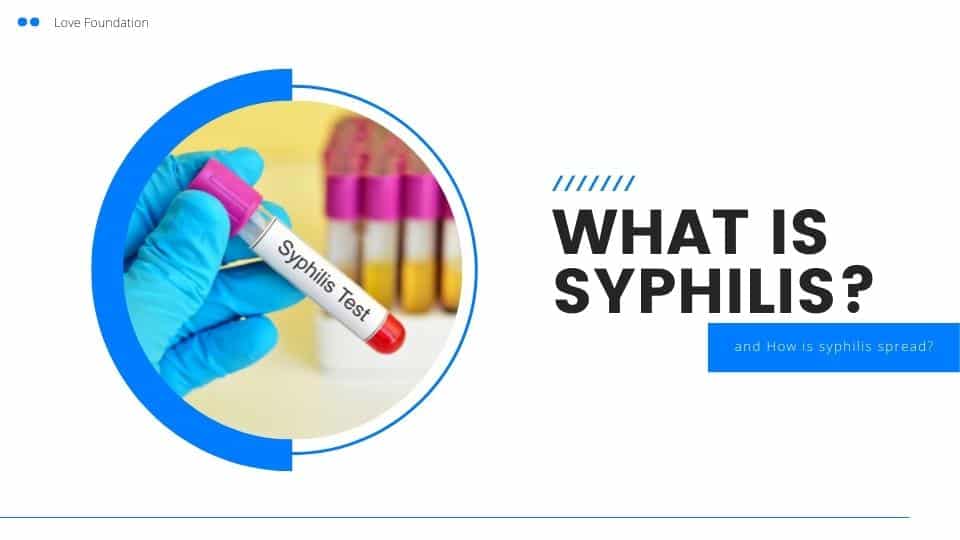
Contents
Symptoms of Syphilis
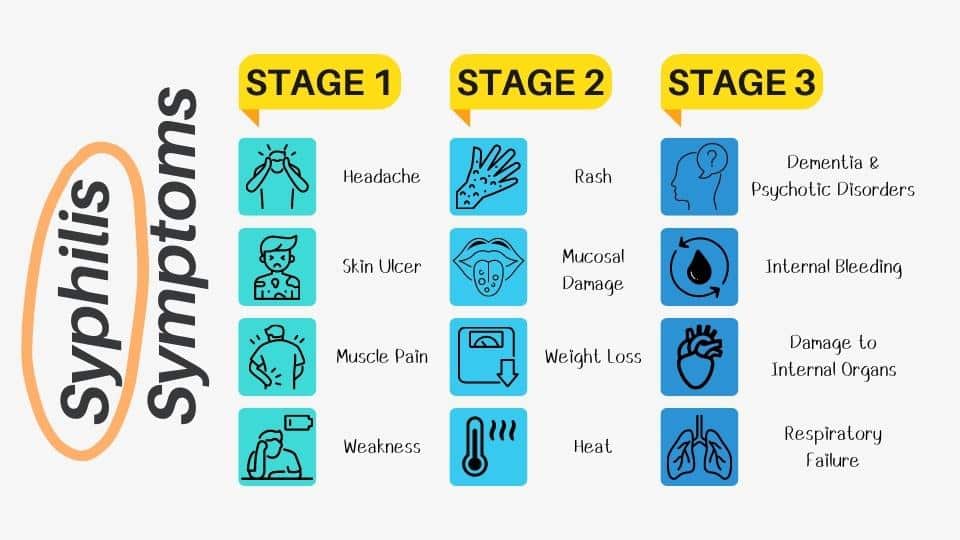
Most people who become infected with syphilis do not know they are ill. Symptoms begin to appear anywhere from 10 days to 3 months after exposure, but the time when the body first starts to feel strange is usually around 20 days in — the point of entering the first stage of infection. The symptoms of this disease are divided into a total of 3+1 stages, as follows:- Stage 1: A firm sore with a raised, red edge begins to appear around the anus, vagina, penis, or on the lips. There may be several sores or just a single one at the spot where the person was exposed to the bacteria. It is painless and gradually fades over about 1–2 months. But if it is not treated properly, this does not mean it is cured — the bacteria have hidden in the body and will progress to the next stage. In some more serious cases, the lymph nodes may swell.
- Stage 2: When it is not treated correctly, the symptoms gradually become more pronounced. Faint rash-like bumps appear on the palms and soles but do not itch, along with fever, fatigue, and body aches; some people lose hair. This usually occurs after the firm sore has already appeared. Some patients may develop sores inside the throat, on the lips, in the mouth, or at the anus. If they still do not realize they are infected and do not see a doctor, the symptoms grow more severe.
- Latent stage: This occurs once a person has passed through the first two stages without treatment. The infection appears to quiet down and does not seem frightening, but in reality the bacteria are still hidden in the body, and the chance of reaching Stage 3 becomes higher.
- Stage 3: In 15% of people who receive no treatment at all through the first two stages, the bacteria spread throughout the body and begin to destroy various organs, such as the spinal cord, brain, heart, nerves, liver, eyes, and bones. As a result, a person with this stage of syphilis — known as the final stage — develops dementia, abnormal and unbalanced muscle movement, numbness, difficulty moving the body, gradual blindness, and finally death.
How Syphilis Is Transmitted
The basics of how syphilis spreads are no different from other sexually transmitted diseases — it passes through direct contact with a sore (which mainly happens through sex without the protection of a condom). The sores can appear in several places, such as the anus, the genitals, and the mouth. This means that anyone who has unprotected anal, oral, or vaginal sex has a high chance of infection. At the same time, a pregnant woman who carries this disease will cause her child to be born with syphilis. But there is no need to worry about everyday life with a person who has syphilis — kissing, eating together, being in a swimming pool, or even touching their belongings and personal items poses no problem.How Serious Syphilis Can Be
As mentioned, at first glance it may not seem all that frightening, but in truth this disease can cause disability or even death, because the bacteria have already spread to every part of the body. This means that anyone who lets the infection advance without treatment loses their chance at once. On top of that, as the body grows weaker and the person still takes no notice, it becomes possible to contract HIV as well. Meanwhile, a pregnant woman with Stage 3 syphilis poses a very grave danger to the baby in her womb — the child may even die after birth, or the pregnancy may end in miscarriage.Preventing Syphilis
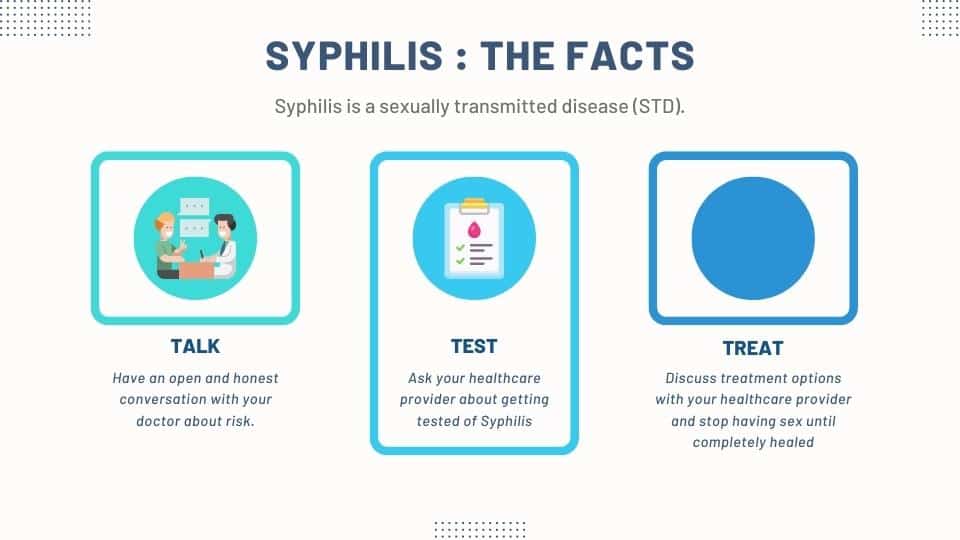
The simplest way to prevent this disease is to wear a condom every time you have sex with someone who is not your own partner, wife, or husband. Even so, if you sense a risk that your partner may be infected, you should use a condom as well. And if you feel that unusual symptoms are starting to appear in your body even though you wore a condom, you should have a doctor examine and treat you right away — because oral sex carries a risk of infection too.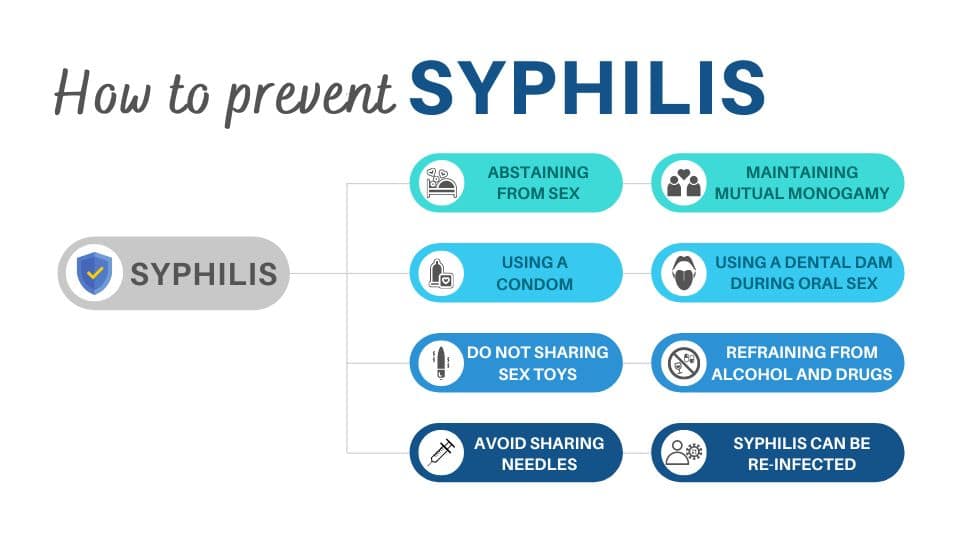
How Syphilis Is Treated
Syphilis can be cured with antibiotics, but the regimen and follow-up schedule depend on the stage of infection, symptoms, pregnancy, and treatment history. Get tested and treated by a healthcare provider rather than using oral antibiotics on your own.
- Injectable penicillin is the standard treatment for most forms of syphilis. The number of doses depends on the stage and likely duration of infection.
- Pregnant people with syphilis require penicillin treatment under clinical guidance to prevent congenital syphilis.
- Syphilis involving the nervous system, eyes, or hearing requires specialist assessment and a specific regimen.
- If you have a penicillin allergy, a clinician will determine whether an alternative is appropriate; alternatives do not suit every situation.
Fever, headache, or muscle aches can occur within 24 hours after treatment as a Jarisch–Herxheimer reaction. This is not the same as a penicillin allergy, but contact your provider if symptoms are severe. There is no single follow-up schedule for everyone; your clinician will plan repeat blood tests according to the stage and your health needs. Sexual partners should be notified for evaluation, and sex should be avoided until treatment is complete, sores have healed, and your provider advises that it is safe to resume.
Verified references
Links and relevance to the article’s main topic were reviewed on 13 August 2026. Each source supports only the scope stated in the original document and does not replace personalised medical, legal, or service advice.
- CDC: About Syphilis Accessed 13 August 2026
- CDC: STI Treatment Guidelines Accessed 13 August 2026