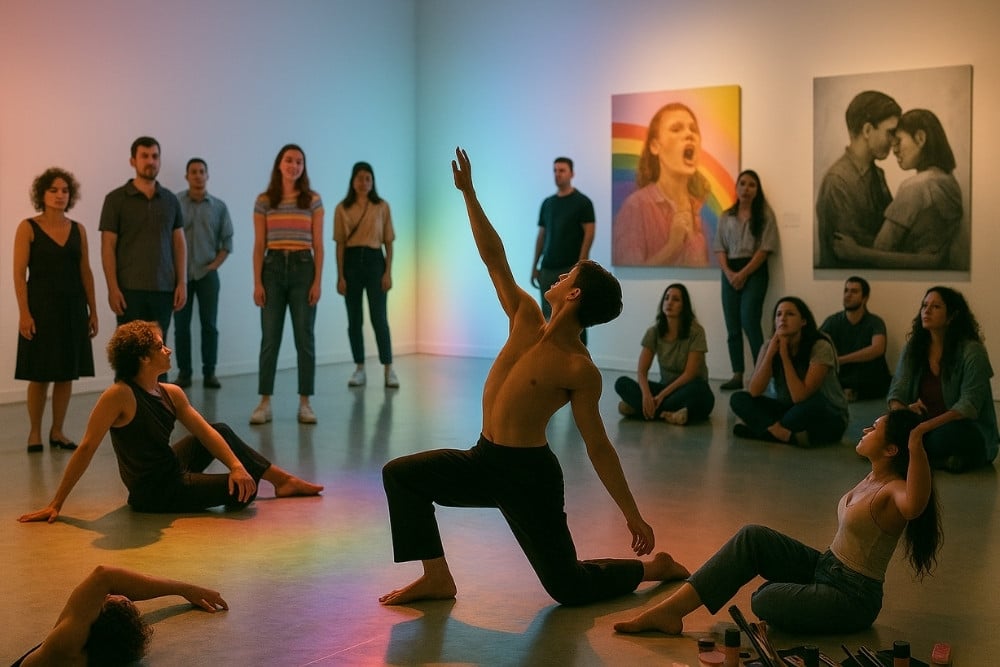
Pride (R)evolution: Dance, Cry, and Learn in One LGBTQ+ Exhibition
Pride (R)evolution was a great success during Sydney WorldPride and Mardi Gras 2023, bringing LGBTQ+ archives, memories, art, performance, and reflection…
อ่านภาษาไทย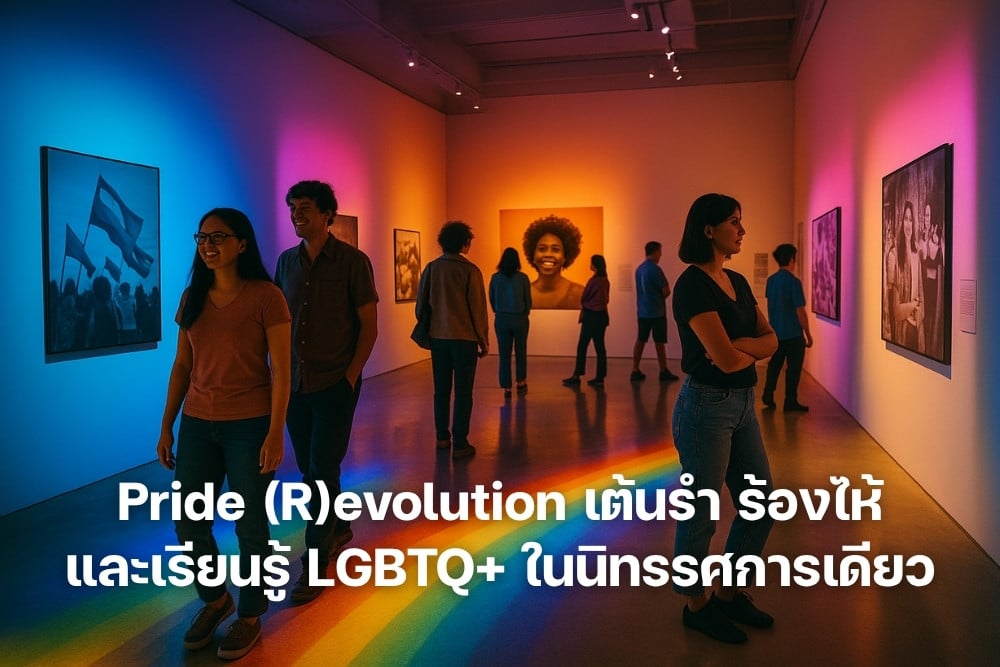
Contents
Sydney WorldPride and Mardi Gras 2023 were a tremendous success. The city came alive in ways rarely seen before, with street parties, cultural festivals, and dance parties for every taste. Pride (R)evolution was one of five serious, in-depth exhibitions about LGBTQ+ culture held in Sydney during the Pride season. The others included Margot Riley's Sydneyphiles, William Yang's work reimagined, the University of New South Wales's "The Party" — about the many intersections of Sydney's clubs and dance parties from the 1970s to the 1990s — and the National Art School's Queer Contemporary.
They also included a major exhibition by Richard Perram and the Powerhouse's Absolutely Queer, which focused on non-binary dress and today's generation. These significant shows were staged in smaller, more nimble spaces rather than the large, headline galleries that had hosted such events in Melbourne.
The Library and Archives at Pride (R)evolution
Libraries and archives are extraordinarily important spaces, because they can work actively to reflect the diversity of who we have been, from the past to the present, and point toward the future. The State Library of New South Wales has been collecting and studying queer lives for decades. Because gay life in NSW was criminalized until 1984 — and policed for far longer — much of that history survives only in court records, sensational news reports, and the traces gay people left behind. Pride (R)evolution is remarkable in the way it seeks out new voices across queer communities and reconnects threads that had been broken.
It also tells the stories of allies — people who stood with the LGBTQ+ community and believed these histories deserved to be saved. During the AIDS crisis, many gay men died without a legal will, and the records of their lives were often destroyed. Among these pioneers were Margy Burns, a former Mitchell Librarian and a lesbian who believed in "voices from below," and librarian Sally Grey, who developed protocols to preserve creative work.
Archives and Memory
Ever since Margot Riley led the Coming Out in the 70s display, and then in 2019, State Library staff have driven a major push to bring new collections and voices forward in time for WorldPride. At the same time, the LGBTQ+ community itself has been determined to preserve its records and memories — as with the Australian Queer Archives building that opened in Melbourne in 2021.
The curators worked with an advisory group of 30 key community figures, activists, and creatives to present stories from across Sydney, including the western suburbs and South Asian voices. The exhibition opened by turning a question back on the institution itself: we are introduced to Ida Leeson, the elegant Mitchell Librarian (1932–46), the first woman to hold a senior position in an Australian library, who lived openly with Florence Birch, a staff member at the YWCA — Leeson's personal papers were burned by her family.
A branching, multi-path layout lets visitors take whichever route they wish, following winding and intersecting directions, much like queer lives themselves. Bright primary colors reflect the energy and movement of the lives we are about to encounter. How did people connect before the apps? We learn about communication in the pre-digital age through gay and lesbian media, from classified ads to telephone and computer dating services.
What about the anti-violence campaigns?
I had forgotten that people were encouraged to wear whistles, because violence was so severe in the early 1990s. The whistle necklace became a fashion symbol — an example of resistance woven into political style.
How did all this social change happen in the pre-internet era? The colored designs and original collages for the Mardi Gras posters highlight how riotous the material was. Much of the work has a "do-it-yourself," agitprop quality in keeping with a postmodern irreverence and a disregard for boundaries.
Gay life was also domestic life. There is a 1938 photo album of the stylishly decorated Astor apartment of Fred James and George Anderson, a couple who had met in Hollywood and worked in the beauty business. There is also a wonderful section on the gay share houses of the 1970s, spaces that were vital to the community.
Sound is a striking feature of the exhibition, with audio drawn from oral histories and even clips from gay community radio and helplines. We can listen to a re-created talk by Garry Wotherspoon, a leading gay activist and historian. These digital assets help build understanding and pass knowledge between generations.
Drag queens have been called the "social workers" of the gay community for the support they gave gay people during the AIDS crisis. Their stories — including the sex work many of them did — are told with respect, with reference to figures such as Carmen Rupe, the celebrated Whanganui Māori transgender woman (I picture her on a motorized scooter with tropical flowers in her hair).
Stunning 1970s photographs of the transgender community of Kings Cross, taken by set designer Bary Kay, are on public display for the first time. We learn about Roberta Perkins, a transgender woman who championed the rights of sex workers. New South Wales became the first jurisdiction in the world to decriminalize sex work, in 1995.
"Earlier generations affirm that you are not alone in history," said Archie Barry. Pride (R)evolution shows how collections and archives can give people a sense of belonging.
People have a right to be seen, and to find themselves, in public institutions. "You each live out your own story." This conversation across generations shows just how far we have come: "The personal is often political, and the personal often becomes public."
Reference: The Conversation
Verified references
Links and relevance to the article’s main topic were reviewed on 13 August 2026. Each source supports only the scope stated in the original document and does not replace personalised medical, legal, or service advice.
- Library of Congress: About LGBT Pride Month Accessed 13 August 2026
- OHCHR: LGBT rights fact sheet Accessed 13 August 2026