Molluscum Contagiosum: Symptoms, Transmission, Treatment, and Prevention
Molluscum contagiosum is a viral skin infection that causes small, usually painless bumps and can spread through skin contact or shared objects.
อ่านภาษาไทย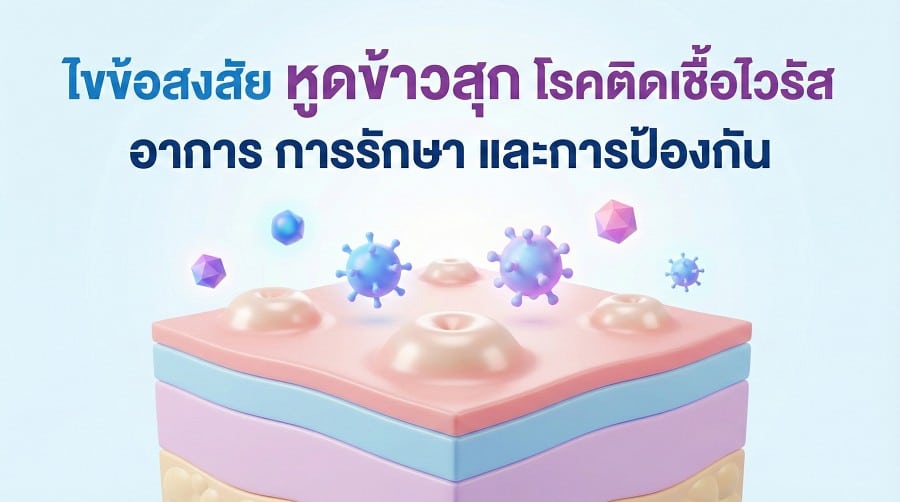
Contents
Molluscum contagiosum is a skin infection caused by the molluscum contagiosum virus. It can spread through direct contact with someone who has the infection. It can affect both men and women of all ages, from infants and children to adults and older people, and it is also commonly seen in people of reproductive age through sexual transmission. Common symptoms include small bumps that resemble pimples on the outer skin, such as the face, arms, torso, or genital area. Unlike some other sexually transmitted infections, it does not enter the bloodstream or nervous system, and it is more often seen in people with a weakened immune system.
What causes molluscum contagiosum?
Molluscum contagiosum is caused by the molluscum contagiosum virus entering through the skin. The virus spreads easily from one person to another through direct contact with the bumps or with infected skin. It can also be transmitted through contaminated objects, such as towels, clothing, sports equipment, or personal items.
In adults, molluscum contagiosum in the genital area, lower abdomen, inner thighs, or around the anus can occur through sexual contact. However, molluscum contagiosum is not always classified as a sexually transmitted infection, because both children and adults can catch the virus through skin-to-skin contact or shared personal items.
The virus can also spread from one part of the body to another by scratching, picking, squeezing, plucking hair, or shaving over the bumps, which is known as self-inoculation. Avoiding unnecessary contact with the bumps is therefore an important way to reduce the spread of the infection.
What are the symptoms of molluscum contagiosum?
Molluscum contagiosum does not cause any internal illness, because the virus that causes it does not enter the bloodstream. The incubation period is roughly two weeks to six months before clear symptoms appear. The lesions most commonly look like the following.
- Small round bumps that are skin-colored, pearly white, or pink
- Smooth, shiny, and relatively firm bumps
- A small dimple in the center
- They may appear as a single bump or as several bumps together
- Some people have itching, redness, or inflammation around the bumps
- The bumps may be larger or more numerous in people with a weakened immune system
Common locations include the face, neck, armpits, torso, arms, skin folds, thighs, and genital area. In children, they often appear on the face, torso, and skin folds, while in adults they tend to appear around the genitals, lower abdomen, inner thighs, or buttocks. Bumps near the eyes can cause irritation or conjunctivitis.
What causes molluscum contagiosum?
Molluscum contagiosum is caused by the molluscum contagiosum virus, a member of the poxvirus family. It grows well in moist, warm environments, and people with a weakened immune system are more likely to develop it. The infection affects only the outer layer of the skin. It is spread mainly through contact with an infected person, either through direct contact or by using objects contaminated with the virus, and it can also be transmitted through sexual contact.
How does molluscum contagiosum spread?
Molluscum contagiosum can be transmitted through direct skin contact, especially when touching the bumps or the material inside them. It can also spread through shared objects such as towels, clothing, razors, or sports equipment.
Possible routes of transmission include the following.
- Direct contact with molluscum contagiosum bumps
- Sharing towels, clothing, or personal items
- Having sex or close skin-to-skin contact with someone who has bumps in the genital area
- Scratching, picking, or squeezing the bumps and then touching other areas of skin
- Shaving over an area with bumps, which spreads the virus along the scraped skin
A person can continue to transmit the infection for as long as bumps remain on the skin. Once all the bumps have cleared, there are no longer any lesions that can pass on the infection. However, someone who has had it before can become infected again if they are exposed to the virus once more, because the body does not develop permanent immunity to it.
How is molluscum contagiosum different from genital warts?
Although both cause bump-like skin lesions and are easily confused, they are caused by different viruses. Molluscum contagiosum is caused by the molluscum contagiosum virus, while genital warts are caused by the human papillomavirus (HPV).
| Point of comparison | Molluscum contagiosum | Genital warts |
|---|---|---|
| Cause | Molluscum contagiosum virus | HPV |
| Appearance of the bumps | Round, smooth, and shiny with a central dimple | Rough surface, resembling a cauliflower |
| Symptoms | Usually painless but may itch | May itch, be irritating, or bleed |
| Location | Can appear anywhere on the body | Often around the genital area and anus |
| Clearing on its own | Many cases clear on their own | Some cases clear on their own, but HPV may remain |
| Transmission | Skin contact and shared items | Mostly through sexual contact |
This table is a general guide only. If you have bumps in the genital area, you should see a doctor, because the appearance of the lesions does not always match the typical pattern.
Diagnosis of molluscum contagiosum
- The doctor takes a medical history and makes an initial assessment.
- The lesions are confirmed in the laboratory by skin scraping, examined under a microscope, or by taking a biopsy sample.
- If a patient has molluscum contagiosum in the genital area, the doctor will also test for other sexually transmitted infections (STIs) to prevent transmission and reduce the risk of possible complications.
- The doctor will recommend that the patient's sexual partner also be tested, so that any molluscum contagiosum or other STIs can be found and treated promptly.
Complications of molluscum contagiosum
People with molluscum contagiosum may develop complications in the skin around the bumps, such as the following.
- Inflammation caused when a bump becomes secondarily infected with bacteria after scratching, picking, or squeezing, which makes further infection more likely
- Conjunctivitis, if there are lesions on the eyelid
- Red, itchy rashes in people with molluscum contagiosum who also have a skin allergy
Prevention of molluscum contagiosum
Molluscum contagiosum can be prevented by avoiding contact with people who are infected, which is the most effective form of prevention, along with maintaining good personal hygiene. Recommended measures include the following.
- Avoid sharing personal items with others
- Avoid touching the skin or lesions of someone who has molluscum contagiosum
- Avoid sex with anyone who has sores or bumps in the genital area
- Use a condom every time you have sex
- Keep your body clean at all times
- Wash your hands thoroughly after using the bathroom or touching others
- Get a health check and STI screening at least once a year
How is molluscum contagiosum treated?
In most cases, molluscum contagiosum clears on its own within 6 to 12 months. There are several treatment options, and the doctor chooses the one most suitable for each patient. A single method or a combination of methods may be used, such as the following.
- Applying topical medication to the bumps that contains salicylic acid, potassium hydroxide, benzoyl peroxide, or hydrogen peroxide
- Oral medication such as cimetidine
- Applying a gel or cream containing retinoids to the bumps
- Freezing the bumps (cryotherapy or cryosurgery)
- Laser treatment (pulsed dye laser therapy)
- Curettage (scraping away the affected tissue)
- Immunotherapy injections of immune-stimulating agents, for patients with a weakened immune system
Read other articles
- HPV Warts: A Major Cause — Recognize the Symptoms, Treatment, and How to Protect Yourself
- Genital Warts: What Are They? Learn Everything You Should Know
Molluscum contagiosum is a mild condition that can affect anyone of any age. If you have it, you should not pick or scrape the bumps off yourself, as this can spread them to other areas. Instead, get proper treatment from a doctor.
Verified references
Links and relevance to the article’s main topic were reviewed on 13 August 2026. Each source supports only the scope stated in the original document and does not replace personalised medical, legal, or service advice.
- CDC: About Molluscum Contagiosum Accessed 13 August 2026