LGBTQ+ Laws Around the World: Are Things Getting Better or Worse?
During a tour of three African nations—Ghana, Tanzania, and Zambia—U.S. Vice President Kamala Harris spoke out on the laws that punish LGBTQ+ people.
อ่านภาษาไทย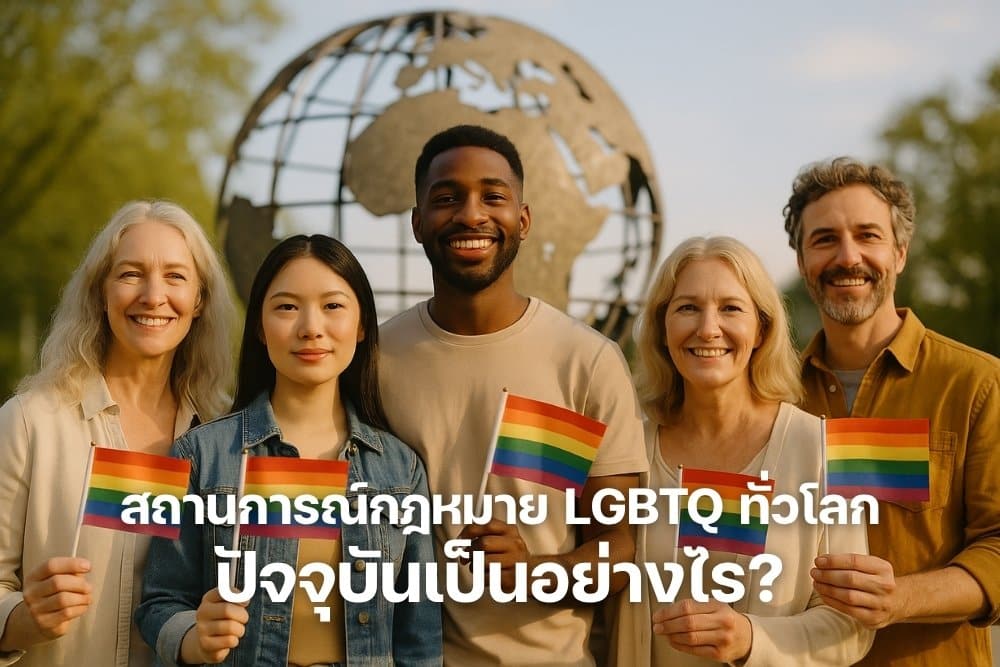
Contents
Kamala Harris, the U.S. Vice President, who was in the middle of a tour of three African countries—Ghana, Tanzania, and Zambia—criticized the laws that punish LGBTQ+ people in Ghana. In a speech calling for "everyone to be treated equally," she appeared to criticize a bill before the country's parliament that would criminalize advocates for gay rights and impose prison sentences on people who identify as lesbian, gay, bisexual, or transgender.
Afterward, Alban Bagbin, the country's Speaker, called her remarks "undemocratic" and urged lawmakers not to be "intimidated by any individual." In Tanzania, a former minister gave a speech opposing U.S. support for LGBTQ+ rights ahead of the visit, and in Zambia some opposition politicians threatened to organize protests.
Where is same-sex activity illegal? Laws that punish LGBTQ+ people
There are 64 countries with laws that punish same-sex relationships, and nearly half of them are in Africa. Recently, some countries, including several in Africa, have moved to decriminalize same-sex unions and improve the rights of LGBTQ+ people. In December 2022, Singapore's parliament repealed a law banning sex between men, and in the same month the High Court in Barbados struck down the law that had made gay sex a crime.
- In July of last year, a court in Antigua and Barbuda declared that the law punishing consensual same-sex acts between adults was unconstitutional.
- In February 2021, President Joao Lourenco of Angola signed a revised criminal code that allows same-sex relationships and prohibits discrimination based on sexual orientation.
- In 2020, Gabon repealed a law that had criminalized homosexuality and made gay sex punishable by six months in prison and a substantial fine.
The High Court of Botswana also ruled to decriminalize same-sex conduct in 2019. Mozambique and Seychelles have repealed their anti-homosexuality laws in recent years. But in several countries, existing laws banning same-sex relationships have grown stricter, including in Nigeria and Uganda. Uganda's parliament recently passed a law to crack down on same-sex activity, drawing widespread condemnation. Anti-LGBTQ+ campaigns in some African countries have intensified in recent weeks, and in some places efforts to repeal these laws have failed.
In May 2019, the High Court in Kenya upheld a law that criminalizes same-sex acts. This February, Kenya's Supreme Court ruled that it was wrong for the authorities to bar the gay community from registering a rights organization, but reiterated that gay sex remains illegal.
The colonial legacy of laws that punish LGBTQ+ people
Many of the laws that criminalize same-sex relationships date back to the colonial era, and in many places breaking them can carry long prison sentences. Of the 53 countries in the Commonwealth—a group made up largely of former British colonies—29 have laws that criminalize homosexuality. Although the original British laws applied only to men, countries that criminalize homosexuality today also impose penalties on women who have sex with women.
The International Lesbian, Gay, Bisexual, Trans and Intersex Association (ILGA) tracks the progress of laws related to homosexuality around the world. According to ILGA, the death penalty is a legally prescribed punishment for same-sex sexual activity in Brunei, Iran, Mauritania, Saudi Arabia, Yemen, and some northern states of Nigeria. In five countries—Afghanistan, Pakistan, Qatar, Somalia, and the United Arab Emirates—the legal situation is unclear, and the death penalty could be applied.
An Indian gay rights activist protested against a 2013 court ruling that upheld a law making gay sex a crime. Sudan abolished the death penalty for consensual same-sex activity in 2020. Some observers note that the risk of prosecution in certain places is very low. For example, a 2017 UK Home Office report on Jamaica said that Jamaica is seen as a society hostile to LGBTQ+ people, but that "the authorities are not attempting to prosecute LGBT people." Activist groups say the ability of lesbian, gay, bisexual, and trans (LGBT) organizations to carry out advocacy work is being restricted.
Shifting trends
There is a global trend toward decriminalizing same-sex relationships. So far, 33 countries around the world recognize same-sex marriage, and another 34 recognize partnerships for same-sex couples, ILGA says.
In Africa, same-sex marriage and cohabitation are legal only in South Africa and in the French territories of Mayotte and Réunion. At the same time, many countries in the Middle East have taken a harsher stance on sexual and gender diversity. There have been fake profiles used to lure LGBTQ+ people into revealing their identities through dating apps, leaving activists quite worried about what is happening, since it drives many LGBTQ+ people to hide who they are and harms both their physical and mental health.
Read other related articles
This is the latest situation the whole world should keep watching as it unfolds, because a person's sexual orientation should not be a matter for the law. At its core, it is a violation of individual human rights.
Reference: BBC NEWS
Verified references
Links and relevance to the article’s main topic were reviewed on 13 August 2026. Each source supports only the scope stated in the original document and does not replace personalised medical, legal, or service advice.
- OHCHR: LGBT rights fact sheet Accessed 13 August 2026