Law and Diversity: A Path to Equality, or a Restriction of Rights?
From Uganda's anti-LGBTQ law to digital targeting across the Middle East, laws can become tools that restrict human diversity, identity, and basic rights.
อ่านภาษาไทย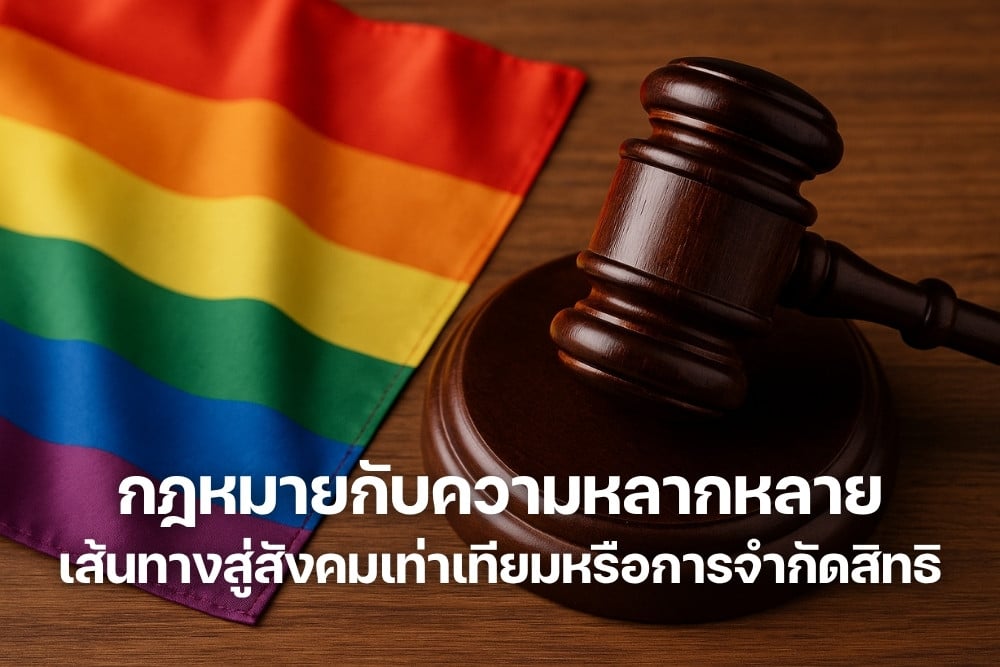
Contents
When laws are used as a tool to restrict human diversity, from the Middle East to Uganda, the country's LGBTQ community was left "stunned" by the new measures, gay activists say. The "Anti-Homosexuality Bill, 2023" carries severe penalties, including the death penalty for "aggravated homosexuality" and life imprisonment for same-sex relationships.
Tools that restrict diversity: when laws become weapons against the LGBTQ community
KAMPALA, Uganda — Members of Uganda's LGBTQ community feel alarmed and fear being arrested after parliament passed a measure that would criminalize identifying as gay and impose severe penalties, including the death penalty in some cases, activists said on Wednesday.
The "Anti-Homosexuality Bill, 2023" was approved by a nearly unanimous majority of lawmakers in the East African country, where anti-gay sentiment runs deep. Antony Blinken, the U.S. Secretary of State, said on Wednesday that the measure would undermine basic human rights and "reverse the gains in the fight against HIV/AIDS," and he urged officials to reconsider putting it into effect.
Frank Mugisha, one of the few Ugandans who lives openly as gay, told Reuters he fears the measure will trigger "the arrest of lesbian, gay, bisexual, transgender, and queer people, as well as vigilante violence against the LGBTQ community."
"LGBTQ people will be afraid to seek services at health centers … there will be many injuries and mental health problems that will lead to a large number of suicides," he said. Same-sex relationships are already illegal in Uganda, but supporters of the new law say it is needed to broadly punish LGBTQ activity, which they claim threatens traditional values in a conservative and deeply religious East African nation.
The measure includes steep penalties, including the death penalty for "aggravated homosexuality" and life imprisonment for same-sex relationships. Aggravated homosexuality involves same-sex relations with a person under 18 years old, or cases in which the offender is living with HIV, among other categories under the law. "It is a shocking time for the LGBTQ community," said Mugisha, of an LGBTQ rights charity that was shut down last year. Mugisha said he would challenge the measure in court because it is unconstitutional and violates international treaties Uganda has signed. He did not say when he would file the case. A case like his would likely be a good opportunity to strike down the law.
Two lawyers in Kampala contacted by Reuters said the law violates fundamental constitutional rights such as privacy and freedom of speech. "So, on a purely legal basis, I think it would be a strong case," said the lawyer Adrian Jjuko. An anti-gay law enacted in 2013, which triggered cuts in aid and investment, was struck down by the courts on procedural grounds.
Digital predation: another form of the tools that restrict diversity
In another dimension of the fallout, Grindr sent warnings to its users in Egypt after people were entrapped and arrested. Human rights groups have documented the digital targeting of LGBTQ people through dating apps and social media in at least five Middle Eastern countries in recent years.
Grindr, the world's most popular gay dating app, sent a warning to all of its users in Egypt this week after reports that dozens of LGBTQ people had been arrested in the country over the past weekend.
"We have been alerted that Egyptian police are actively arresting gay, bi, and trans people on digital platforms," said the warning, first sent on Monday. "They are using fake accounts and impersonating real community members who have already been arrested and had their phones seized."
The message, which Grindr said has been sent to users hourly since Monday, closed by advising, "Please take extra caution both online and offline, including with accounts that may have appeared legitimate in the past."
Patrick Lenihan, Grindr's head of global communications, told NBC News that the company decided to issue the warning after LGBTQ advocacy groups in Egypt reported that roughly 35 to 40 LGBTQ people had been arrested in the majority-Muslim country over the past weekend.
"Grindr is working with groups in Egypt to make sure our users have the latest information on how to stay safe, and we are pushing international organizations and governments to demand justice and safety for the LGBTQ community in Egypt," Lenihan said in an email, though he declined to name the advocacy groups they work with in order to protect the safety of their members.
Neither the U.S. Department of State nor the Egyptian Embassy in Washington, D.C., immediately responded to requests for comment on the alleged detentions and arrests in Egypt. The United States has provided Egypt with more than $50 billion in military aid and $30 billion in economic aid since 1978, according to the State Department's website.
Restricting diversity: a human rights challenge in the 21st century
When LGBTQ people are arrested in Egypt, they are often charged under the country's "debauchery" and "prostitution" laws, said Afsaneh Rigot, a researcher at Harvard Law School who studies the arrests of LGBTQ people in Egypt. But because the authorities have used social media and dating apps to arrest LGBTQ people in recent years, Rigot added, they are also increasingly charging people with violations of the country's cyber and telecommunications laws.
"That means higher penalties, more charges, and a greater likelihood of conviction, because those cyber and telecommunications laws are so vague," Rigot said. "So it is what is used against people after the arrest." Lenihan said Grindr, together with local advocacy groups, frequently sends general safety warnings to users in Egypt, but this week's warning was more specific and shared more widely. He added that Grindr's social justice division, Grindr for Equality, has worked closely with international LGBTQ organizations to deploy safety features and warnings for users in dozens of countries where it is not safe to be openly LGBTQ.
"Many of the safety features we have developed, we first developed in Egypt," he said. "It really is one of the worst places when it comes to police persecution." Lenihan added that officials in Egypt are using "many social media platforms" to target LGBTQ people, and he encouraged other platforms operating in the country to share similar safety messages.
In recent years, human rights advocates have documented the arrests of LGBTQ people by Egyptian authorities through social media platforms and dating apps. A 2020 report by Human Rights Watch documented the "arbitrary arrest" and prosecution of 15 LGBTQ people in the country between 2017 and 2020. A subsequent report by an international rights group, published last month, found that beyond Egypt, similar fear of the LGBTQ community also exists in Iraq, Jordan, Lebanon, and Tunisia.
Drawing on 120 interviews, including 90 LGBTQ people affected by digital targeting, the report found that state and private actors had detained 40 LGBTQ people across five countries between 2017 and 2022. Researchers also found that fear among LGBTQ people was most pronounced in Egypt, where 29 of the 40 arrests or "prosecutions" took place in the North African country.
Same-sex relations remain a crime in 67 countries and jurisdictions, according to the Human Dignity Trust, a global organization advocating for LGBTQ rights. On Wednesday, Uganda's parliament doubled down on punishing same-sex relationships by passing a first-of-its-kind measure that bars people from identifying as LGBTQ. Ugandans who have sex with people of the same sex would be sentenced to life in prison if the bill becomes law.
Reference: NBC News, NBC News
Verified references
Links and relevance to the article’s main topic were reviewed on 13 August 2026. Each source supports only the scope stated in the original document and does not replace personalised medical, legal, or service advice.
- OHCHR: LGBT rights fact sheet Accessed 13 August 2026