Can Genital Warts Be Treated at Home? Expert Answers and the Right Way to Treat Them
Genital warts can be treated, but you should always consult a doctor first, because a clinician needs to confirm whether the growths are truly genital warts…
อ่านภาษาไทย
Contents
Genital warts can be treated, but you should always consult a doctor first, because a clinician is the one who can determine whether the growths are truly genital warts and recommend the most appropriate treatment. Genital warts, or condyloma acuminata, are commonly known as warts in the genital area. They are a sexually transmitted infection caused by a virus, appearing as small flesh-colored bumps or warts on the genitals, anus, or mouth.
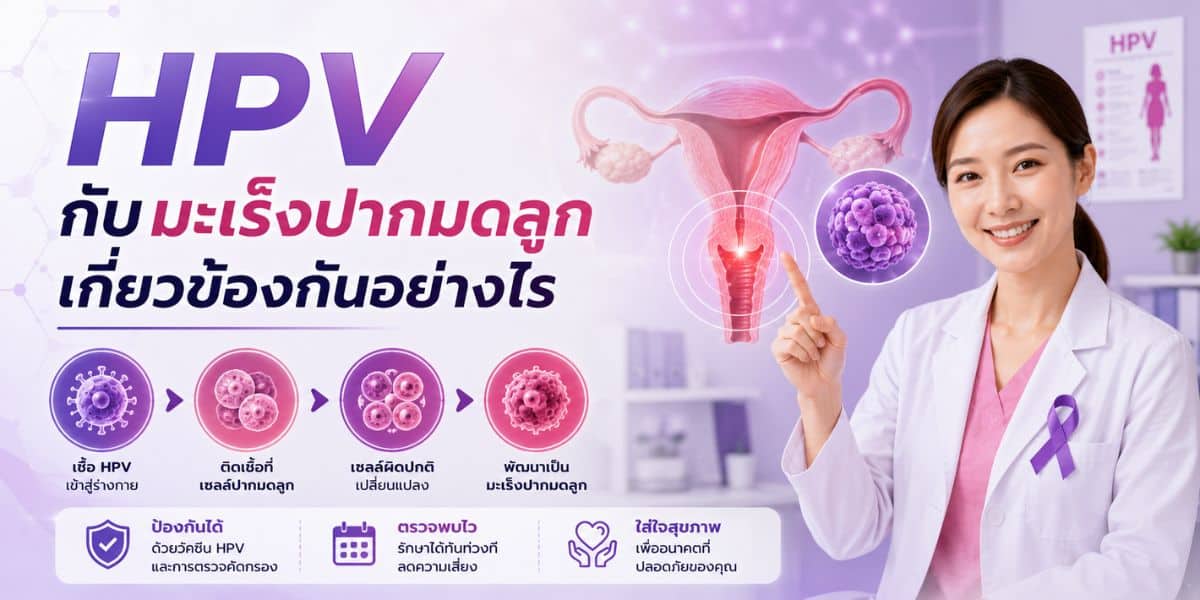
These bumps can vary in appearance, from small, flat, or raised bumps to large, cauliflower-like clusters. The condition is caused by certain strains of the human papillomavirus (HPV), especially HPV-6 and HPV-11, though it can also be caused by other HPV strains.
How Are Genital Warts Transmitted?
Genital warts can spread through direct skin-to-skin contact, usually during sexual activity, including penetrative sex without a condom, and can affect the genital area, anus, mouth, and throat. Transmission can be divided into:
| Sexual intercourse | Exposure to the virus |
|---|---|
| Vaginal sex | From mother to child during childbirth |
| Anal sex | Sharing personal items |
| Oral sex | Contact with secretions through an open wound |
What Risks Can Lead to Genital Wart Infection?
- Never having had a sexual health check-up
- Having sex without a condom with someone who is infected
- Frequently changing sexual partners, which raises the chance of infection
- A weakened immune system, as in people living with HIV, who are at greater risk of complications
What Are the Symptoms of Genital Warts?
As mentioned above, genital warts are caused by HPV, a diverse group of viruses with more than 200 known strains. However, most genital warts are caused by low-risk HPV types, namely:
- HPV type 6: This is the most common strain. It often causes genital warts on the genitals, anus, or mouth. HPV-6 mainly causes visible genital warts and is considered low-risk for cancer. HPV-6 is transmitted through skin-to-skin contact with an infected area, which can occur during vaginal, anal, or oral sex. It can also be transmitted by contact with an infected area elsewhere on the skin, such as the hands or face.
- HPV type 11: This is a virus that causes genital warts. The virus grows in the skin of the genital area, causing that skin to thicken and form soft growths resembling a cauliflower or cockscomb. The condition often does not cause pain or itching but may cause discomfort. Some people have no symptoms at all, while others may experience itching, irritation, or bleeding at the site of the warts.
Common Signs and Symptoms
Warts
- One of the main symptoms of genital warts is the development of warts in the genital area. These warts vary in size, shape, and appearance; they may be flat clusters, raised, or cauliflower-like. In men, they usually appear on the penis, scrotum, or anal area. In women, they may appear on the vagina, cervix, vulva, or anal area. Genital warts can also occur in the mouth or throat if the infection is transmitted through oral sex.
Itching and discomfort
- People with genital warts often experience itching and discomfort in the affected genital or anal area. The presence of warts can cause irritation and discomfort, leading to itching and sometimes pain.
Bleeding during sexual activity
- In some cases, genital warts caused by HPV can lead to bleeding during sexual activity, especially when the warts are irritated or rubbed during sex.
How Genital Warts Are Diagnosed
Genital warts can be diagnosed through a physical examination. The doctor examines the genital area or anus to look for warts. Genital warts usually appear as pink or flesh-colored growths with a rough, jagged surface resembling a cockscomb or cauliflower. Sometimes they may bleed or ooze fluid. In addition to a physical examination, the doctor may use other tests, such as:
Pap Smear
A Pap Smear, or Pap test, is a screening test for cervical cancer. The doctor uses a speculum to gently open the vagina, then collects a sample of cells from the cervix and sends it to the laboratory to look for abnormal cells or cell changes that could lead to cancer.
The Pap Smear is one of the most effective screening tests for cervical cancer. It can be done for women of all ages who are sexually active. In general, a Pap Smear is recommended every year for women aged 21-65. If the results are normal for three consecutive years, it can then be done every three years. Exceptions include groups at higher risk of cervical cancer, such as those with HIV infection, HPV infection, or conditions that weaken the immune system, or whose mothers took Diethylstilbestrol during pregnancy; these women should have a Pap Smear every year.
Steps of a Pap Smear
A Pap Smear takes about 5-10 minutes. The steps are as follows:
- The doctor puts on gloves and applies lubricant into the vagina.
- The doctor inserts a speculum into the vagina to open the cervix.
- The doctor uses a spatula or cell brush to gently scrape the cervix and the vagina.
- The doctor places the collected cells into a specimen container.
- The cells are sent to the laboratory for testing.
Pap Smear results
Pap Smear results are divided into four levels, as follows:
- Normal: No abnormal cells found.
- Atypical squamous cells of undetermined significance (ASCUS): A few slightly abnormal cells are found, but it is not yet clear whether they are cancerous.
- Low-grade squamous intraepithelial lesion (LSIL): A few slightly abnormal cells are found that have the potential to become cancerous.
- High-grade squamous intraepithelial lesion (HSIL): Severely abnormal cells are found that have the potential to become cancerous.
If a Pap Smear finds abnormal cells, the doctor may recommend additional tests, such as colposcopy or molecular biology testing, to confirm the results and plan appropriate treatment.
Benefits of a Pap Smear
A Pap Smear has several benefits, as follows:
- Helps detect abnormal cells or cell changes that could lead to cancer.
- Helps diagnose cervical cancer at an early stage, when it can be cured.
- Helps reduce the death rate from cervical cancer.
What to do before and after a Pap Smear
Before a Pap Smear, avoid sexual intercourse for at least 24 hours, do not use vaginal suppositories or inserted medications within 24 hours before the test, and do not douche before the test. After a Pap Smear, there may be a small amount of discharge or light bleeding, which usually resolves on its own within 24 hours. If there is heavy discharge or bleeding, you should see a doctor.
Genital Wart Biopsy
If the diagnosis is unclear or further confirmation is needed, a biopsy may be performed. During a biopsy, a small sample of tissue is taken from the suspected wart and sent to the laboratory for analysis. A biopsy is the definitive method for confirming a diagnosis of genital warts, done by removing tissue from the wart for pathological examination. A genital wart biopsy is usually performed when:
- The wart has features that are not typical of a wart, such as an unusually dark color, firmness, or firm attachment to the underlying tissue, or when it does not respond to standard treatment.
- There is suspicion that the wart may be cancerous.
- The doctor needs to distinguish genital warts from other sexually transmitted infections.
Steps of a genital wart biopsy
A genital wart biopsy can be performed by a doctor or a dermatologist. The steps are as follows:
- The doctor injects a local anesthetic at the site of the wart.
- The doctor uses a scalpel or forceps to remove tissue from the wart.
- The doctor closes the wound with stitches.
Genital wart biopsy results
Results of a genital wart biopsy take about 1-2 weeks. The biopsy results indicate which HPV strain caused the wart and whether the wart may be cancerous. If the biopsy shows the wart was caused by a non-cancerous HPV strain, the doctor may recommend continuing treatment of the wart. If the biopsy shows the wart was caused by an HPV strain that may be cancerous, the doctor may recommend additional tests, such as an X-ray or MRI, to assess the severity of the cancer.
What to do after a genital wart biopsy
After a genital wart biopsy, there may be a small amount of discharge or light bleeding, which usually resolves on its own within 24 hours. If there is heavy discharge or bleeding, you should see a doctor.
HPV DNA Testing
HPV DNA testing detects the human papillomavirus (HPV), a major cause of cervical cancer. It can be done using a cell sample from the cervix or vagina, which is sent to the laboratory for analysis. A Pap smear sample can be collected in two ways:
- Conventional Pap Test: This is the traditional Pap smear method. The doctor uses a spatula or cell brush to gently scrape cells from the cervix and vagina, then places the collected cells in a specimen container and sends them to the laboratory.
- Liquid-based Pap Test (such as ThinPrep): This is a newer Pap smear method. The doctor uses a collection device to draw cells from the cervix and vagina, then places the collected cells in a container of liquid and sends them to the laboratory.
HPV DNA testing has several advantages, as follows:
- It is highly sensitive and accurate at detecting high-risk HPV strains that can cause cervical cancer.
- It can detect the HPV strains that cause genital warts.
- It can be used together with a Pap Smear to improve the accuracy of diagnosing cervical cancer.
- HPV DNA testing is recommended for women of all ages who are sexually active, generally every 5 years, except for groups at high risk of cervical cancer, such as those with HIV infection, HPV infection, or conditions that weaken the immune system, or whose mothers took Diethylstilbestrol during pregnancy; these women should have HPV DNA testing every year.
HPV DNA test results
- Negative: No HPV detected.
- Positive: A high-risk HPV strain associated with cervical cancer is detected.
What to do before and after an HPV DNA test
Before an HPV DNA test, avoid sexual intercourse for at least 24 hours, do not use vaginal suppositories or inserted medications within 24 hours before the test, and do not douche before the test. After an HPV DNA test, there may be a small amount of discharge or light bleeding, which usually resolves on its own within 24 hours. If there is heavy discharge or bleeding, you should see a doctor.
How Are Genital Warts Treated?
Medication to treat genital warts may take several weeks to several months to work, so many people wonder whether it is better to just treat the warts themselves. Because there are many types of sexually transmitted infections, we recommend seeing a doctor for proper treatment. This helps you recover faster and worry less about the warts easily coming back, since the staff will have given you a clear understanding of the condition. Treatment options for genital warts include the following:
- Topical medications for genital warts, which come in several types and must be applied by a doctor, including:
- Imiquimod, a drug in the immune-boosting group. It works by stimulating the immune system to become stronger in order to inhibit the growth of the abnormal skin. It is used to treat several skin conditions. Apply it to the warts or thickened lesions three times a week (for example, Monday, Wednesday, and Friday) at bedtime, and wash it off after 6-10 hours. Treatment may take several weeks or months to show results.
- Podofilox, a sticky, yellowish-brown substance that causes cell death by inhibiting cell division. It may cause skin irritation, sores, and pain, and if it enters the bloodstream it may cause nerve inflammation, numbness, a low white blood cell count, and a low platelet count.
- Trichloroacetic acid solution, which works by denaturing the proteins in cells, causing cell death. Stalked (pedunculated) warts usually fall off within 2-3 days, and it can cause skin irritation and bleeding sores.
- Oral medications for genital warts, such as Cimetidine.
- Surgical procedures, such as electrocautery, cryotherapy with liquid nitrogen, and laser excision.
- Light therapy, such as laser treatment and ultraviolet light treatment.
How to Prevent Genital Warts
The best way to prevent genital warts is to get the HPV vaccine, which can protect against up to 9 HPV strains, including strains 6 and 11 that cause genital warts. The HPV vaccine can be given to both women and men and is available for people aged 9 to 45. In addition to vaccination, other ways to prevent genital warts include:
- Use a condom every time you have sex. Condoms can help prevent HPV from entering the body, but they are not 100% effective, because HPV can spread from genital areas not covered by the condom.
- Have only one sexual partner, or as few as possible. Having multiple partners or changing partners often increases the risk of HPV exposure.
- Avoid contact with areas that have genital warts. Genital warts can be transmitted through direct contact with the lesion or its secretions.
- Get screened regularly for sexually transmitted infections. STI screening can help detect HPV infection early, allowing for more effective treatment.
- Genital warts can clear up on their own within one year, but they can come back. That is why it is important to prevent them from the start, to reduce the risk of the condition and other complications.
The following are additional tips for preventing the spread of genital warts:
- Wash your hands thoroughly with soap and water after using the toilet or changing sanitary products.
- Avoid touching another person's genital or anal area.
- Avoid sharing personal items such as towels, underwear, soap, toothbrushes, razors, and so on.
Read other articles related to genital warts
In short, genital warts are a common sexually transmitted infection caused by certain strains of HPV. The condition can lead to serious complications if it is not properly treated, so understanding its causes, symptoms, available treatments, and prevention strategies is important for both individuals and society as a whole. This is how we can protect our sexual health and reduce the rate of this condition, through safe sex, vaccination, and regular health check-ups.
If you suspect you have genital warts, they are not difficult to treat, so please do not hesitate to seek advice from a sexual health care specialist right away.
Verified references
Links and relevance to the article’s main topic were reviewed on 13 August 2026. Each source supports only the scope stated in the original document and does not replace personalised medical, legal, or service advice.
- CDC: About Genital HPV Infection Accessed 13 August 2026
- NCI: HPV and Cancer Accessed 13 August 2026
- CDC: Anogenital Warts—Treatment Guidelines Accessed 13 August 2026