What Is Chancroid? Understanding Its Symptoms, Treatment, and Prevention
Haemophilus ducreyi can cause chancroid, but genital ulcers need assessment for other causes too. Understand testing, partner care and safe treatment.
อ่านภาษาไทย
Contents
Is a painful genital ulcer enough to diagnose chancroid?
No. A clinician considers the examination, exposure history and tests for other ulcer causes, including syphilis and herpes. Special testing for Haemophilus ducreyi is not available at every facility.
Does chancroid show that someone is unclean or unfaithful?
No. Infection is not a measure of cleanliness or character. Do not infer recent behaviour or nationality from an ulcer. Seek non-judgmental assessment and avoid direct contact with lesions.
Do partners need care if they have no ulcer?
They may. CDC guidance recommends evaluation and treatment of partners who had sexual contact during the ten days before symptoms began. Follow the treating service’s plan for partner care and resuming sex, rather than sharing antibiotics.
Sources for these answers
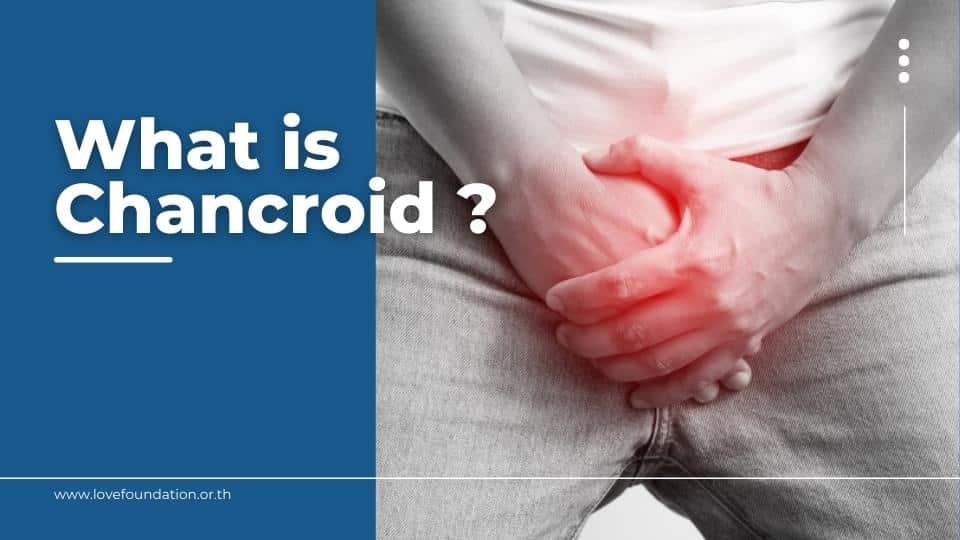
How is chancroid diagnosed?
A doctor will take your sexual history and examine the appearance and location of the sore, as well as check the lymph nodes in your groin. Because chancroid can look similar to syphilis and herpes, the doctor may take a blood test for syphilis, collect a sample from the sore to test for herpes, and consider testing for HIV as well. Culturing Haemophilus ducreyi requires a special culture medium and may not be available at every healthcare facility.Symptoms of chancroid
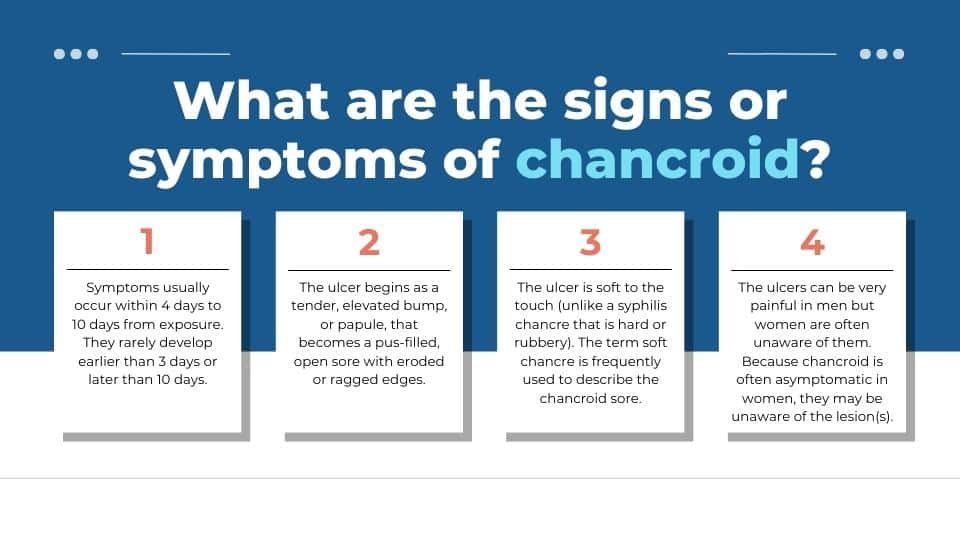
Symptoms usually begin to appear within several days of exposure, starting with a small red or raised bump at the spot where the bacteria made contact. The bump may then break open into a painful sore with irregular, fairly soft edges. The base of the sore may be yellow or gray, contains pus, and bleeds easily when touched. Symptoms that may occur include:- Painful sores on the genitals, around the anus, or wherever the bacteria made contact
- Pain or a burning sensation when urine touches the sore during urination
- Pain during sex
- Swollen, tender lymph nodes in the groin
- Lymph nodes that may turn into a pus-filled abscess, known as a bubo
How is chancroid transmitted?
Contact with an infectious ulcer during sexual activity can transmit the organism. Condoms reduce contact but may not cover all lesions. Geography, sanitation or identity alone cannot establish the diagnosis or a person’s behaviour.
Do sexual partners need to be tested and treated too?
Anyone who had sex with the patient in the period before symptoms began should be evaluated by a healthcare professional, even if they have no sores or unusual symptoms, because they may have been infected and could pass it on. The patient should abstain from sexual activity until treatment is complete, the sores have healed, and their partners have been evaluated or treated. The CDC recommends evaluating and treating any sexual partner who had sex with the patient during the 10 days before symptoms began.Preventing chancroid
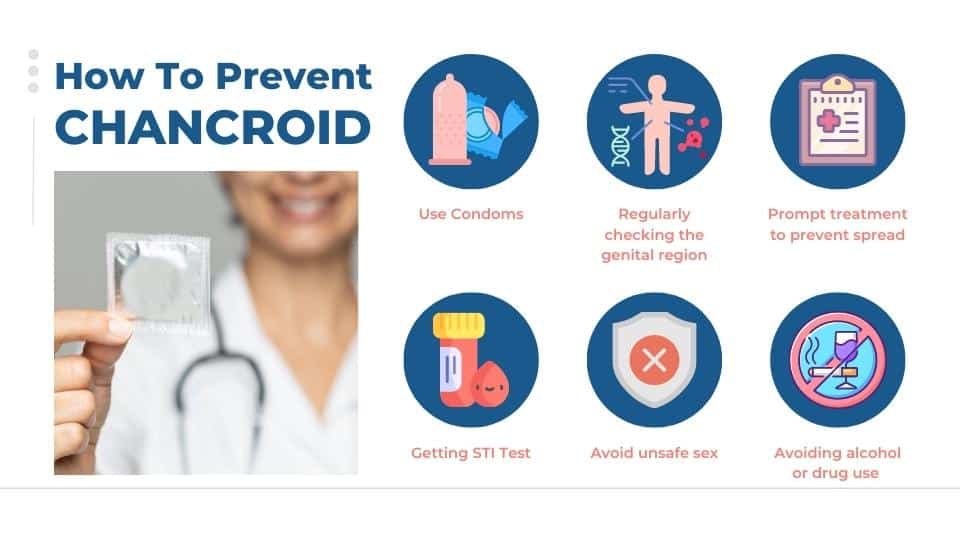
Avoid sexual contact with active ulcers, use barriers correctly and obtain assessment when a lesion appears. A regular partner can also have an undiagnosed infection. Washing or disinfecting the genitals is not a substitute for prevention or treatment.
Approaches to treating chancroid
A clinician selects antibiotics and follow-up for the individual. Painful enlarged lymph nodes may require drainage by a professional. Antibiotics do not create lasting immunity, and lack of improvement needs reassessment rather than repeated self-treatment.
How to take care of yourself when you have chancroid
Follow prescribed treatment and wound-care instructions. Do not squeeze ulcers or swollen nodes or apply harsh products. Return if symptoms worsen or do not improve as expected, and arrange partner evaluation before resuming sexual contact as advised.
Is chancroid dangerous?
Untreated ulcers and lymph-node complications require care, and genital ulcers can increase susceptibility to HIV during an exposure. Chancroid does not automatically cause another STI. Recovery and scarring vary; do not guarantee a scar-free outcome or use unsupported claims about current Thai prevalence.
Verified references
Links and relevance to the article’s main topic were reviewed on 13 August 2026. Each source supports only the scope stated in the original document and does not replace personalised medical, legal, or service advice.
- CDC: Chancroid—Treatment Guidelines Accessed 13 August 2026
- CDC: STI Treatment Guidelines Accessed 13 August 2026