New Bangladesh Textbook Offers Hope for Reducing Anti-Transgender Discrimination
A new Bangladesh school textbook includes the experiences of transgender people and hijras, raising hopes for greater understanding while also drawing public…
อ่านภาษาไทย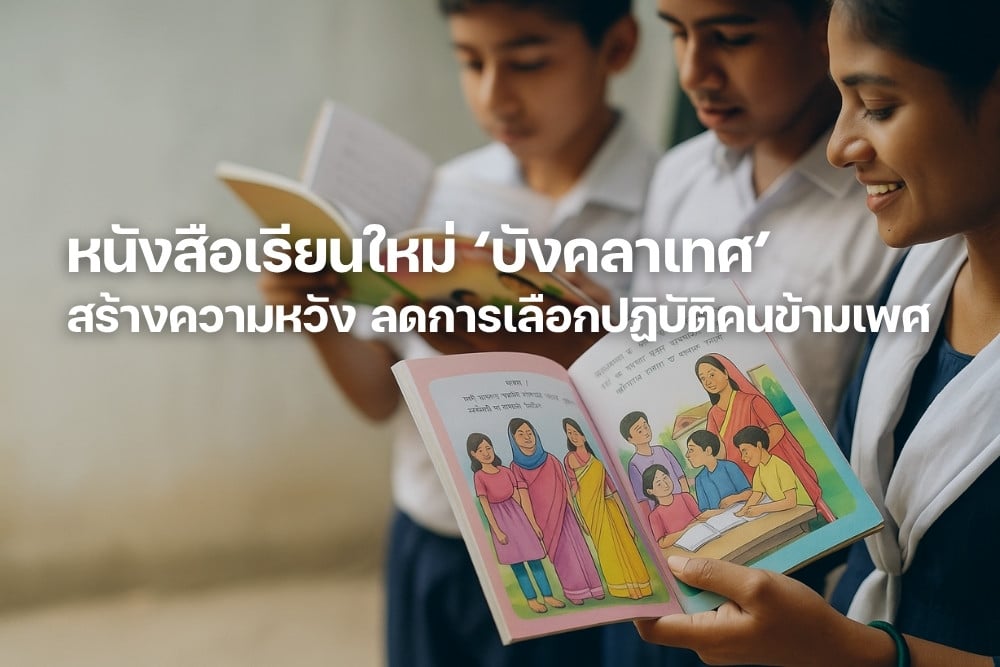
Contents
Dhaka, Feb 24 (Reuters) - Many transgender people in Bangladesh, known as hijras, wear brightly colored saris and heavy makeup and spend their days begging from people stuck in traffic and from shopkeepers who hand over small change in exchange for a blessing of good luck. The government recognized hijras as a third gender in 2013, yet they remain marginalized in a country where same-sex sexual activity is illegal.
Many members of the hijra community live in extreme poverty, with no access to proper education and almost no employment. Many are forced to beg or to do sex work to survive. But on January 1, a new textbook was launched for millions of students between the ages of 11 and 13, featuring content about transgender people.
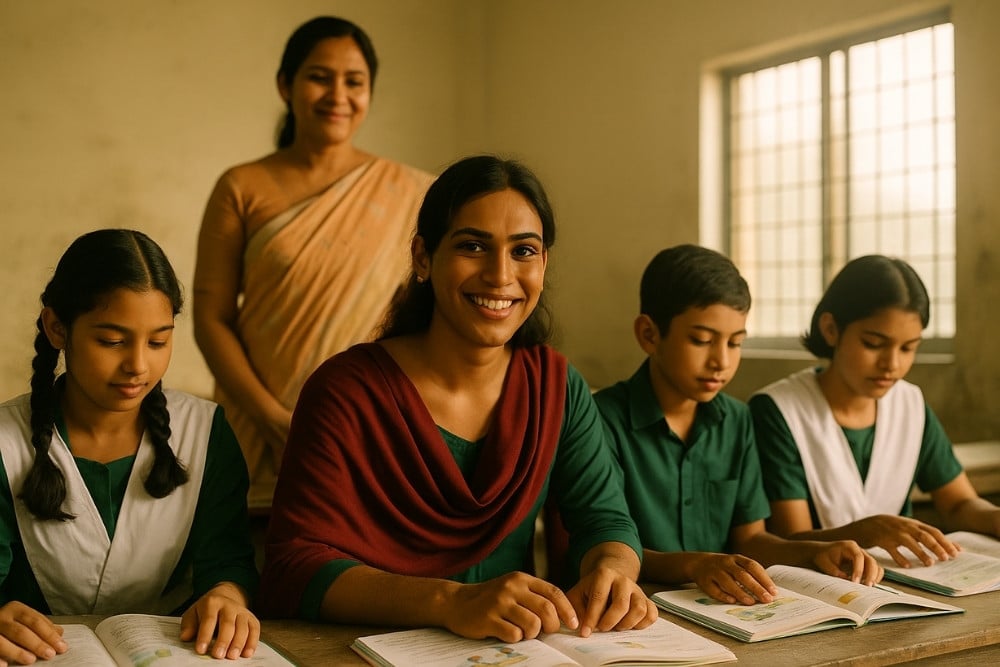
A textbook featuring images of transgender people in Bangladesh
The textbook includes images of transgender people in respected jobs — among them beauty therapists, development officers, and an elected mayor — along with a fictional story about a child who transitions, takes a female name, and goes to live with a transgender community. The book's creators hope it will help build acceptance. "We piloted it in a small area and got a good response from students, because it was something they had never known before. It was new knowledge for them, and they accepted it very well," said Muhammad Moshiuzzaman, a member of the National Curriculum and Textbook Board.
"I think they are human beings just like us. We come to know them by learning from the book. We believe we should help them move forward," said Fatiah Alam, 12, a student at Gomail High School on the outskirts of Dhaka, one of the schools using the new textbook.
Officials estimate that there are about 10,000 hijras in Bangladesh, but human rights groups say the figure could be as high as 1.5 million in a country of 170 million people. The textbook has not been welcomed by everyone. A large group of conservative Muslims, angered by the recent inclusion of hijras, held protests at Dhaka's main mosque to demand that the textbook be recalled and its content restored to the way it was.
Even so, the transgender community and their supporters hope the textbook will spread awareness and help improve their standing in society.
"If our stories catch people's attention and make them think about our hardships, that would be good for us. We hope that those who learn more about us will understand and work to help us progress in the future," said Jonak, a transgender community leader, speaking to Reuters at her office in Dhaka.
Another development that cannot go unmentioned is the cyclone disaster that struck Bangladesh, disrupting the work and everyday lives of the transgender and hijra communities and leaving them at even greater risk of discrimination, said Mala, an activist.
"Transgender people cannot easily access emergency shelters. They may be beaten and thrown out," she said.
Natasha Kabir, founder of the Bridge Foundation, which works with socially disadvantaged groups, said Bangladesh lacks a comprehensive disaster management policy.
"Most of the support given to transgender people is concentrated in Dhaka, while those living in remote areas are often left out," she said.
A gender analysis of transgender people in Bangladesh
A 2020 gender analysis by UN Women identified sex workers, including transgender women, as one of the groups most affected by Cyclone Amphan.
The pandemic had already limited their ability to earn a living, and then the cyclone swept away many homes — yet they were cut off from aid and social support, the report said. Emergency relief was aimed mainly at men, while marginalized groups such as transgender people were left to languish.
Transgender people who do not identify with hijra culture also struggle in education and employment because of harassment and discrimination, and they remain almost invisible in society. Sudha, a banker, noted that she is often called "hijra," even though "hijras and transgender people are not the same."
"Hijra is not a gender identity but an ancient subculture in South Asia," said Manisha Meem Nipun, an executive at the Pathchola Foundation in Bangladesh, which works on gender and sexual-minority issues. The earliest references to hijras — who traditionally included eunuchs and transgender people — can be traced back to the Mahabharata, the Sanskrit epic believed to have been written between the third century BCE and the third century CE.
Read other related articles
Hijra culture has for centuries been associated with practices such as the guru-disciple relationship, public begging, and sex work. After gaining legal recognition in 2013, hijras won the right to change official documents, such as passports, to reflect their gender identity. Worldwide, at least 15 countries recognize a third gender identity on passports, including Australia, Ireland, and Nepal, and hijra was also included as a separate category on Bangladesh's national voter rolls in 2019.
But obtaining official documents from government agencies, and handling other official matters, remains a difficult struggle. When opening a bank account, Mohona — a hijra who was assigned male at birth and who runs an organization that helps hijras find work in Rajshahi — had to have local officials certify that she was the same person recorded on her national ID card.
References:
- en.prothomalo.com/bangladesh/bangladesh-in-world-media/bangladesh-disaster-response-neglects-vulnerable-transgender-community
- reuters.com/world/asia-pacific/bangladesh-new-school-textbook-features-transgender-people-2023-02-24/
Verified references
Links and relevance to the article’s main topic were reviewed on 13 August 2026. Each source supports only the scope stated in the original document and does not replace personalised medical, legal, or service advice.
- Reuters: Bangladesh textbook includes transgender people Accessed 13 August 2026
- OHCHR: LGBT rights fact sheet Accessed 13 August 2026