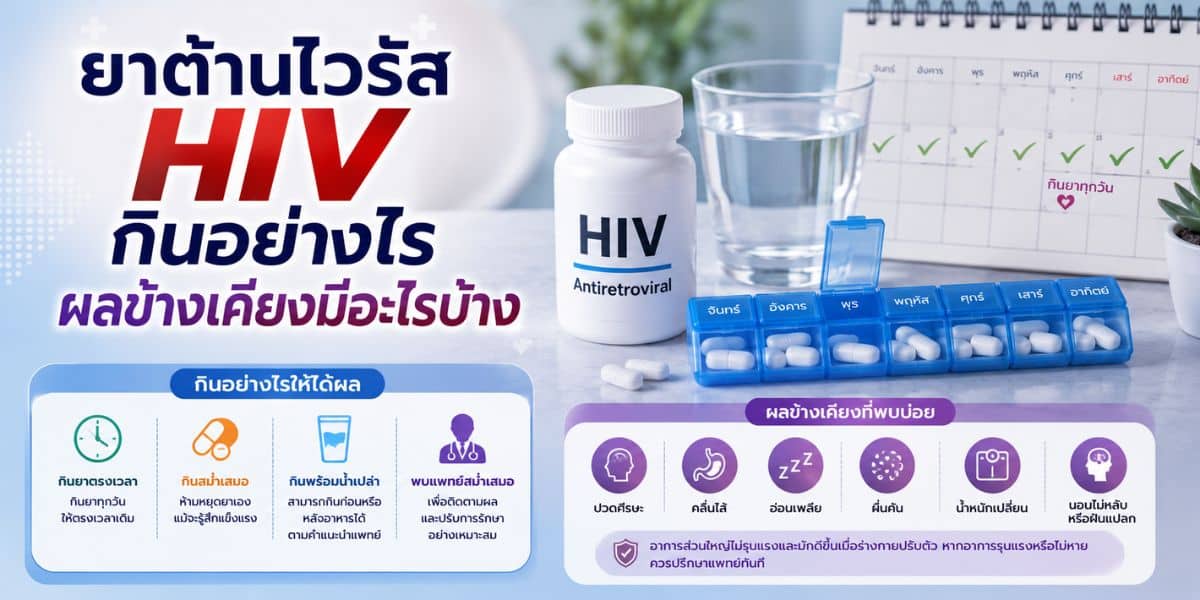
Antiretroviral Therapy (ART): How It Works, Benefits, and Side Effects
Antiretroviral therapy (ART) suppresses HIV, protects the immune system, and helps people living with HIV live long, healthy lives.
อ่านภาษาไทย
Contents
Throughout the relentless fight to manage HIV and AIDS effectively, antiretroviral therapy (ART) has become a game-changer, a powerful arsenal that stands against the ongoing spread of HIV today. This comprehensive article sets out to answer common questions about HIV antiretroviral medications, taking a close look at their development, mechanism of action, benefits, and the challenges involved in their use. From the key goals of HIV treatment to the complexity of combination therapy, it offers an in-depth perspective covering every aspect for anyone seeking a foundational understanding of this treatment process.
Antiretroviral Therapy (ART): A Powerful Weapon in the Fight Against HIV/AIDS
Understanding HIV and the need for antiretroviral treatment.
HIV is a global health challenge that has had a profound and lasting impact on communities around the world. Before we can appreciate the importance of antiretroviral treatment, we first need to understand the nature of HIV itself, along with the urgent need for timely care.
An Overview of HIV and AIDS
HIV, or the Human Immunodeficiency Virus, is a retrovirus that targets and destroys the immune system, particularly the CD4 cells. The virus spreads through bodily fluids such as blood, semen, vaginal fluids, and breast milk. By attacking the immune system's defenses, it leaves a person more vulnerable to a range of opportunistic infections.
How HIV Infection Progresses
HIV infection can be divided into stages, from the earliest point of infection through to the AIDS stage. AIDS is a condition that develops in people who do not receive antiretroviral treatment promptly, allowing the infection to advance to its most severe form. These stages include:
Acute HIV Infection
- Timeframe: 2 to 4 weeks after infection.
- Symptoms: flu-like symptoms such as fever, sore throat, rash, swollen lymph nodes, and body aches.
Clinical Latency Stage
- Timeframe: this stage can last a long time, from 5 to 10 years or more, depending on the person's health.
- Symptoms: HIV remains in the body without causing noticeable symptoms, but the immune system gradually weakens.
AIDS Stage
- Timeframe: reached when a person has gone without antiretroviral treatment and has lived with the virus for a long time.
- Symptoms: the immune system becomes severely weakened, giving rise to opportunistic infections such as tuberculosis, pneumonia, cancer, and neurological conditions. This can lead to frequent or chronic fever, unexplained weight loss, cough, frequent diarrhea, and more.
- Diagnosis: an HIV antibody blood test returns a positive result, the CD4 count is often below 200 cells/mm³, and other co-infections may be present.
Why Antiretroviral Medication Matters in Starting Treatment Early
Diagnosing HIV early and starting treatment quickly are crucial to managing the spread of the virus. Beginning treatment at the right time can help lower the amount of virus in the body (viral load), slow the destruction of immune cells (CD4), and delay the progression to AIDS. Beyond these medical benefits, starting HIV treatment early also reduces the risk of passing the virus to others, underscoring how important timely care is for overall health.
Understanding how HIV infection progresses lays the groundwork for appreciating the vital role antiretroviral therapy (ART) plays in managing a complex and constantly changing virus. In the next section, we will take a closer look at how antiretroviral medications work and the positive impact they have on the lives of people living with HIV.
How Antiretroviral Drugs Work
To understand the effectiveness of antiretroviral therapy (ART), we need to look closely at the clever mechanisms behind these medications. Antiretroviral drugs act like powerful weapons that stop the virus in its tracks by disrupting different stages of its life cycle, which in turn limits how the virus spreads.
Inhibiting HIV Replication
At the heart of antiretroviral therapy (ART) is the goal of inhibiting the virus's replication. Whatever their type, antiretroviral drugs all aim to disrupt HIV's ability to make copies of itself. By blocking this replication process, these medications effectively control the amount of virus (viral load) in the body, helping to prevent the virus from spreading rapidly and protecting the immune system from damage. Each type of antiretroviral drug works by interfering with a different stage of the HIV life cycle, as follows:
Blocking entry into cells
- This type of medication acts at the earliest stage of the life cycle by preventing HIV from entering its target cells, the CD4 cells. Working this way stops the virus from attaching to and penetrating CD4 cells.
Blocking the transcription of genetic material
- This type of antiretroviral medication is divided into Nucleoside Reverse Transcriptase Inhibitors (NRTIs) and Non-Nucleoside Reverse Transcriptase Inhibitors (NNRTIs). These drugs work by blocking the reverse transcription process, the step in which HIV converts its RNA genetic material into DNA after entering a cell.
Inhibiting the protease enzyme
- This type of medication acts during the later stage of virus production by inhibiting the protease enzyme, which HIV needs to build its proteins. As a result, the virus cannot assemble complete, infectious particles.
Preventing the virus from integrating
- This type of drug prevents HIV's genetic material from integrating into the cell's DNA, another crucial step in the viral life cycle. By acting in this way, it stops HIV from permanently embedding itself in the cell's DNA.
Types of Antiretroviral Drugs
Antiretroviral drugs fall into several types, as follows:
Nucleoside/Nucleotide Reverse Transcriptase Inhibitors (NRTIs)
- This type of antiretroviral drug mimics the building blocks used to make DNA, inserting itself into the DNA chain the virus is building. This causes the transcription of genetic material to stop prematurely.
Non-Nucleoside Reverse Transcriptase Inhibitors (NNRTIs)
- Unlike NRTIs, this type of drug binds directly to the reverse transcriptase enzyme, distorting its shape and function so that the virus fails to convert its RNA genetic material into DNA.
Protease Inhibitors (PIs)
- This type of antiretroviral drug interferes with the final stage of virus production by inhibiting the protease enzyme, which HIV uses to cut its large proteins into the smaller functional proteins the virus needs. This inhibition prevents the virus from producing essential proteins and leaves newly formed viruses unable to infect.
Integrase Inhibitors
- The integrase enzyme plays a key role in integrating HIV's genetic material into the cell's DNA. This type of antiretroviral drug inhibits the integrase enzyme, preventing the virus from permanently embedding itself in the cell's DNA.
Understanding these varied mechanisms of action allows healthcare providers to design treatment plans that take into account the specific properties of each antiretroviral drug and combine them for greater effect. It also helps guide how treatment is started and highlights the importance of taking medication faithfully, to ensure these drugs work as effectively as possible.
Benefits of Antiretroviral Therapy (ART)
The arrival of HIV antiretroviral drugs marked a turning point in how HIV is managed. These medications offer many benefits and have a positive impact on the health and quality of life of people living with HIV. Understanding these benefits helps underscore why it is so important to start antiretroviral treatment early and to take the medication consistently.
Reducing the Viral Load
One of the main goals of antiretroviral therapy (ART) is to reduce the viral load in people living with HIV. Viral load refers to the amount of HIV in the bloodstream. ART is effective at controlling and lowering the viral load until it becomes undetectable. Suppressing the virus in this way not only protects the health of the person living with HIV but also greatly reduces the risk of passing the virus to others.
Restoring the Immune System
HIV targets and destroys CD4 cells, weakening the immune system's ability to protect the body from infections and other illnesses. Antiretroviral therapy (ART) plays a role in restoring and preserving these vital immune cells. As the viral load falls, the CD4 count rises, helping to rebuild a stronger immune system. This restoration allows the body to fight off opportunistic infections and supports better health overall.
Reducing the Risk of Opportunistic Infections
A weakened immune system leaves people living with HIV who are not on treatment more vulnerable to opportunistic infections, illnesses that take advantage of a compromised immune system. Antiretroviral therapy (ART) greatly reduces this risk by strengthening the immune system, significantly lowering the chances of opportunistic infections such as tuberculosis, pneumonia, and certain cancers. In this way, ART not only improves quality of life but also helps extend the lifespan of people living with HIV.
More Articles You May Find Interesting
- Answering Your Questions: What Are Opportunistic Infections in People Living with HIV?
- Hope for People Living with HIV: Scientists Turn to Genetic Engineering
As we can see, antiretroviral therapy (ART) has revolutionized HIV care, offering a vital lifeline to people living with the virus. From its historical development to its mechanisms of action, benefits, and the subtle challenges it presents, HIV antiretroviral therapy stands as a testament to scientific progress and to an unwavering commitment to confronting a global health crisis. This article has walked readers through the many dimensions of HIV antiretroviral therapy, emphasizing the importance of starting treatment early, staying committed to it, and the life-changing positive impact it has on people living with HIV.
Looking to the future, overcoming the obstacles that remain, advancing research, and sharing inspiring stories will help move our world toward a place where HIV is not only manageable but ultimately curable. With understanding, support, and a recognition of the benefits of HIV antiretroviral therapy, we move closer to a world free from the stigma faced by people living with HIV, where everyone can live a healthy life.
Verified references
Links and relevance to the article’s main topic were reviewed on 13 August 2026. Each source supports only the scope stated in the original document and does not replace personalised medical, legal, or service advice.
- NIH HIVinfo: HIV Treatment Basics Accessed 13 August 2026
- NIH HIVinfo: HIV Medicines and Side Effects Accessed 13 August 2026