Perianal Abscess and Anal Fistula: Causes, Symptoms, and Treatment
A perianal abscess is a pocket of pus caused by infection near the anus. An anal fistula is an abnormal tunnel between the anal canal and nearby skin, often…
อ่านภาษาไทย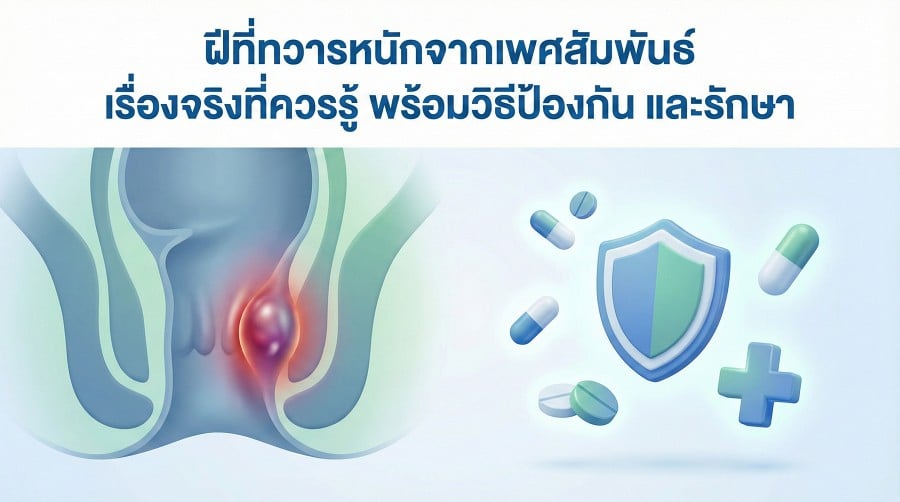
Contents
A perianal abscess is a pocket of pus caused by infection near the anus. An anal fistula is an abnormal tunnel between the anal canal and nearby skin, often left after an abscess drains. Neither condition is, by itself, a sexually transmitted infection.
What Causes Them?
The usual cause is blockage and infection of a small anal gland, producing an abscess. After pus drains, a persistent tunnel can remain as a fistula. Less common causes include Crohn's disease, previous surgery or injury, hidradenitis suppurativa, tuberculosis, and other conditions that require individual assessment.
Anal sex is not the usual cause of an abscess or fistula. Friction or injury may make pain more noticeable, and some STIs can cause symptoms in the same area, but they require separate testing and should not automatically be labelled as the cause.
Symptoms
- Throbbing pain, swelling, redness, or a lump near the anus
- Pus, blood, or an unpleasant-smelling discharge from an opening near the anus
- Pain that worsens when sitting, coughing, or passing stool
- Fever, chills, or feeling unwell, which may indicate an infection requiring prompt care
Seek urgent care for severe or rapidly worsening pain and swelling, fever, diabetes, or a weakened immune system. Do not squeeze or puncture the lump yourself.
Assessment
A clinician examines the area and may perform a careful rectal examination. Ultrasound, MRI, or CT may be used when a deep or complex tract is suspected. Symptoms that could be related to sexual exposure require separate site-specific STI testing.
Treating an Abscess
Many perianal abscesses require prompt incision and drainage by a clinician. Antibiotics do not replace drainage in every case; they are selected when infection is spreading, immunity is reduced, or another indication is present. After treatment, follow wound-care and pain-relief advice and return if fever, pain, or discharge worsens.
Treating a Fistula
Anal fistulas rarely heal on their own, and many require surgery. Options include fistulotomy, a seton, or other sphincter-sparing procedures. The choice depends on the tract and its relationship to the anal sphincter. Treatment aims to heal the fistula while preserving continence, so it must be planned with a colorectal surgeon rather than selected from online information alone.
Verified references
Links and relevance to the article’s main topic were reviewed on 13 August 2026. Each source supports only the scope stated in the original document and does not replace personalised medical, legal, or service advice.
- American Society of Colon and Rectal Surgeons: Abscess and Fistula Accessed 13 August 2026
- CDC: About Sexually Transmitted Infections Accessed 13 August 2026