What Is PrEP? Options, Effectiveness and Getting Started
PrEP prevents HIV before exposure. Learn who can use it, which tests are needed before starting, how follow-up works, and where to find a service.
อ่านภาษาไทย
Contents
In an era when HIV remains one of the health issues the whole world takes seriously, "prevention" has become just as important as treatment. One of the innovations proven to be highly effective is PrEP (Pre-Exposure Prophylaxis) the use of antiretroviral medication before a possible exposure, creating a shield that keeps HIV from entering the body. It has been confirmed to greatly reduce the chance of infection, especially among people at higher risk, such as those with multiple partners, serodifferent couples, or men who have sex with men. This article will help you get to know PrEP more deeply: what it is, how it works, who it is suitable for, how to access it, and the misconceptions many people still have about this form of prevention. The goal is to show you that PrEP is not something distant, but another option that lets you live your life with more confidence and safety.
PrEP: An Advance Shield Against HIV
PrEP is a proactive prevention approach designed for people who may find themselves in situations that put them at risk of HIV. Its key strength is "building a shield in advance" for the body, by taking one PrEP pill consistently every day to keep the level of the medication in the blood and tissues high enough to block the virus.
When taken as prescribed, PrEP can reduce the risk of acquiring HIV through sex by about 99%. PrEP does not prevent other STIs. At the same time, for people who share needles to inject drugs, PrEP can reduce the risk by more than 70%, which matters greatly for preventing the spread of HIV within this group.
What makes PrEP so compelling is that it is not just an ordinary "antiviral" medicine, but a tool that gives users greater peace of mind and confidence in their sexual lives, because they no longer have to live with the anxiety that used to follow sex. Many people who use PrEP say the same thing: they feel safe, happy in their relationships, and able to care for themselves with confidence. That said, using PrEP effectively must come with the discipline of taking the medication and regular health check-ups, especially an HIV test every three months to confirm the user is still HIV-negative, to monitor kidney function, and to receive other guidance from the doctor.
"PrEP is therefore not just an 'antiviral' medicine, but is like an advance shield that both reduces physical risk and boosts everyday confidence for those who genuinely want safety in their sexual lives."
How PrEP Works
Some people may wonder, "How can taking one tiny pill a day prevent HIV?" The answer is that PrEP is designed to stop the life cycle of HIV right at the source, so the virus cannot spread further. Let's understand it step by step.
1. It starts with taking PrEP every day
PrEP works best when taken consistently every day, because the medication gradually builds up in the blood and tissues, especially in the organs most exposed to the virus, such as the rectum, genitals, and vagina. That steady level of medication is your "shield."
2. When HIV enters
Imagine that after sex without a condom, HIV manages to slip into the body. What the virus needs to do next is "invade" the white blood cells (CD4 cells), the key cells that help build the body's immune defenses.
3. The virus needs an enzyme
Once inside a cell, HIV needs an enzyme called reverse transcriptase to convert its genetic material so it can integrate with human cells. This step is like the virus's "factory." If it succeeds, the virus makes new copies of itself and spreads throughout the body.
4. PrEP steps in to block this cycle
This is where PrEP goes to work! The medications in PrEP (tenofovir and emtricitabine) block the action of reverse transcriptase, so the virus cannot make copies of itself. Even if HIV enters the body, it "cannot go any further."
5. The result: the virus cannot multiply
When the virus cannot multiply, infection does not take hold. Your body is spared from HIV, even when there was a risk from sex without a condom.
6. PrEP is not the answer to everything
Although PrEP is highly effective at preventing HIV, remember that PrEP only protects against HIV. It cannot prevent other sexually transmitted infections such as syphilis, gonorrhea, herpes, or HPV. For that reason, using condoms together with PrEP is still essential for all-around safety.
In short: PrEP acts like "antivirus software on a computer" that blocks HIV the moment it tries to get in. If you take it every day with discipline, your body will have a strong shield, so you no longer have to live with anxiety after sex.
Who Should Start PrEP
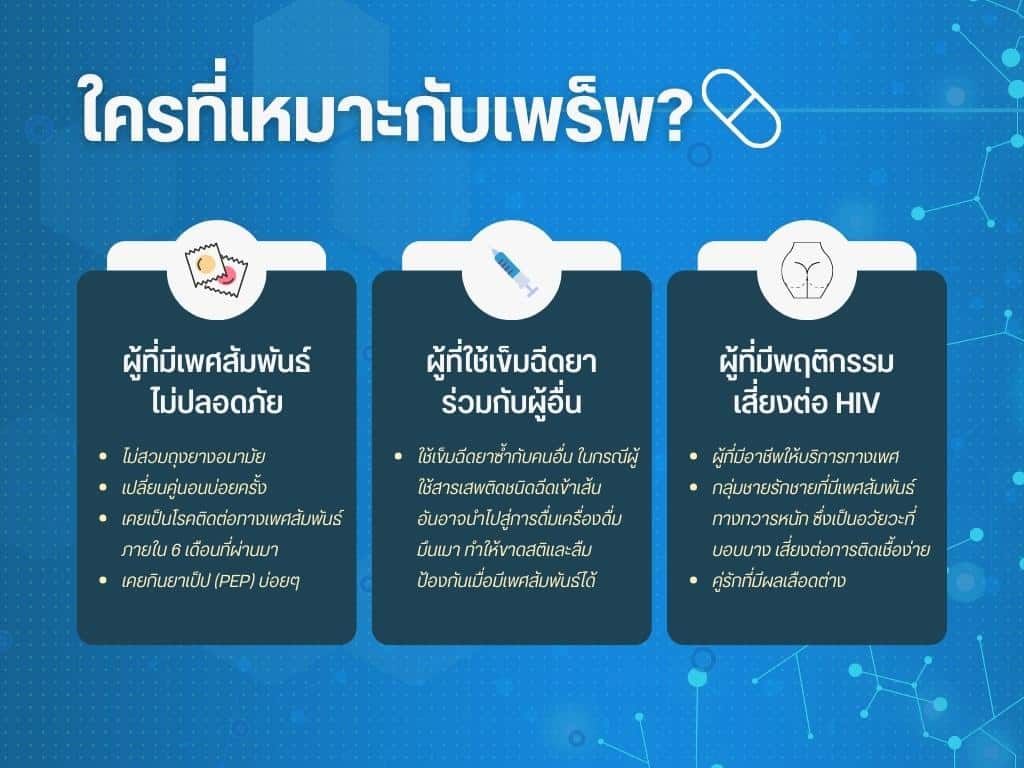
Starting PrEP is not something a doctor prescribes automatically to everyone; it is considered based on each person's individual risk. The main factors used in the assessment include sexual behavior, history of drug use, and current HIV status. If you fall into one of the following groups, a doctor is likely to recommend PrEP for you.
- People who change partners often. If you have multiple partners or non-committed relationships, your risk of unknowingly encountering a partner living with HIV rises significantly. PrEP acts as an added layer of protection that reduces risk even in situations you cannot control.
- People who have sex without condoms. Although condoms are the primary form of protection, the reality is that many people choose not to use them, or problems happen, such as a condom breaking or slipping off. If you regularly have sex without a condom, using PrEP alongside it can greatly reduce your risk of HIV.
- Serodifferent couples. When one partner is living with HIV and the other is HIV-negative, even if the partner living with HIV is on antiretroviral therapy and has an "undetectable" viral load (U=U), the other partner using PrEP adds confidence, eases anxiety, and helps the relationship continue more safely.
- People who inject drugs and share needles with others. Injecting drugs is another major route through which HIV spreads easily. For people with this behavior who cannot stop or change it, PrEP helps reduce the risk of infection from shared needles.
- People whose work carries a risk of HIV exposure, such as sex workers or professionals in certain fields who may come into direct contact with blood and body fluids. PrEP helps them work with more confidence and protects them over the long term.
- People who have used PEP frequently. PEP is emergency medication taken within 72 hours after a possible HIV exposure. If you find yourself needing PEP repeatedly, it reflects risk behavior that cannot be avoided, and switching to ongoing PrEP is a more effective way to reduce that risk.
- Men who have sex with men, transgender people, or MSM, especially those who have anal sex without a condom, since this route carries a higher chance of infection than vaginal sex. PrEP is therefore widely recommended for this group around the world.
This medical evaluation includes an HIV test to confirm you are truly HIV-negative, a kidney function test, and screening for other sexually transmitted infections. The doctor reviews this information before allowing you to start PrEP. This step really does require a consultation with a specialist, and the medication is not sold at ordinary pharmacies, because it is a controlled medicine that requires a medical history to make sure PrEP is safe and appropriate for each person's level of risk.
Steps to Getting PrEP That You Should Know
| Step | Details |
|---|---|
| 1. Consult a doctor or specialist staff | Start by talking with a doctor or specialist to assess your individual risk behavior and get initial information about the benefits and side effects of PrEP. |
| 2. Review your medical history | The doctor asks about your health history, underlying conditions, and current medications to see whether starting PrEP is appropriate for you. |
| 3. Blood tests and physical assessment | Screening for HIV, a kidney function test, testing for sexually transmitted infections (STIs), and a pregnancy test (for women) to ensure safety before starting the medication. |
| 4. Assess suitability | The doctor weighs all the test results together with your risk behavior to decide whether PrEP is right for you. |
| 5. Receive PrEP | If you meet the criteria, the doctor prescribes PrEP and advises on the right way to take it (for example, daily or on-demand). |
| 6. Follow-up appointment every 3 months | PrEP users should have a health check-up, blood tests, and refills every 3 months for maximum safety and effectiveness. |
| Online booking | If you are ready, you can book an appointment to receive PrEP at www.love2test.org, or consult a doctor before starting the medication. |
After You Decide to Use PrEP
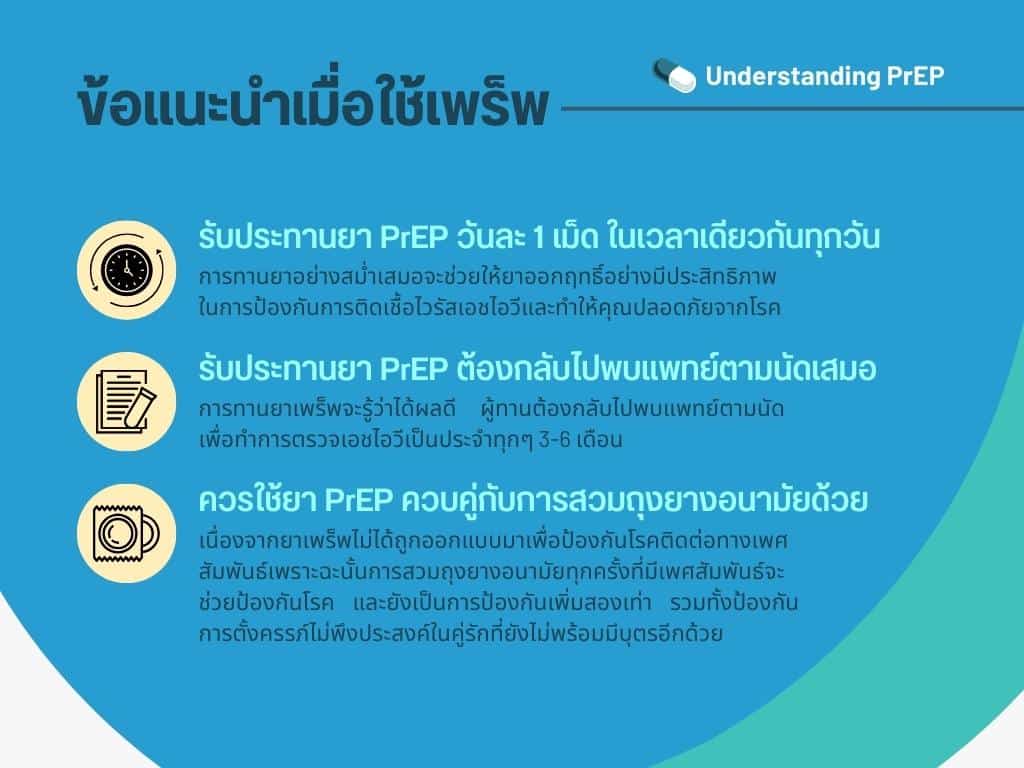
- Take one PrEP pill a day, at the same time every day, strictly and without missing doses, because taking the medication consistently is what allows it to fully protect you against HIV.
- You can take it at whatever time is convenient, but it must be the same time every day. Choose a time you won't easily forget, such as 10 a.m. every day, or after breakfast.
- If you forget one PrEP pill, take it as soon as you can, but do not take more than 2 pills in a day. If it is almost time for your next dose, just start with a new pill.
- PrEP does not protect against other sexually transmitted infections, so you should use a condom every time you have sex.
- People taking PrEP should have blood tests every 3 months to check for HIV infection and to monitor for side effects of the medication.
Frequently Asked Questions About Taking PrEP
☞ Does PrEP have side effects?
- PrEP is a medication certified as safe, but taking it may cause minor side effects such as headache, muscle aches, nausea, vomiting, or diarrhea. These usually go away on their own within a few days, but if symptoms become more severe, you should see a doctor promptly.
☞ Can I skip condoms once I'm on PrEP?
- Even though PrEP helps prevent HIV infection, using a condom adds confidence and also protects you and your partner from other sexually transmitted infections, because PrEP is not designed to prevent other STIs.
☞ Where can I get PrEP?
- Today, PrEP is available at hospitals nationwide, including public hospitals, private hospitals, and general specialty clinics, but it is not sold at pharmacies, because this medication requires seeing a doctor and having a blood test to screen for HIV first.
Read Other Related Articles
- How to take PrEP safely: a beginner's guide with answers to all your questions
- What is PrEP On-Demand, and can it really prevent HIV?
Taking PrEP as prescribed can reduce the risk of acquiring HIV through sex by about 99%. It may sound like something distant, but honestly, it's the method many young people are choosing, because it lets them enjoy their sexual lives with peace of mind and no worrying afterward. PrEP is not a magic pill that guards against every disease, but paired with condoms it's about as safe as it gets, for both HIV and other sexually transmitted infections. More importantly, it's a way of telling yourself, "I choose to protect myself first," which is nothing to be ashamed of. If anything, it's pretty cool. If you have a partner, have multiple partners, or simply want the confidence of knowing you're truly safe, I'd encourage you to talk with your doctor about PrEP. It can be a small step that makes your life safer for the long run, and lets you enjoy intimacy without fear of what might follow.
References:
Department of Disease Control highlights a public health system that cares for people living with HIV, with a good quality of life and long lives.
Stop the HIV cycle, starting with us! Doctors say every sector must work together to speed up understanding and proper prevention to reduce the spread.
PrEP: an option for preventing HIV infection
PrEP is antiretroviral medicine for people without HIV that is used before possible exposure. Oral and long-acting options exist, although availability and eligibility vary by country and service.
Who can ask for PrEP?
Any person without HIV who wants additional protection can discuss PrEP. A person does not need to accept a stigmatising label or disclose more than is necessary for safe care. If a possible exposure happened within the past 72 hours, seek urgent PEP assessment rather than waiting to start PrEP.
Frequently asked questions
Is PrEP 100% effective?
No prevention method guarantees 100%, but PrEP greatly reduces the chance of acquiring HIV when used as prescribed.
How are PrEP and PEP different?
PrEP is used before and during periods of possible exposure; PEP is an emergency course started no later than 72 hours after a substantial exposure.
Does PrEP prevent other STIs?
No. Site-specific STI testing, condoms, vaccination, and other prevention choices remain important.
Primary sources reviewed: CDC: Preventing HIV with PrEP · WHO: PrEP · Love2Test clinic directory
Verified references
Links and relevance to the article’s main topic were reviewed on 13 August 2026. Each source supports only the scope stated in the original document and does not replace personalised medical, legal, or service advice.
- CDC: Clinical Guidance for PrEP Accessed 13 August 2026
- WHO: HIV and AIDS fact sheet Accessed 13 August 2026