Mpox in Thailand, November 2026: What to do if you notice a rash
Thailand reported 470 mpox cases from January through 31 October 2026. Know when to seek care, how mpox spreads and what to do while waiting for a test.
อ่านภาษาไทย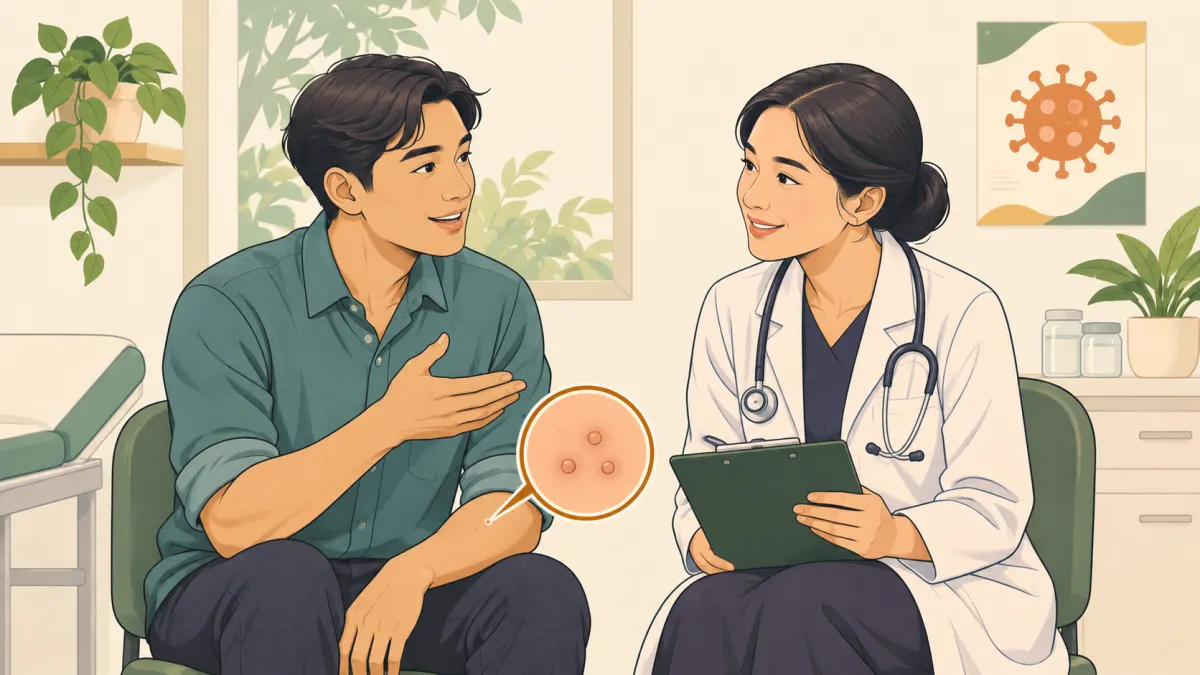
Contents
Finding a new bump just after seeing the mpox headlines can leave you wondering: should I get it checked? If you notice an unexplained rash, bump or sore, especially after close contact with someone who may have mpox, call a healthcare provider. You do not have to wait for a fever or for the rash to spread. [1]
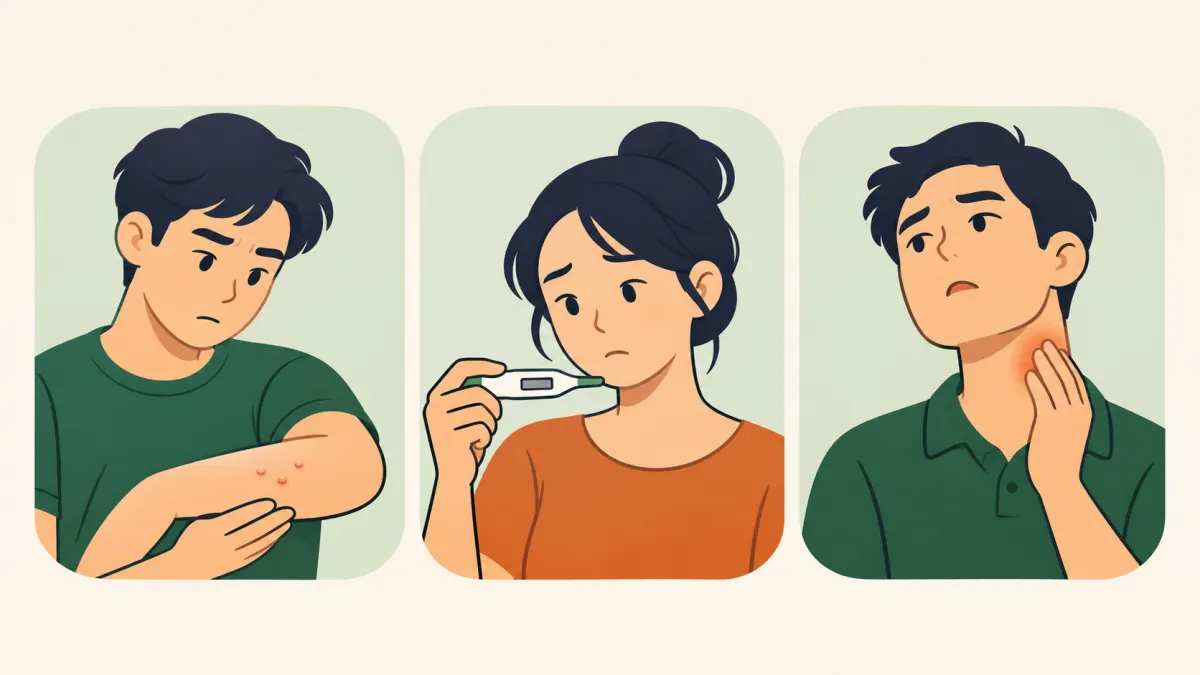
The cover and illustrations are AI-generated. They do not show actual patients and should not be used to diagnose a rash.
What does the figure of 470 cases mean?
On 3 November 2026, Thailand’s Department of Disease Control (DDC) reported 470 mpox cases and three deaths from the start of the year through 31 October 2026. This was a cumulative count, not the number of new cases on the day of the announcement. Follow the DDC surveillance dashboard for later updates. [1]
The numbers tell us why mpox still deserves attention. They do not tell us how likely any one person is to have it. For that, the type of contact and the symptoms matter more.
What if it is just one bump, or there is no fever?
Some people have only one or a few painful or itchy spots. A sore can be easy to miss if it is in the mouth or around the genitals or anus. Other possible symptoms include fever, aches or swollen glands in the neck or groin. A rash can come first, and not everyone gets a fever. [2] [3]
Mpox can look like herpes, chickenpox or other skin conditions. A photo alone cannot confirm it. A clinician will ask about symptoms and recent contact and, when testing is indicated, usually take a swab from a sore for PCR. A routine blood test does not confirm mpox. If your first visit did not settle the question and the rash spreads or symptoms change, go back and share the results from your earlier visit. [1]
For more on where a rash can appear, see the symptoms section of our Mpox hub.
Can mpox spread through everyday contact?
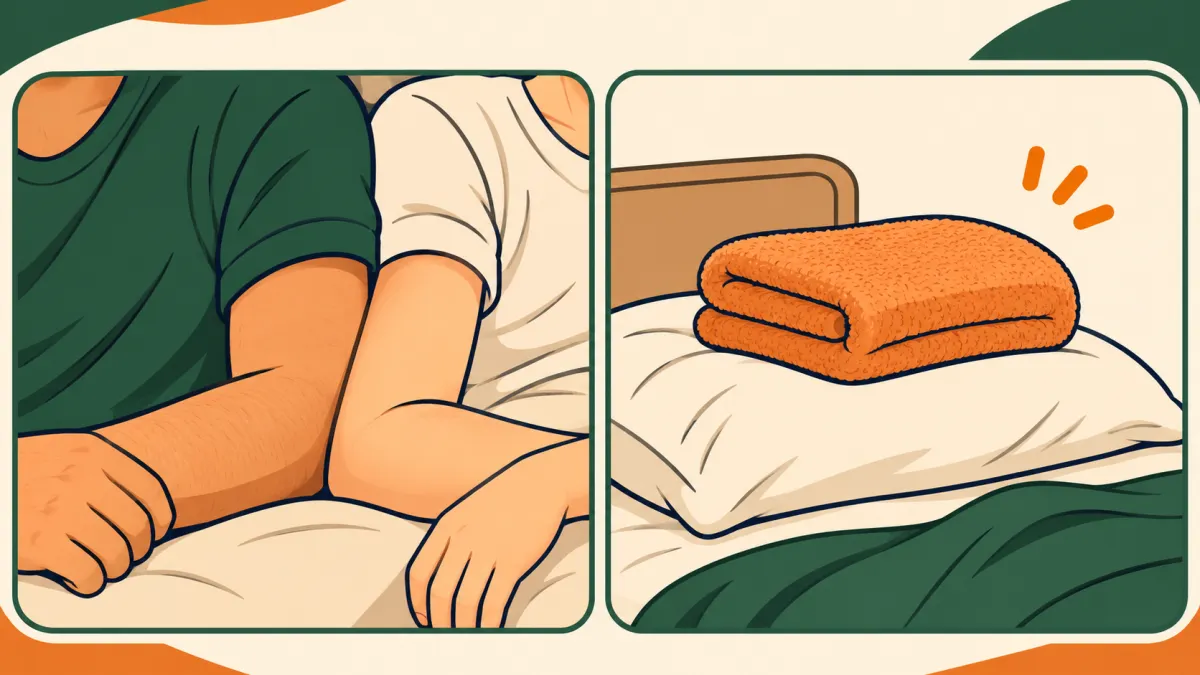
Mpox spreads mainly through close contact with someone who has it, including direct skin contact, kissing or sex. Prolonged close face-to-face contact can also carry risk. So can sharing clothing, towels or bedding contaminated with material from sores. Passing someone briefly is not the same kind of exposure. Risk comes from the contact, not someone’s gender or sexual orientation. [2]
Condoms are important for HIV and STI prevention, but they do not cover every area of skin. If you or a partner has an unexplained rash or sore, pause close contact until it has been assessed. [2] See how mpox spreads and what counts as close contact.
What can I do today if I think I might have it?
- Call a nearby healthcare facility. Tell them when symptoms began, where the rash is and when you last had possible exposure. “I have a new rash and would like to be assessed for mpox” is enough to start the conversation.
- Stay apart from others while waiting for assessment or results. Pause sex and other close contact. Keep your towels and bedding separate, wash your hands regularly and do not pick or pop sores. Cover the rash where possible and wear a well-fitting mask when going for care.
- Get medical help promptly if you have severe pain, cannot drink, have a sore near your eye or feel much worse. Do not wait for a scheduled appointment. Young children, pregnant people and people with weakened immune systems should seek advice early if mpox is suspected.
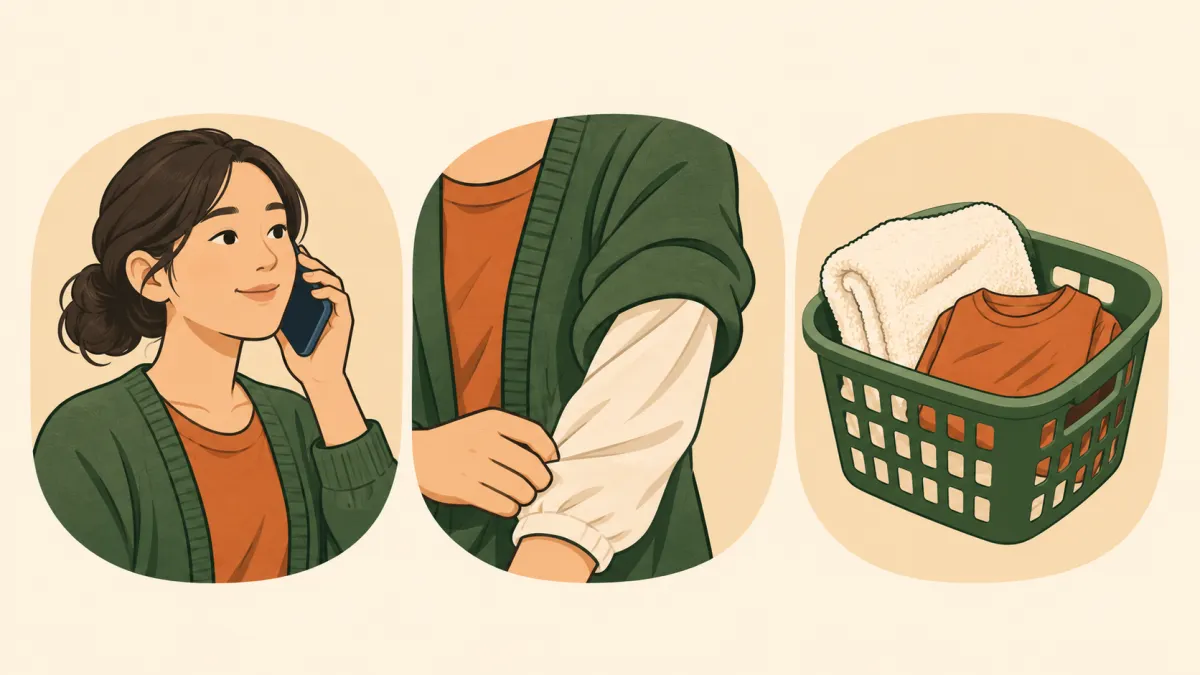
If mpox is confirmed, a clinician can advise whether home care is suitable. Follow their isolation advice until all sores have healed, scabs have fallen off and new skin has formed, including healing of any sores in the mouth or other moist areas. [1] Read our guidance on seeking care and reducing spread.
What if I had close contact but feel well?
Call a healthcare provider to discuss the exposure now. Tell them when and how it happened, and watch for symptoms for 21 days after the last exposure as advised. A vaccine may be an option after some exposures. WHO advises giving it as early as possible, ideally within four days; it may still be considered up to 14 days after contact if symptoms have not started. Ask the provider about eligibility and local availability. [2] [4]
Living with HIV does not automatically mean you will have severe mpox. The risk is higher when the immune system is weakened or HIV is not well controlled. Keep taking your prescribed HIV treatment and tell your care team if you have symptoms. [5] See our guide to HIV treatment and follow-up.
Find more guides in Love Foundation’s Mpox article collection.
Sources
Sources checked 4 November 2026. Case counts refer to the dates shown, not a live total.