Medical Ethics Framework for Gender-Affirming Care in Thailand
Understand Thailand’s medical ethics rules for gender-affirming care and how they differ from name, title, legal sex-marker, and marriage law.
อ่านภาษาไทย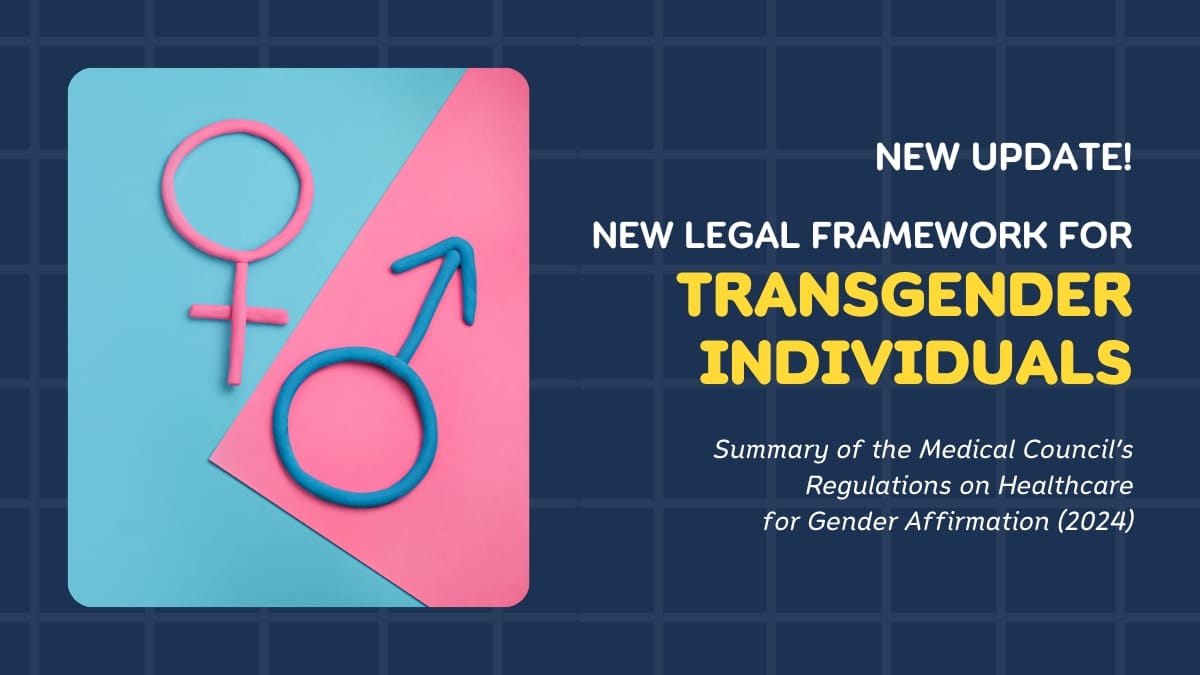
Contents
The Medical Council of Thailand’s ethical rules on gender-affirming healthcare set professional standards for assessment, consent, information, safety, and referral. They regulate medical practice; they are not a gender-recognition law and do not automatically change a person’s name, title, or sex marker on official documents.
What Does the Medical Ethics Framework Cover?
The rules guide clinicians providing hormones, surgery, and other gender-affirming care. A provider should explain benefits, risks, alternatives, limitations, and follow-up appropriate to the service. The patient should be able to ask questions and make a voluntary decision. No single medical intervention is required for every transgender person.
Consent and Age
Consent requirements can differ according to age, decision-making capacity, the service involved, and applicable law. Age thresholds from different procedures should not be combined into one general rule. Providers must use the complete regulation, professional guidance, and current law for each case. Patients and guardians should request service-specific information before deciding.
What the Regulation Does Not Directly Change
- Name changes: These follow separate civil-registration law and procedures.
- Titles and sex markers on identity documents or passports: These depend on legislation and rules of the issuing agency; medical care alone does not automatically alter them.
- Marriage: This is governed by Thailand’s marriage-equality law, effective since 23 January 2025, not by the Medical Council regulation.
Choosing Care Safely
Check the facility and clinician’s authorization, ask about cost, follow-up, and emergency contact arrangements, and disclose relevant medicines, conditions, and test results. Do not obtain hormones or procedures from an unverified source. For a legal-document change, check directly with the registration authority or obtain legal advice separately from medical advice.
Verified references
Links and relevance to the article’s main topic were reviewed on 13 August 2026. Each source supports only the scope stated in the original document and does not replace personalised medical, legal, or service advice.
- WHO: Guideline development for trans and gender-diverse health Accessed 13 August 2026
- OHCHR: LGBT rights fact sheet Accessed 13 August 2026