HIV and AIDS: The Difference, Treatment, and Recovery
HIV is the virus; AIDS is an advanced stage of HIV infection defined by severe immune damage or particular opportunistic conditions.
อ่านภาษาไทย
Contents
HIV is the virus; AIDS is an advanced stage of HIV infection defined by severe immune damage or particular opportunistic conditions. AIDS is not a separate virus, and an AIDS diagnosis does not mean that care can only “slow progression” or that recovery is impossible.
What Does ART Treat?
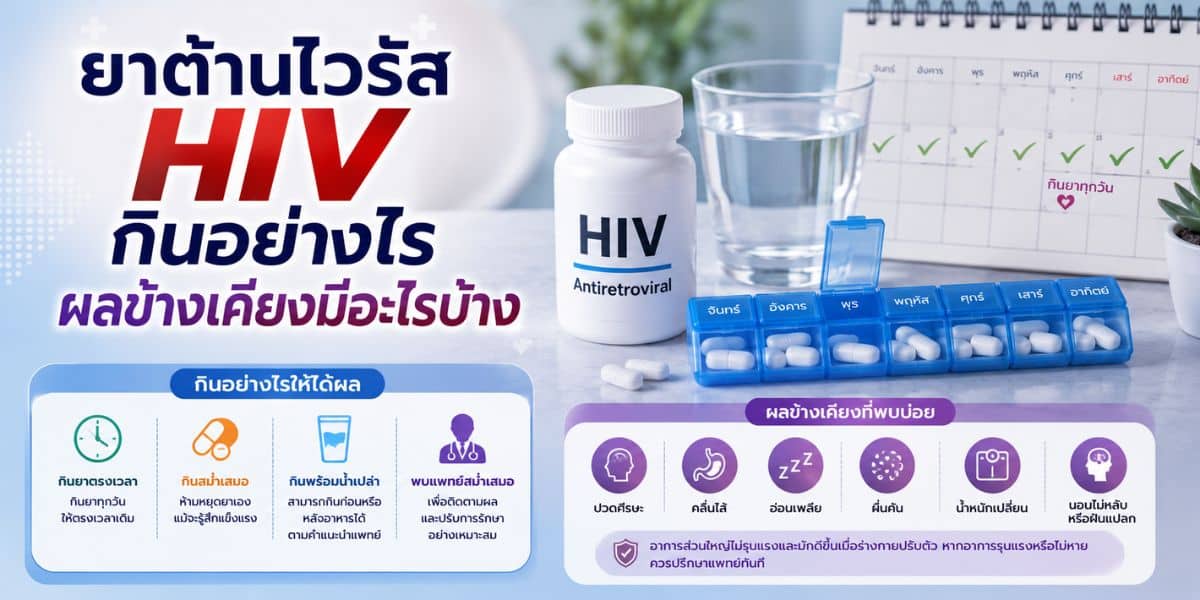
ART suppresses HIV, lowers viral load, and allows CD4 recovery. Even after an AIDS diagnosis, prompt ART plus treatment of opportunistic conditions greatly reduces mortality. Many people regain immune health and live long lives, although the historical AIDS diagnosis remains in the medical record.
Symptoms Cannot Diagnose HIV
Early infection may resemble flu or cause no symptoms; chronic infection can be asymptomatic for years. Weight loss, persistent fever, diarrhea, thrush, or severe infection needs assessment, but only HIV testing determines status.
Living Together Safely
HIV is not transmitted by hugging, holding hands, sharing toilets, or sharing food. A person taking ART with sustained viral load below 200 copies/mL does not transmit HIV through sex (U=U). “People living with HIV” avoids defining a person by a diagnosis.
Verified references
Links and relevance to the article’s main topic were reviewed on 13 August 2026. Each source supports only the scope stated in the original document and does not replace personalised medical, legal, or service advice.
- NIH HIVinfo: HIV Treatment Basics Accessed 13 August 2026
- NIH HIVinfo: HIV Medicines and Side Effects Accessed 13 August 2026
- WHO: HIV and AIDS fact sheet Accessed 13 August 2026