How to Put On a Condom Correctly: 10 Practical Steps
Follow ten steps from checking the package and pinching the tip to lubrication and withdrawal, plus what to do after breakage, slipping, or reversal.
อ่านภาษาไทย
Contents
Condoms are one of the most effective medical tools for safer sex. They not only help prevent sexually transmitted infections (STIs) but also enhance sexual pleasure and confidence when used correctly. Condoms are recognized worldwide as one of the most reliable methods of both contraception and STI prevention. While most people have used condoms before, many still lack detailed knowledge about proper use — or worse, use them incorrectly, such as wearing two condoms at once, which is unnecessary and can even increase the risk of breakage. In this article, we’ll share essential Condom Tips to help you understand, choose, and use condoms effectively for safer and more enjoyable sex.
List of Contents
- The History of Condoms
- Types of Condoms
- Female Condoms
- Choosing the Right Size
- Designs and Features
- How to Use a Condom Correctly
- Advantages & Disadvantages of Condoms
The History of Condoms
The word “Condom” is derived from the Latin term Condus, meaning “container” or “receptacle.” Historical evidence shows that around 5,000 years ago, during the era of ancient Egyptian pharaohs, animal intestines were used to create coverings resembling the male organ to prevent pregnancy. Later, linen cloths were used as protective sleeves to prevent sexually transmitted infections (STIs).
As time went on, the use of sheep intestines and natural rubber became popular in Europe. During World Wars I and II, governments promoted condom use among soldiers to reduce the spread of STIs — marking the beginning of widespread public health campaigns promoting condom protection.
Types of Condoms
Condoms are categorized based on the materials used in their production. There are generally three main types:Condoms Made from Animal Intestine
These are made from the lower intestines of sheep and are praised for feeling very natural — almost like not wearing anything at all. However, they are expensive and cannot prevent STIs because the material has tiny pores that only block sperm, not bacteria or viruses. For that reason, they are not available in Thailand.
Condoms Made from Natural Rubber Latex
The most common type, made from natural latex rubber, is thin, flexible, and fits snugly. Latex condoms are affordable, easy to find, and effective for both contraception and STI prevention. However, they are not suitable for people allergic to latex.
Condoms Made from Synthetic Materials
These are made from polyurethane (PU) or other synthetic polymers. They are more durable than latex and ideal for those allergic to natural rubber. They also work well with oil-based lubricants, which do not damage the condom. This makes them a great option for people seeking comfort and reliability.
Female Condoms
Internal condoms are transparent cylindrical pouches made of polyurethane. They have two rings: one at the closed end (inner ring) inserted into the vagina, and one at the open end (outer ring) that remains outside the body. They are durable, flexible, and allow women to take control of their own sexual protection. However, they are less popular due to their higher price and the perception that they are slightly difficult to use.

Condom Tips - Choosing the Right Size
One of the most important Condom Tips is choosing the correct size. A condom that is too large can slip off during sex, while one that is too tight may tear. In Thailand, standard sizes are:
- 49 mm width × 160 mm length
- 52 mm width × 180 mm length
To find your perfect fit, measure the circumference of your erect penis (in millimeters) and divide by two. For example, a 104 mm circumference would correspond to a size 52 condom. The right condom should feel comfortable — not too tight, not too loose.
Condom Tips - Designs and Features
Modern condoms come in many designs to match different preferences:
- Material: animal intestine, latex, or synthetic.
- Size: usually between 44–56 mm in width.
- Thickness: from standard 0.05–0.07 mm to ultra-thin 0.02 mm.
- Texture: smooth, ribbed, dotted, or contoured for enhanced stimulation.
- Flavors and Colors: mint, strawberry, glow-in-the-dark, and more.
- Additives: special lubricants, delay agents, or spermicide for extra protection.
How to Check Condom Quality
Always check the expiration date before use. Store condoms in a cool, dry place — not in a hot car, wallet, or anywhere under pressure, as heat and friction can cause deterioration and tearing. A fresh condom should feel smooth, flexible, and properly sealed in its packaging.
How to Use a Condom Correctly
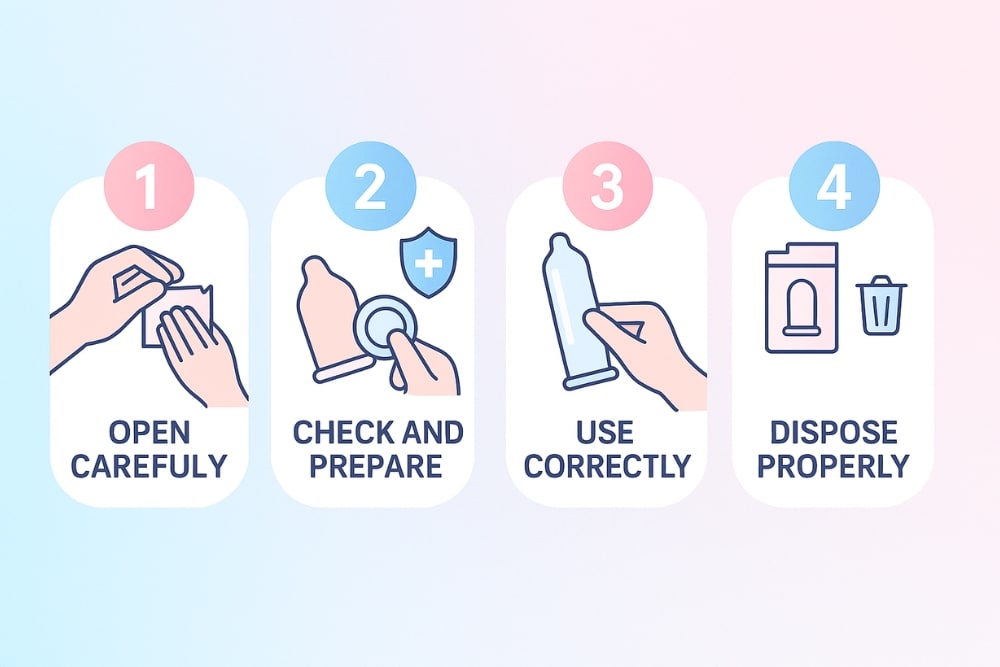
Follow these Condom Tips for safe and effective use:
- Open the wrapper carefully using your fingers — never teeth, knives, or scissors.
- Use only on a fully erect penis. Pinch the tip of the condom to remove air and unroll it all the way down to the base.
- Replace with a new one after 30 minutes or if the session is extended.
- Use a condom only once — never reuse.
- Withdraw while still erect and dispose of the condom properly (wrap it in tissue and throw it in the trash, not the toilet).
- If the condom breaks or slips off, visit a clinic immediately for emergency protection (PEP).
Condom Tips Advantages and Disadvantages of Condoms
Advantages:
- Prevent pregnancy and STIs, including HIV.
- Help delay ejaculation for longer sexual performance.
- Affordable, widely available, and easy to use.
Disadvantages:
- Do not provide 100% protection (skin-to-skin STI transmission is still possible).
- Some users may experience reduced sensitivity or dislike the feel.
Despite these limitations, condoms remain the most practical and effective method of protection — especially for young adults and new couples who value safety and responsibility.

Final Condom Tips
Using condoms correctly ensures both partners can enjoy sex with confidence and peace of mind. Don’t be embarrassed to buy condoms — they represent care, respect, and responsibility. If you feel shy buying them in person, you can easily order online from reputable stores.
Related Article References: ☆ 10 Best Condom Brands: Safe and Loved by Couples ☆ Facts About Condoms: Essential Information You Need to Know ☆ Condoms: A Tool to Reduce the Risk of Both Sexually Transmitted Infections and PregnancyIf you’re ready for sex, you should be ready with a condom.
Correct condom use reduces HIV, some STI, and pregnancy risk. Use a new condom from the start to the end of every act and match the condom material with a compatible lubricant.
A ten-step external-condom checklist
- Choose the right size and material and check the expiry date.
- Push the condom away from the wrapper edge and open it with fingers.
- Check the roll direction before contact; use a new condom if it was reversed after touching the penis.
- Retract the foreskin comfortably if uncircumcised.
- Pinch the reservoir tip to remove air.
- Unroll to the base.
- Add water- or silicone-based lubricant to latex condoms.
- Check that the condom stays in place; change it between partners or body sites.
- Hold the base and withdraw while the penis is still erect.
- Remove without spilling, wrap, and place in the rubbish—not the toilet.
If a condom breaks or slips
Stop and replace it. Consider urgent PEP assessment within 72 hours for a substantial HIV exposure, emergency contraception where pregnancy is possible, and site-specific STI testing. Douching does not prevent infection and may irritate tissue.
Frequently asked questions
Are two condoms safer than one?
No. Friction between condoms can increase slipping or breakage. Use one correctly fitted condom.
Can a reversed condom be flipped and reused?
Use a new one if the wrong side touched the penis, because pre-ejaculate may be transferred.
Can coconut oil be used with latex condoms?
Oil can weaken latex. Use water- or silicone-based lubricant and check the package for other condom materials.
Primary sources reviewed: CDC: Condom Use · CDC: Preventing HIV with Condoms
Verified references
Links and relevance to the article’s main topic were reviewed on 13 August 2026. Each source supports only the scope stated in the original document and does not replace personalised medical, legal, or service advice.
- CDC: About Sexually Transmitted Infections Accessed 13 August 2026
- CDC: STI Treatment Guidelines Accessed 13 August 2026
- CDC: Condom Use Accessed 13 August 2026