Barbie: The Doll That Helped Him Know Himself, and Why Toys Should Not Be Divided by Gender
As the Barbie movie became the year's top-earning hit, the old "Weird Barbie" models that stood for marginalized people returned to the spotlight, showing…
อ่านภาษาไทย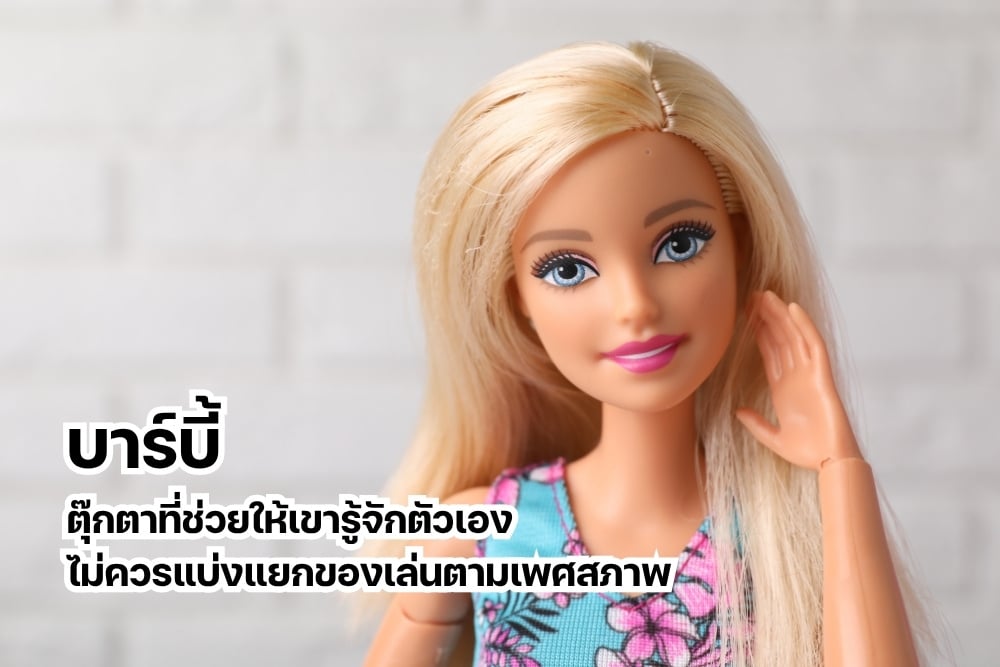
Contents
As the Barbie movie became a runaway hit and the year's top earner, older Barbie models that represented marginalized people, the ones known as "Weird Barbie," came back into the conversation. Some versions even returned for pre-order and went on sale again. They make up a collection of toys that do not divide by gender and that reflect the looks of people on the margins, toys created so that queer kids can learn about and better understand themselves.
Mattel, the maker of Barbie, once produced the Barbie Earring Magic Ken, which was popular in the gay community
Believe it or not, in 1993 Mattel, the company that makes Barbie, produced a Ken doll, the Barbie Earring Magic version, and it sold very well within the gay community. What caught people's attention was Ken's ring-shaped necklace pendant, which resembled a cock ring worn on the penis. This led some to wonder whether Ken was really born to be Barbie's boyfriend, or whether he might be gay and one of Barbie's girlfriends instead. The question followed all the way to actress Margot Robbie. Asked by fans whether Ken really was gay as the rumors claimed, she answered that the characters in the movie are dolls, and that she thinks they have no sexual orientation because Barbie dolls have no genitalia.
Sugar Daddy Ken, made for the 50th anniversary celebration, drew objections from parents
One of the figures in the Weird Barbie line is Sugar Daddy Ken, produced in 2009 as one of the models made for Barbie's 50th anniversary celebration. This Ken is a doll that looks like an older, distinguished gentleman, accompanied by a dog named Sugar, which is Ken's pet. The reason parents objected to this doll was its suggestive name: the term "Sugar Daddy" refers to an older man who financially supports a younger partner, which was read in a negative light, so it too was discontinued.
Mattel introduced a pregnant Midge doll in 2002 under the "Happy Family" collection
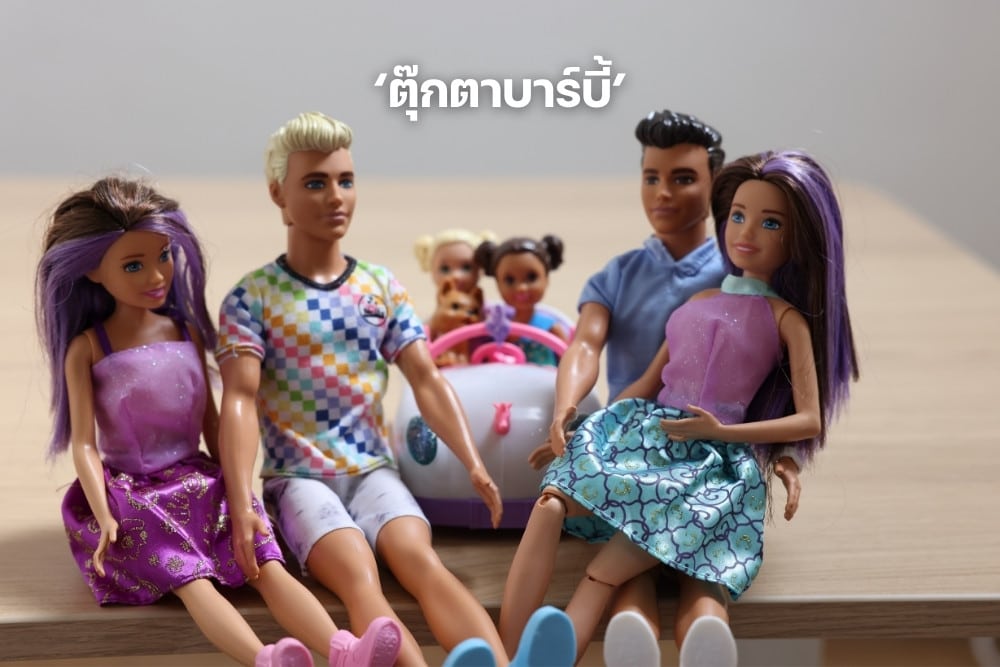
Later, Mattel, the doll manufacturer, introduced a pregnant Midge doll in 2002 under the "Happy Family" collection. The collection included Midge's husband, Alan; their 3-year-old son, Ryan; and the pregnant Midge doll, which came with a baby named Nikki resting inside her belly. Children could take Nikki out of Midge's belly, a feature meant to help them learn about childbirth.
When the "Happy Family" set went on sale, it became a major controversy among parents, who felt Midge was too young to have a child and accused Mattel of possibly encouraging teenage pregnancy. The uproar grew to the point where there were calls for Walmart to pull every pregnant Midge doll from its shelves. Unable to withstand the backlash, Mattel decided to discontinue the pregnant Midge (which is also mentioned in the movie).
Mattel worked with the National Down Syndrome Society in the United States to produce a Barbie doll with Down syndrome
Most recently, Mattel worked with the National Down Syndrome Society in the United States to produce its first Barbie doll with Down syndrome. This doll differs from other Barbie dolls in several ways:
- It is shorter than other Barbie dolls
- It has a longer torso
- It has a rounder face
- It has almond-shaped eyes
- It has smaller ears
- It has a flatter nose bridge
One person who identifies as queer, named Angel Cruz, shared stories from his childhood and his experiences with Barbie dolls: "When I was little, my father would always tell me that boys must not be friends with girls, but I broke that rule by sneaking off to play Barbie with the girl next door when I was five. My father caught me, and he was pretty shocked by what I had just done." Afterward, Cruz's father forbade him from being friends with girls, without ever explaining why, and Cruz went along with it because the world around him before the 2000s was full of prejudice about gender, on television, in school, and in church.
Cruz has always kept Barbie close to his heart, because it was what helped him understand who he was, and watching the Barbie movie only strengthened him further. Still, Cruz admits, "In the past, whenever I looked back on playing Barbie with my close friend, it made me feel bad about my younger self. But now I will never let these bad memories hurt me."
"My mother once told me that the reason both my father and mother wouldn't let me play with Barbie dolls was because they didn't want me to be gay," Cruz said.
What Cruz heard from his close friends while the world around him was full of prejudice about gender
Even so, his close friends always told him, "Even if you're gay, you're still you." Those words led him to start questioning what he had been told all his life, and he came to the conclusion that LGBTQIA+ people should not be stereotyped or judged. "So I stopped going to church at 26, because I had already lost so much, including the close female friends I had," he said.
Cruz closed by saying, "Watching the Barbie movie felt like a breath of fresh air, because for so long queer kids have been boxed in and told what we are supposed to be. But toys are just toys. They help spark children's imagination and help them get to know themselves. Dividing toys by gender is completely absurd."
Verified references
Links and relevance to the article’s main topic were reviewed on 13 August 2026. Each source supports only the scope stated in the original document and does not replace personalised medical, legal, or service advice.
- WHO: Sexual health Accessed 13 August 2026