

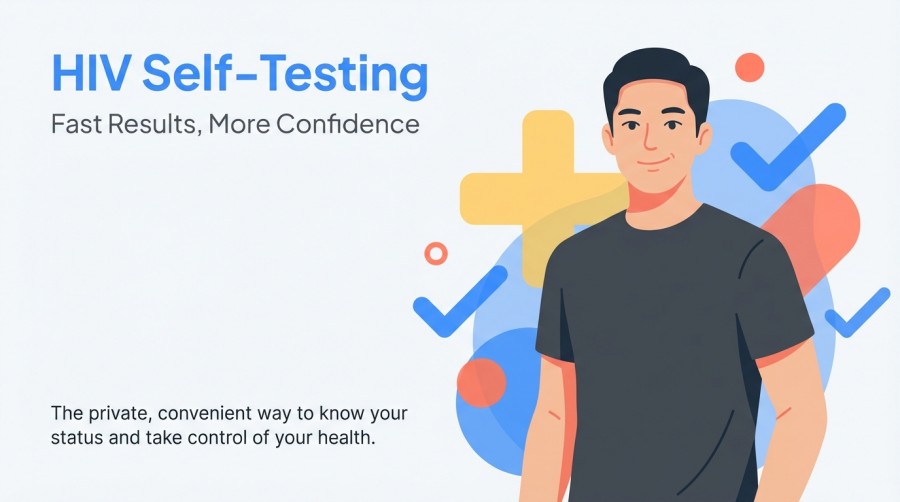
Early HIV testing is a key step toward effective prevention, timely treatment, and improved quality of life. In recent years, HIV self-testing has emerged as an innovative approach that allows individuals to know their HIV status quickly, privately, and conveniently. In Thailand, national health authorities have officially endorsed HIV self-testing as a screening tool to increase access to testing and strengthen the country’s response to HIV. With fast results and greater privacy, HIV self-testing empowers people to take control of their health, reduces fear around testing, and supports broader efforts to end HIV-related stigma and discrimination.
National Support for HIV Self-Testing in Thailand
The National Committee on the Prevention and Resolution of AIDS has approved the use of HIV self-test kits as a screening tool for the general public. This decision aims to help individuals learn their HIV status as early as possible and enter prevention or treatment systems without delay.
On June 15, 2022, a national meeting was held at the Ministry of Public Health in Nonthaburi, chaired by Dr. Sathit Pitutecha, Deputy Minister of Public Health. The meeting brought together experts and committee members both onsite and online to strengthen Thailand’s HIV strategy, particularly in the areas of youth engagement, stigma reduction, and workplace HIV management.
Thailand’s leadership role as Chair of the UNAIDS Programme Coordinating Board in 2022 further highlighted the country’s commitment to ending AIDS and promoting human rights at both national and international levels.
Fast Results Lead to Faster Action
One of the key reasons HIV self-testing has gained support is its ability to deliver rapid results, allowing people to act quickly.
HIV self-test kits approved in Thailand currently include two types:
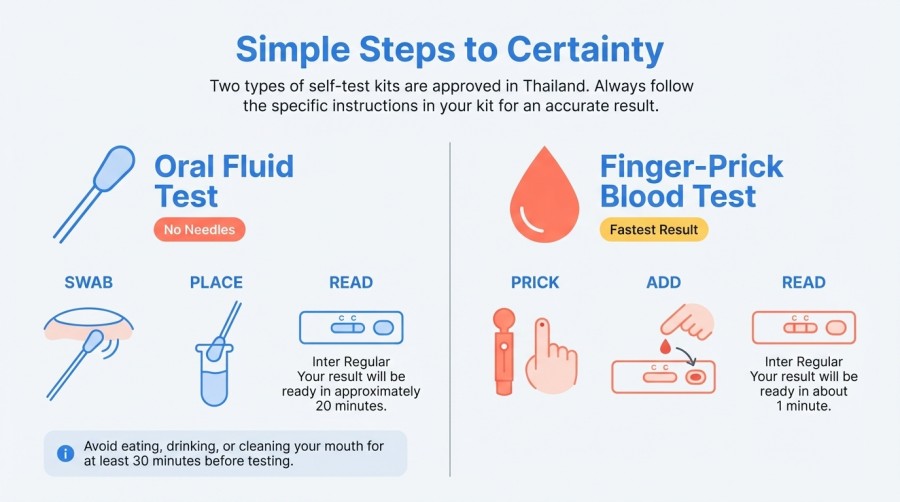
- Finger-prick blood tests, which provide results in about one minute
- Oral fluid tests, which deliver results within approximately 20 minutes
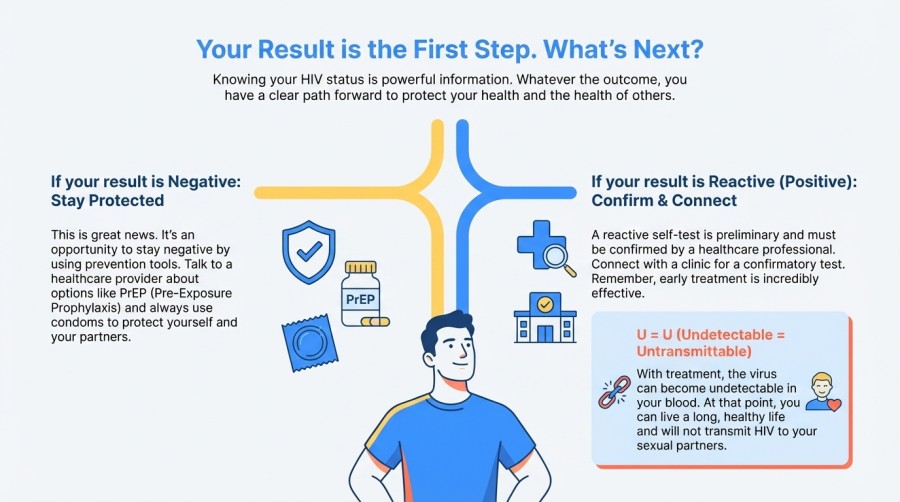
By receiving results quickly, individuals can make informed decisions without prolonged anxiety. Those who test negative can access prevention options, while those who receive a reactive result can be linked promptly to confirmatory testing and medical care.
Early Detection Supports Prevention and Treatment
Many people living with HIV do not experience symptoms in the early stages of infection. Without testing, they may be unaware of their status for years. HIV self-testing helps close this gap by making testing easier and more accessible. When people learn their HIV status early and begin treatment promptly, they can suppress the virus to undetectable levels. This not only improves their health and life expectancy but also prevents onward transmission. This principle is known as U=U (Undetectable = Untransmittable) and is a cornerstone of modern HIV response strategies.
Reducing Stigma & Discrimination
Beyond medical benefits, HIV self-testing plays an important role in reducing stigma. The ability to test privately, without disclosing personal information or visiting a healthcare facility, helps address fear and embarrassment that often prevent people from getting tested. Thailand’s national action plan emphasizes eliminating stigma and discrimination related to HIV and gender diversity. Public institutions are encouraged to lead by example through workplace HIV policies under the concept of “Care, Support, and Prevention in the Workplace.” Promoting accurate knowledge about HIV and U=U helps create safer, more inclusive environments for everyone.
What Is HIV Self-Testing?
HIV self-testing refers to the use of medically approved test kits that allow individuals to collect a sample and perform an HIV screening test on their own. These kits are designed to be simple, safe, and reliable, making them suitable for people who may not feel comfortable accessing traditional testing services.
Self-testing is especially useful for individuals who value privacy, have limited access to healthcare facilities, or want a faster way to know their status.
Benefits of HIV Self-Testing
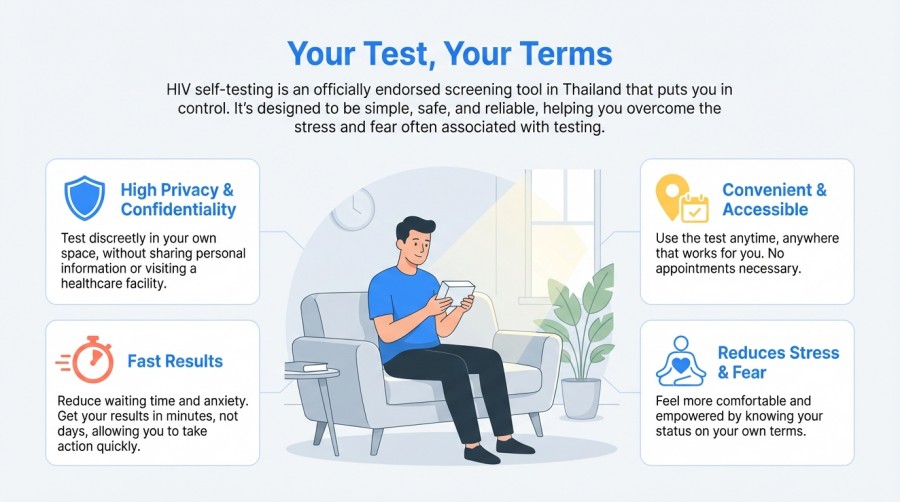
- Easy to use and safe – Designed for simple, self-guided testing without medical assistance
- High privacy and confidentiality – Allows individuals to test discreetly without sharing personal information
- Fast results – Reduces waiting time and anxiety by providing results within minutes
- Convenient and accessible – Can be used anytime and anywhere, without visiting a healthcare facility
- Reduces stress and fear – Helps people feel more comfortable knowing their status on their own terms
- Early detection before symptoms appear – Enables timely medical care and better long-term health outcomes
- Supports prevention and treatment planning – Helps individuals access prevention options or treatment sooner
- Protects partners and families – Supports informed decisions for relationships, family planning, and child protection
- Contributes to public health goals – Increases testing uptake and supports broader HIV prevention efforts
How to Use HIV Self-Test Kits
Approved HIV self-test kits in Thailand come in two main forms, each with specific instructions that must be followed carefully to ensure accurate results.
Finger-Prick Blood HIV Self-Test
This type of test requires a small drop of blood from the fingertip. It is intended for one-time use only and must not be used if the kit is damaged or expired. A reactive result from this test is preliminary and must be confirmed by a healthcare professional through laboratory testing.
Oral Fluid HIV Self-Test
Oral fluid tests collect a sample from the gums or oral cavity. Users should carefully follow the instructions and avoid eating, drinking, or cleaning the mouth for at least 30 minutes before testing. As with blood tests, a reactive result requires confirmatory testing at a medical facility.
References:
- รู้จักชุดตรวจคัดกรองการติดเชื้อเอชไอวีด้วยตนเอง (HIV self-testing)
- คกก.เอดส์ชาติ เห็นชอบใช้ชุดตรวจ HIV Self-Test คัดกรองด้วยตนเอง ทราบผลไว เข้าสู่ระบบป้องกันและรักษาที่รวดเร็ว
- คร. ชวนคนไทยร่วมรณรงค์วันเอดส์โลก 1 ธันวาคม 2568 รอบรู้เรื่องสิทธิ ป้องกันรอบด้าน เข้าถึงบริการตรวจรักษาเอชไอวีได้ทุกคน
Last Updated on 29/12/2025 by ทีมที่ปรึกษา มูลนิธิเพื่อรัก