



The concept of U=U (Undetectable = Untransmittable) has fundamentally changed how the world understands HIV. What was once surrounded by fear, stigma, and misinformation is now supported by strong scientific evidence. This article presents 6 Key Facts About U=U to help readers gain a clear, accurate, and medically sound understanding of what U=U truly means and why it matters for both individuals living with HIV and society as a whole.

U=U explains that people living with HIV who take antiretroviral therapy consistently and achieve an undetectable viral load—generally below 20–50 copies/mL, depending on the test—do not transmit HIV through sexual contact. This is not a theoretical idea, but a fact confirmed by large international studies and widely accepted in modern healthcare.
6 Key Facts About U=U
1. U=U Is a Scientific Fact, Not a Theory
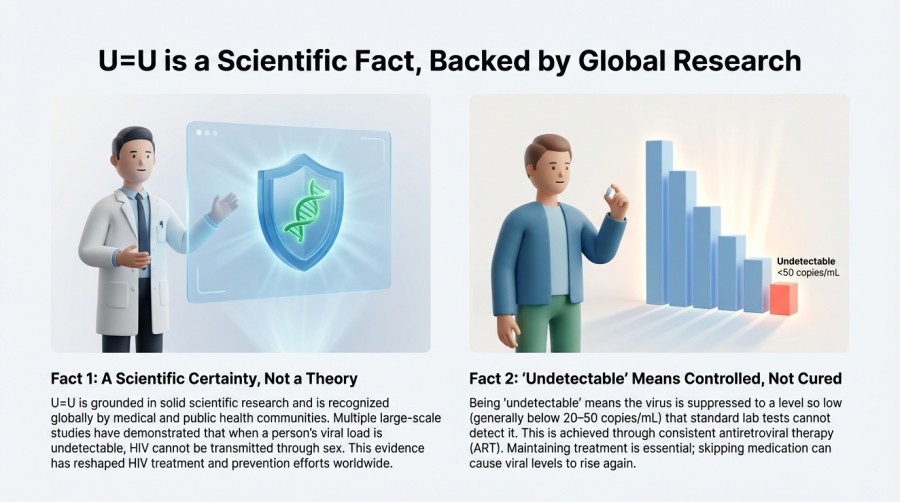
One of the most important 6 Key Facts About U=U is that it is grounded in solid scientific research. U=U is recognized globally in the medical and public health communities. Multiple large-scale studies have demonstrated that when a person’s viral load is undetectable, HIV cannot be transmitted through sex. This evidence has reshaped HIV treatment strategies, placing viral suppression at the center of both personal health management and HIV prevention efforts worldwide.

Being “undetectable” does not mean HIV is cured. Instead, it means the virus is suppressed to such a low level that standard laboratory tests cannot detect it. Achieving this status requires taking antiretroviral medication consistently and attending regular medical follow-ups. Among the facts About U=U, this point is crucial: U=U only applies when viral suppression is maintained. Skipping medication or stopping treatment can cause viral levels to rise again.
3. U=U Does Not Replace Condom Use Completely
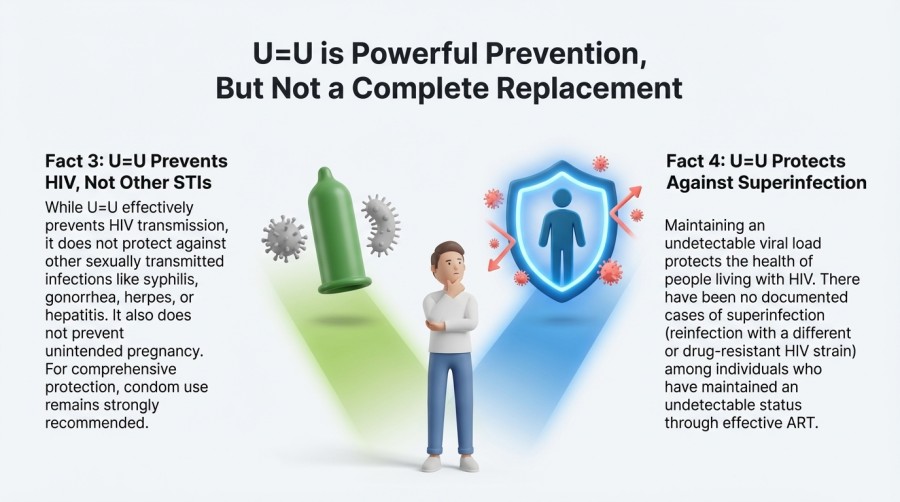
Another key point in the Facts About U=U is understanding its limits. While U=U effectively prevents HIV transmission, it does not protect against other sexually transmitted infections such as syphilis, gonorrhea, herpes, or hepatitis, nor does it prevent unintended pregnancy. For comprehensive sexual health protection—especially with non-regular partners—condom use remains strongly recommended.
4. U=U Helps Prevent HIV Superinfection
In the past, there were concerns about people living with HIV becoming reinfected with another strain of the virus, including drug-resistant strains. However, since the widespread and effective use of antiretroviral therapy, there have been no documented cases of superinfection among individuals who have maintained an undetectable viral load.
This is another important entry in the facts about U=U, showing that viral suppression protects not only partners, but also the health of people living with HIV themselves.
5. U=U Improves Quality of Life and Relationships
U=U has a powerful positive impact on mental health, relationships, and overall quality of life. Knowing that HIV cannot be transmitted when viral load is undetectable helps reduce anxiety, fear, and guilt in intimate relationships.
Among the facts about U=U, this aspect highlights how U=U allows couples—whether serodiscordant or not—to build intimacy, plan families safely, and live more naturally without constant fear of transmission.
6. U=U Reduces Stigma and Discrimination
One of the most socially transformative 6 Key Facts About U=U is its role in reducing stigma. Accurate knowledge about U=U helps dismantle long-standing myths that people living with HIV are dangerous or contagious in everyday life.
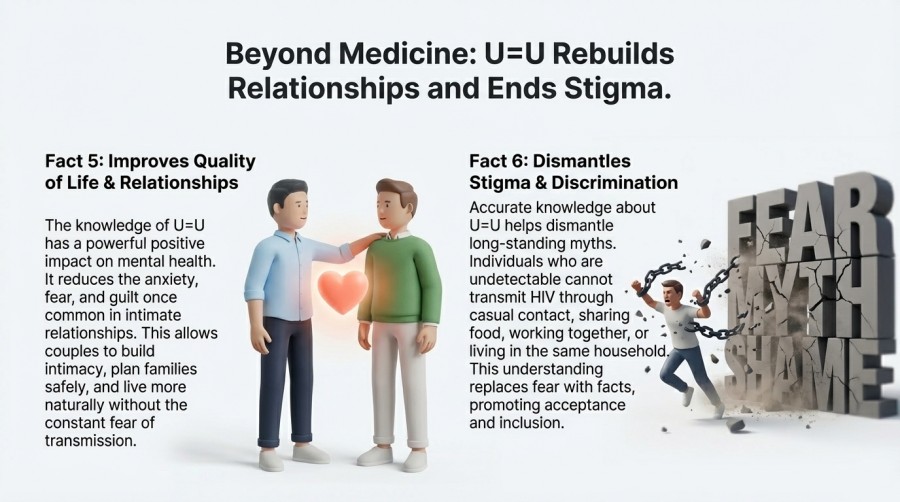
Individuals who are undetectable cannot transmit HIV through casual contact, sharing food, working together, living in the same household, or physical closeness. This understanding promotes acceptance, inclusion, and respect, replacing fear with facts.
Conclusion of 6 Key Facts About U=U
6 Key Facts About U=U demonstrate that U=U is a scientifically proven concept that has transformed HIV care and prevention. It empowers people living with HIV to lead healthier, more confident lives, reduces transmission rates, and plays a vital role in ending stigma and discrimination.
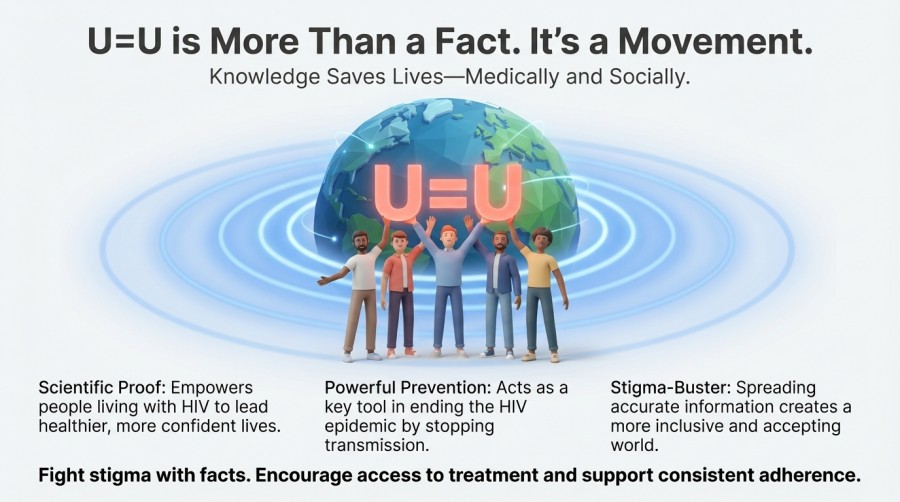
Encouraging access to treatment, supporting consistent medication adherence, and spreading accurate information about U=U are essential strategies in today’s global response to HIV. Clear understanding saves lives—not only medically, but socially as well.
References:
- Practice Safe Sex and Learn How to Have Safer Sexual Relationships
- How to Practice Safe Sex?
- Tips for Confident and Healthy Sexual Well-Being
Last Updated on 26/12/2025 by ทีมที่ปรึกษา มูลนิธิเพื่อรัก