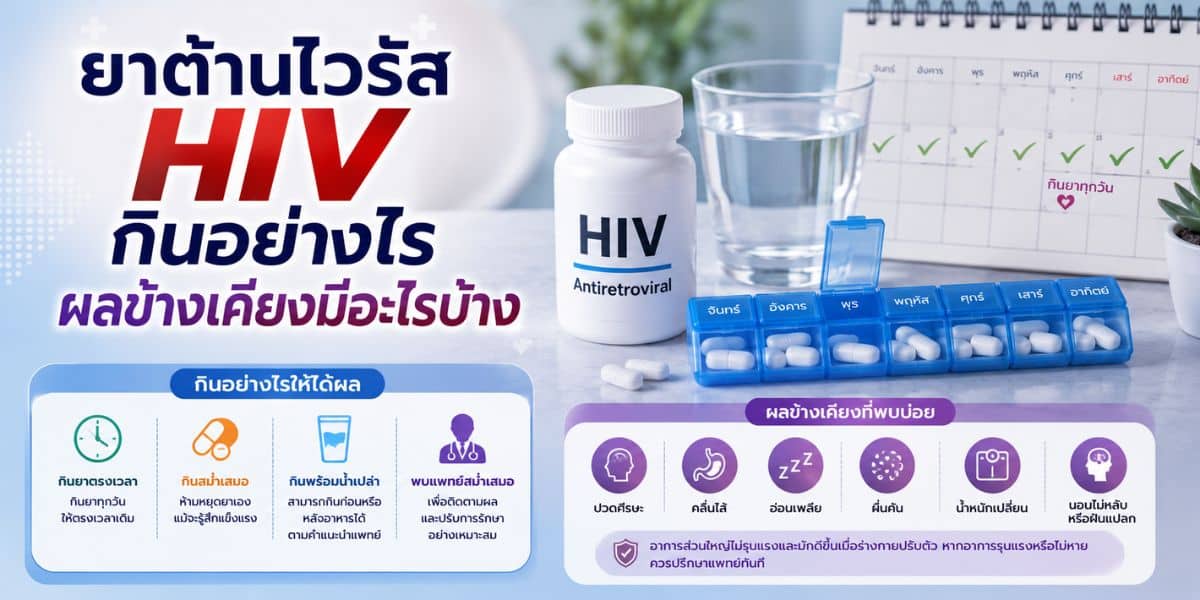
Safer Injection Equipment and Blood-Borne Infection Prevention
How blood-borne infections are transmitted, how to use and dispose of injection equipment safely, and what to do after a needlestick or shared-equipment…
อ่านภาษาไทย
Contents
Sharing injection equipment can transfer one person’s blood into another person’s bloodstream and transmit HIV, hepatitis B, and hepatitis C. Injection is not the only—or necessarily the main—route of HIV transmission in every setting, but it is a preventable risk. Sterile equipment, correct sharps disposal, and accessible nonjudgmental harm-reduction services all reduce that risk.
Why Is Shared Injection Equipment Risky?
A small amount of blood can remain in a needle, syringe, or preparation equipment. Reusing it can introduce blood-borne viruses directly into another person’s bloodstream. Risk is not limited to the needle: shared syringes, cookers, water, filters, or other equipment can also become contaminated with blood.
Principles of Safer Injection
- Use a new sterile needle and syringe for every injection and every person. Never share them.
- Healthcare services must use aseptic technique, follow single-dose medication requirements, and never reuse a needle or syringe between patients.
- Place used sharps immediately in a puncture-resistant container. Do not bend, break, or recap a needle by hand.
- People who inject drugs should have access to sterile supplies, HIV and hepatitis testing, hepatitis B vaccination, treatment for substance use, and naloxone when opioid overdose is a possibility.
After a Needlestick or Shared-Equipment Exposure
Wash the area with soap and water; do not squeeze the wound or use caustic chemicals. Seek an urgent assessment. If HIV exposure is possible, PEP should be started as soon as possible—and no later than 72 hours—when indicated. A clinician will assess HIV, hepatitis B and C, vaccination, and follow-up testing. Do not wait for symptoms, because early infection can be asymptomatic.
Harm Reduction Supports Individuals and Communities
Syringe-service programs do not encourage drug use. They reduce infections, connect people with care, and support safer disposal. Communication should refer to “people who use drugs” or “people who inject drugs” rather than labeling a person, and services should be voluntary, confidential, and respectful.
Verified references
Links and relevance to the article’s main topic were reviewed on 13 August 2026. Each source supports only the scope stated in the original document and does not replace personalised medical, legal, or service advice.
- CDC: How HIV Spreads Accessed 13 August 2026