How Long Can HIV Remain Asymptomatic, and When Do AIDS Symptoms Appear?
HIV can stay symptom-free for years, so there is no way to tell when illness will appear if someone at risk is never tested.
อ่านภาษาไทย
Contents
The truth is, there is no way to know exactly when AIDS will show symptoms, or when a person will become ill. If someone at risk does not get a blood test for HIV, you cannot tell from their symptoms, or by the naked eye, that they are living with the virus. Because AIDS symptoms can take a very long time to appear, it is hard to know without first learning about and understanding HIV. Otherwise, people may wrongly assume that AIDS always causes symptoms before it is time to see a doctor.
What is AIDS? How is it different from HIV?
HIV is short for Human Immunodeficiency Virus. It is a virus that attacks the immune system, particularly the CD4 white blood cells that help protect the body from infections. Without treatment, the virus gradually multiplies and the CD4 count drops, making it harder for the body to fight infections and certain diseases.
AIDS is short for Acquired Immunodeficiency Syndrome, a group of conditions caused by immune deficiency. It is the most severe stage of HIV infection. Doctors generally diagnose AIDS when the CD4 count falls below 200 cells per cubic millimeter, or when a person develops an opportunistic infection or certain AIDS-defining illnesses even if the CD4 count is not below 200.
Simply put:
- HIV is a virus.
- AIDS is the severe stage of HIV infection.
- Having HIV does not mean that everyone will develop AIDS.
- Starting antiretroviral therapy (ART) early helps prevent progression to AIDS.
How Many Years Does It Take to Know You Have HIV?
There is no fixed number of years, because the disease progresses at a different pace in each person, depending on their underlying health, age, viral load, immune status, co-infections, and other factors. Without antiretroviral therapy, HIV infection may move through the chronic stage for several years before progressing to AIDS, but some people progress faster or slower than average.
However, you do not have to wait years to find out whether you are infected, because current HIV tests can detect infection within days to weeks after exposure, depending on the type of test. NAT testing can detect the virus sooner than other methods, while laboratory antigen and antibody blood tests usually detect it about 18–45 days after exposure.
So the more useful question is "When should you get tested for HIV after a possible exposure?" rather than "How many years until I know I am infected?"
Is HIV Easily Transmitted?
Many people in Thailand still hold a mix of accurate and mistaken beliefs about how HIV is transmitted. Some think that even close contact can pass on the virus. In reality, hugging, breathing the same air, sharing a bathroom, or eating together do not transmit HIV. Importantly, the virus is definitely not spread by mosquito or insect bites. Transmission most often happens through:
- Sex without a condom (the most common route).
- Sharing needles or injecting equipment with someone living with HIV (seen among people who use drugs).
- Passing from a pregnant woman living with HIV to her baby (very rare).
- Receiving donated blood that was not previously screened for HIV (now almost never seen).
HIV Stages and Possible Symptoms
| Stage | General time frame or criteria | Possible symptoms |
|---|---|---|
| Acute stage | About 2–4 weeks after infection | Fever, rash, sore throat, muscle aches, swollen lymph nodes, or no symptoms |
| Chronic stage | Can continue for several years if untreated | Often no symptoms or only mild ones |
| AIDS stage | CD4 count below 200 or an AIDS-defining illness | Weight loss, persistent fever, opportunistic infections, fungal infections, tuberculosis, or pneumonia |
This table is only an overview. Symptoms and the pace of progression vary from person to person, and it should not be used in place of HIV testing.
What Are the Symptoms of AIDS?
It is quite hard for someone who has just been infected to show visible symptoms, but HIV infection can be divided into three stages:
Acute stage
This is the period about 2–4 weeks after a person at risk has acquired HIV. The virus multiplies rapidly, causing the CD4 count to drop quickly as well. People in this stage may have flu-like symptoms such as fever, headache, sore throat, body aches, rash, swollen lymph nodes, or diarrhea. During this acute stage there is a high risk of transmitting the virus to sexual partners.
Clinical latency stage
Also known as the "latent stage," this is a period with no symptoms at all, or with symptoms like those of the acute stage that appear only briefly, so they seem like an ordinary illness. During this stage the virus slowly keeps multiplying and works to weaken the immune system. This stage can last as long as 7–10 years. It is the time when people living with HIV are most likely to let their guard down and not take precautions to protect themselves and their partners.
AIDS stage
When HIV is not detected and not treated, AIDS develops. This is the stage where the immune system is severely damaged and the CD4 count falls below 200, compared with 500–1,600 in the general population. Because the body is now weak, a person living with HIV at this stage catches other infections easily. Symptoms at this stage include:
- Frequent fever, coughing up blood, severe headache.
- Night sweats, nausea, vomiting.
- Tiring easily, body aches, fatigue.
- Swollen lymph nodes in the neck, armpits, and groin.
- Chronic diarrhea and rapid weight loss.
- Oral thrush, fungal lung infections, pneumonia, and fungal meningitis.
- Tuberculosis, shingles, and spreading herpes sores.
Once someone has reached the AIDS stage, treatment becomes much harder, because other illnesses keep developing and cause constant sickness, and without treatment death can occur within 1–2 years.
HIV Is Treatable
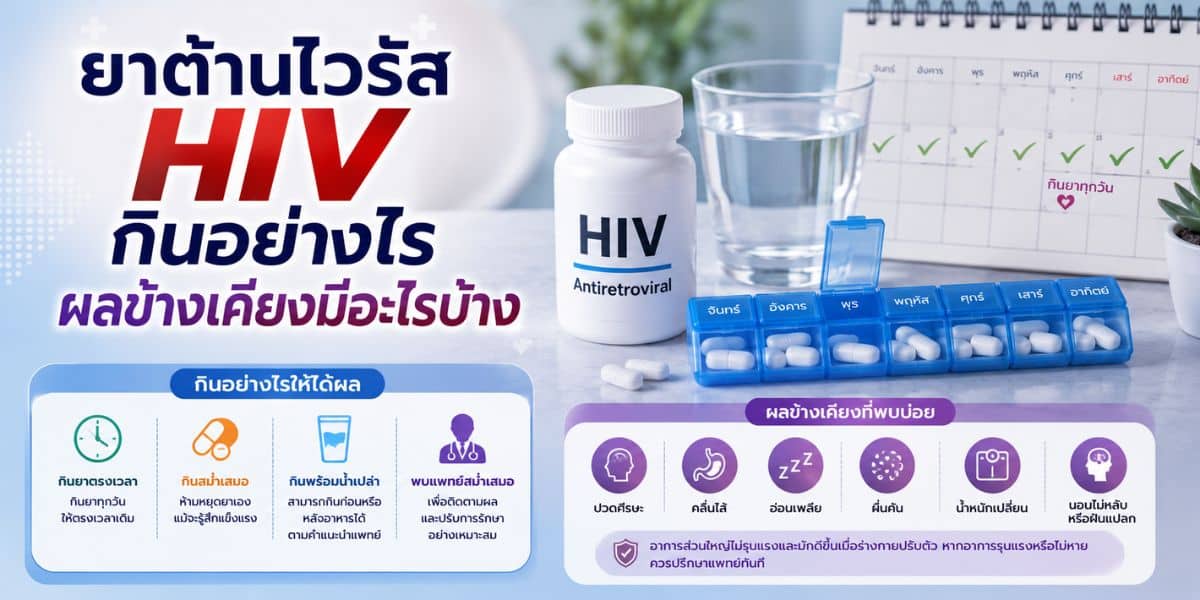
The best treatment for someone living with HIV today is antiretroviral therapy. Doctors use antiretroviral medicines (ARVs) that suppress the growth of HIV so the immune system is not completely destroyed. This helps a person living with HIV stay healthy and live a long life comparable to anyone else. Taking the medicines consistently also lowers the risk of passing HIV to a sexual partner. Detecting the virus early leads to prompt treatment and keeps HIV from progressing to AIDS.
The most important thing is to not wait until symptoms appear before testing for HIV, because many people living with HIV have no symptoms in the early stage. A blood test is the only way to confirm an infection accurately. When HIV is found early and antiretroviral therapy is started right away, it helps prevent progression to AIDS, allows a lifespan close to that of the general population, and reduces the risk of passing the virus to others, following the principle of U=U (Undetectable = Untransmittable).
Read other interesting articles
- Answers to all your questions about HIV and AIDS testing
- HIV testing: find it early, treat it in time
Verified references
Links and relevance to the article’s main topic were reviewed on 13 August 2026. Each source supports only the scope stated in the original document and does not replace personalised medical, legal, or service advice.
- CDC: Getting Tested for HIV Accessed 13 August 2026
- กรมควบคุมโรค: แนวทางตรวจ HIV/ซิฟิลิส/HBV/HCV พ.ศ. 2568 Accessed 13 August 2026
- WHO: HIV and AIDS fact sheet Accessed 13 August 2026