PrEP Explained: Effectiveness, Cost, and Access
PrEP protects you from HIV infection by using antiretroviral medication in people at risk before they are exposed to the virus.
อ่านภาษาไทย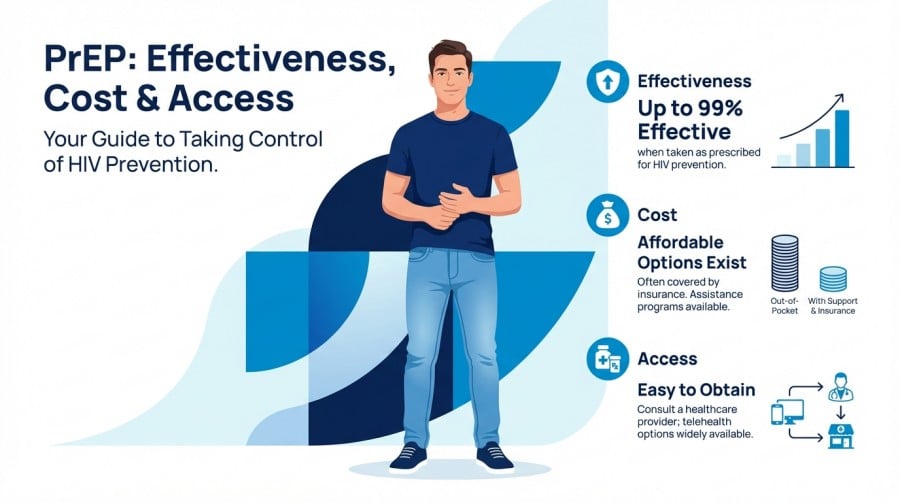
Contents
In an era where sexual health awareness continues to grow, preventing HIV has become a shared responsibility and a key public health priority. PrEP Explained refers to a proven HIV prevention strategy that empowers individuals to take control of their sexual health before exposure occurs. PrEP, or Pre-Exposure Prophylaxis, is an antiretroviral medication taken by people who are HIV-negative to significantly reduce their risk of acquiring HIV.
When used correctly and consistently, PrEP provides highly effective protection and serves as an additional layer of prevention alongside condoms and regular health check-ups. Understanding PrEP helps individuals make informed decisions based on their lifestyle, level of risk, and personal health needs.
☰ List of Contents
- What Is PrEP?
- How Does PrEP Work?
- Medical Tests Before Starting PrEP
- How to Take PrEP Correctly?
- Do You Still Need to Use Condoms When Taking PrEP?
- What If You Forget a Dose?
- How Often Are Follow-Up Tests Needed?
- Where Can You Get PrEP?
- Types of PrEP Use
- Who Should Consider PrEP?
- Safety and Side Effects
- Is PrEP a Vaccine?
- PrEP vs. PEP
- Can Pregnant Women Use PrEP?
- FAQ
PrEP Explained - What Is PrEP?
PrEP (Pre-Exposure Prophylaxis) is an HIV prevention medication taken before potential exposure to the virus. It is designed for individuals who do not have HIV but are at higher risk, such as people with multiple sexual partners, those with an HIV-positive partner, or individuals in communities with higher HIV prevalence.
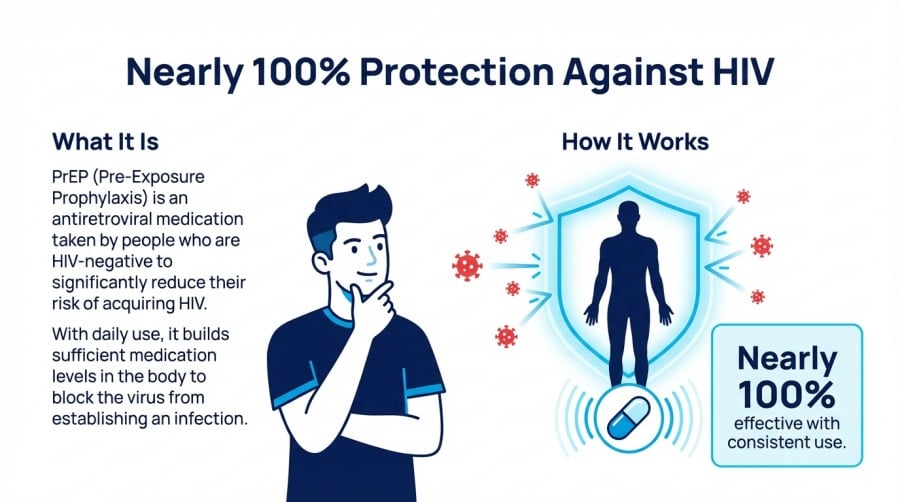
With daily use, PrEP builds sufficient medication levels in the body to block HIV from establishing infection, making PrEP one of the most effective biomedical HIV prevention tools available today.
How Does PrEP Work?
PrEP helps prevent HIV from establishing infection after exposure. When taken as prescribed, PrEP reduces the risk of acquiring HIV through sex by about 99%; it does not prevent other STIs. Its effectiveness depends heavily on adherence—missing doses can reduce protection. This is why PrEP always emphasizes correct and regular use as the foundation of HIV prevention success.
PrEP Explained - Medical Tests Before Starting PrEP
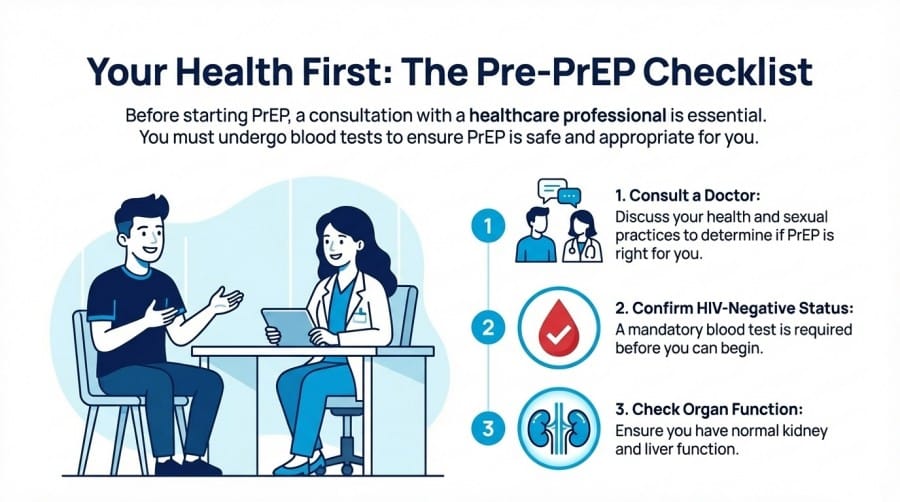
Before starting PrEP, individuals must consult a healthcare professional and undergo blood tests to confirm:
- HIV-negative status
- Normal kidney and liver function
Ongoing monitoring is essential to ensure safety and continued effectiveness. Highlights that PrEP should always be used under medical supervision.
How to Take PrEP Correctly?
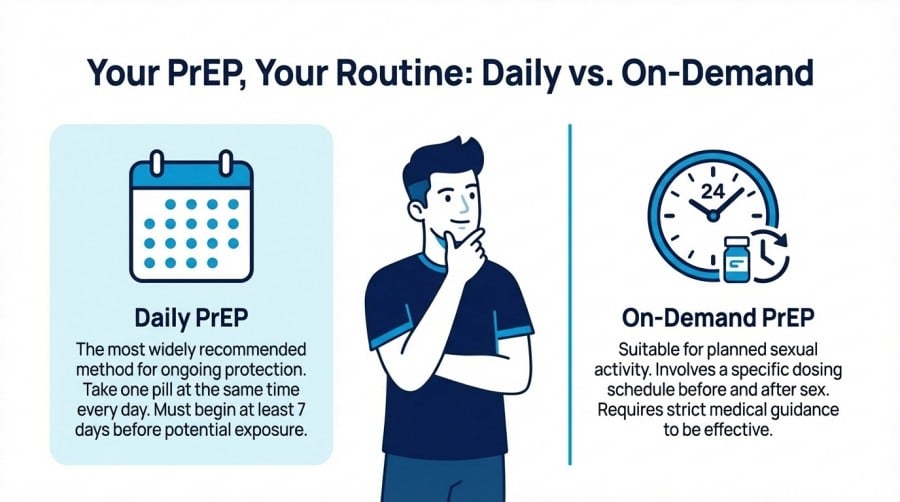
For daily PrEP use:
- Take one pill per day, at the same time each day
- Begin at least 7 days before potential exposure
- Continue daily use as recommended by a healthcare provider
If a dose is missed, take it as soon as remembered unless it is close to the next scheduled dose. Never double-dose. Even with PrEP, condoms are still recommended to prevent other sexually transmitted infections (STIs). PrEP supports combination prevention for optimal sexual health.
Do You Still Need to Use Condoms When Taking PrEP?
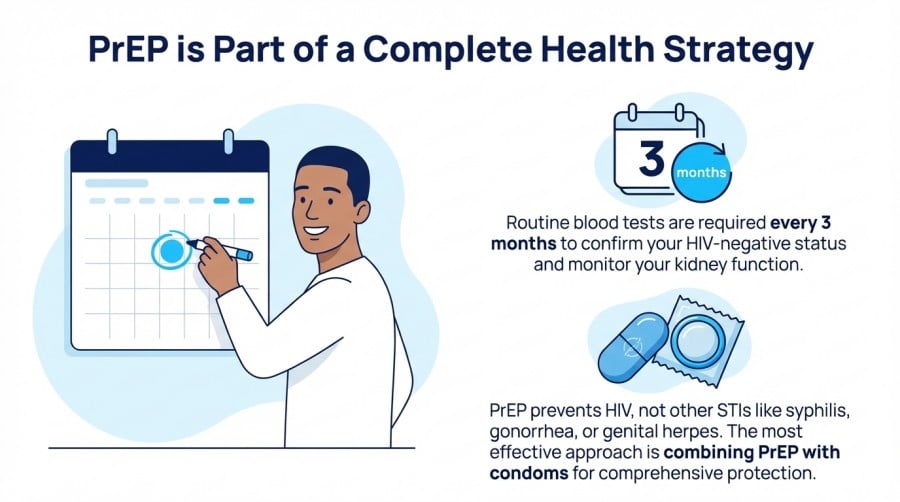
Taking PrEP is an effective option for preventing HIV infection, but it is strongly recommended to use PrEP together with condoms. The most effective prevention approach is combining condom use with PrEP, as this not only provides strong protection against HIV but also helps prevent other sexually transmitted infections (STIs), such as genital warts, gonorrhea, syphilis, and genital herpes.What If You Forget a Dose?
Missing doses may reduce PrEP’s effectiveness. If PrEP is taken inconsistently, protection against HIV may decrease. However, continuing the medication as soon as possible helps restore protection.How Often Are Follow-Up Tests Needed?
While taking PrEP, routine blood tests are required every 3 months to:
- Confirm HIV-negative status
- Monitor kidney function
- Screen for other STIs
Regular follow-ups ensure PrEP remains safe and effective.
Where Can You Get PrEP?
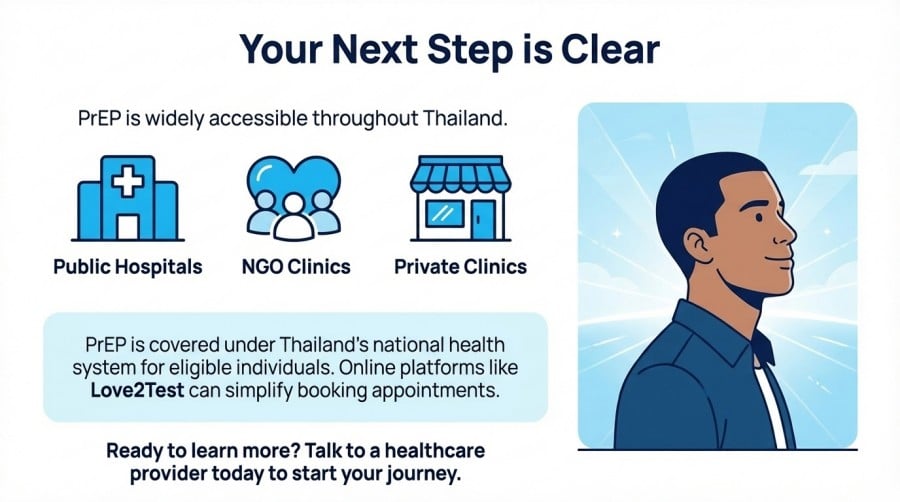
In Thailand, PrEP is widely accessible through:
- Public hospitals
- NGO clinics
- Private clinics
PrEP is also covered under Thailand’s national health system for eligible individuals. Online appointment booking platforms such as Love2Test further simplify access and reduce barriers to care.
Types of PrEP Use
There are two main ways to take PrEP:Daily PrEP
- Suitable for ongoing risk
- One pill daily
- Most widely recommended
On-Demand PrEP
- Suitable for planned sexual activity
- Specific dosing before and after sex
- Requires medical guidance
Who Should Consider PrEP?
PrEP is recommended for individuals at higher risk of HIV, including:
- People with multiple sexual partners
- Those with an HIV-positive partner
- Individuals who have used emergency HIV medication (PEP) multiple times
- People with a history of STIs
Safety and Side Effects
PrEP is generally very safe. Most users experience no side effects, while some may have mild symptoms such as nausea or headache during the first few weeks. These usually resolve on their own. Serious side effects are rare when PrEP is taken under medical supervision.
Is PrEP a Vaccine?
No. PrEP is not a vaccine. It does not create permanent immunity. Instead, it works similarly to daily contraception—protection lasts only while the medication is taken consistently. Releted Article- Long-Acting PrEP Injection, A Smarter Way to Stay Protected
- Taking PrEP for HIV Protection: Everything You Need to Know
PrEP vs. PEP
| Feature | PrEP (Pre-Exposure Prophylaxis) | PEP (Post-Exposure Prophylaxis) |
|---|---|---|
| Purpose | HIV prevention before exposure | HIV prevention after exposure |
| When to use | Before having potential HIV risk | Within 72 hours after risk |
| Who it’s for | HIV-negative people at ongoing risk | Anyone with a recent HIV exposure |
| How it’s taken | 1 pill daily (or on-demand, as advised) | Daily medication for 28 days |
| Effectiveness | About 99% when taken as prescribed; does not prevent other STIs | About 80% if started early |
| Duration | Long-term, ongoing prevention | Short-term emergency prevention |
| Medical supervision | Required | Required |
| Side effects | Usually mild and temporary | Possible nausea, fatigue, dizziness |
| Prevents other STIs | No (condoms still needed) | No (condoms still needed) |
Can Pregnant Women Use PrEP?
Yes. Pregnant women or those planning pregnancy can safely use PrEP under medical guidance. PrEP does not affect fertility or pregnancy outcomes.
Frequently Asked Questions: PrEP Explained
- Q: How effective is PrEP?
- PrEP reduces the risk of acquiring HIV through sex by about 99% when taken as prescribed; it does not prevent other STIs.
- Q: Can PrEP cure HIV?
- No. PrEP prevents HIV but does not treat or cure it.
PrEP Explained represents a major advancement in HIV prevention. When used properly, PrEP empowers individuals to protect themselves, plan their futures with confidence, and contribute to reducing HIV transmission in society. Access to accurate information, regular medical follow-up, and responsible decision-making are the foundations of successful prevention. Because the best protection always starts with knowledge, awareness, and proactive care.
References:- Use PrEP correctly to prevent HIV
- Pre-exposure prophylaxis for HIV
- Truly prevent HIV! Get to know PrEP
Verified references
Links and relevance to the article’s main topic were reviewed on 13 August 2026. Each source supports only the scope stated in the original document and does not replace personalised medical, legal, or service advice.
- สปสช.: Integrate PrEP provision in UHC Accessed 13 August 2026
- CDC: Clinical Guidance for PrEP Accessed 13 August 2026
- WHO: HIV and AIDS fact sheet Accessed 13 August 2026