
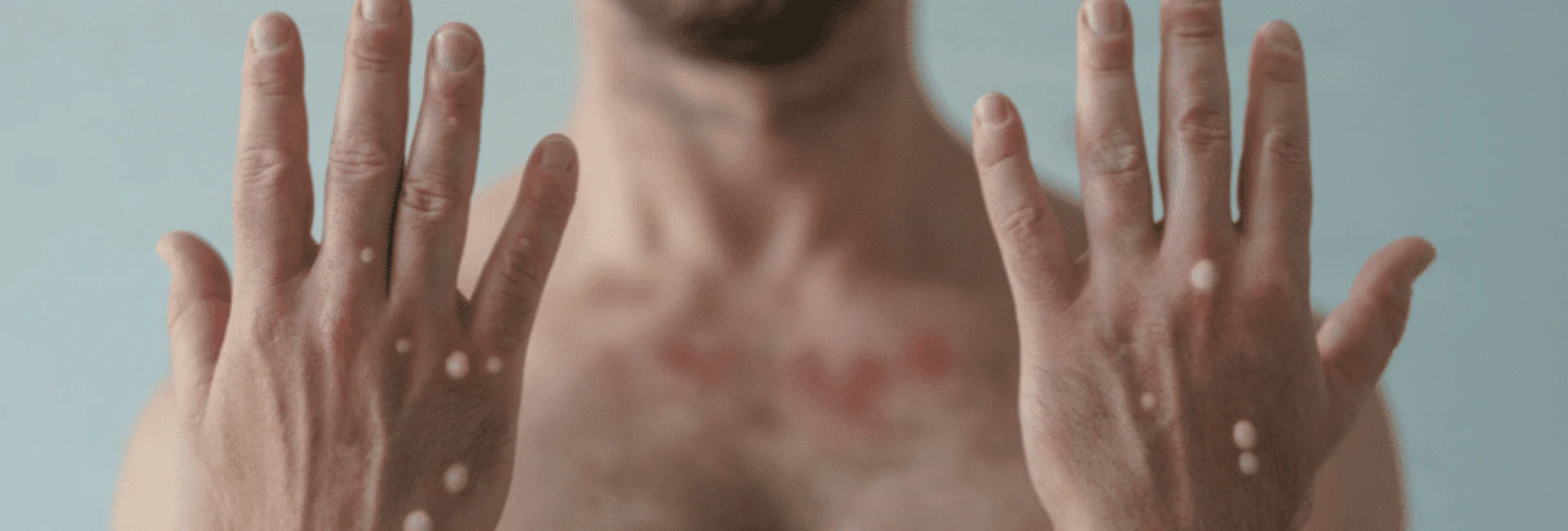
This information is for education and does not replace a medical diagnosis. If you have a new rash, bumps, or sores — or symptoms you are unsure about — contact a health facility for assessment.
What is Mpox?
Mpox is a viral infection caused by the monkeypox virus, part of the Orthopoxvirus group. Symptoms vary from person to person: some people start with a rash or bumps, while others first have fever, sore throat, headache, muscle aches, fatigue, or swollen lymph nodes before the rash appears.
The rash may be just a few spots or many, and can appear on the face, mouth, hands, feet, genitals, around the anus, or wherever contact occurred. The sores can be painful or itchy and may take several weeks to heal fully.
How it spreads
Mpox spreads through close contact with someone who has the virus — especially skin-to-skin contact with the rash, bumps, sores, or bodily fluids, as well as kissing, sex, or prolonged close contact. It can also spread through contaminated items such as clothing, towels, or bedding.
Condoms reduce the risk from some contact but cannot cover every area of skin that may touch. Talking openly about symptoms and avoiding close contact when you have a suspicious rash therefore remain important.
Signs to watch for
- New rash, blisters, pus-filled bumps, sores, or scabs — especially around the genitals, anus, face, hands, or feet
- Fever, sore throat, headache, muscle aches, back pain, fatigue, or swollen lymph nodes
- Rectal pain, painful bowel movements, painful urination, or difficulty swallowing
- Rapidly worsening symptoms, severe pain, inability to drink, difficulty breathing, drowsiness, or sores near the eyes — seek urgent care
If you suspect infection or a recent contact
- Contact a health facility before traveling there, to get advice on testing and on reducing the chance of spreading it
- Avoid close contact and sex, cover sores with clean clothing or a clean dressing, and wear a mask around others
- Do not pick, scratch, squeeze, or shave areas with sores, as this can spread the virus and cause a secondary bacterial infection
- Do not share towels, clothing, bedding, or personal items with others, and wash your hands regularly
Prevention without stigma
Mpox can affect anyone. Prevention should be based on the type of contact, not on sexual identity. You can lower your risk by avoiding contact with a rash or sores, not sharing personal items, following vaccine announcements for people at higher risk, and seeking advice after a possible exposure.
Mpox explainer video
Understand Mpox — its symptoms, how it spreads, and how to care for yourself — in an easy-to-follow video.
Mpox posters
A set of Mpox knowledge posters to download and share. Click an image to view and save the full-size file.


Mpox infographics
Infographics summarizing the key points about Mpox. Click an image to view and save the full-size file.


